Bonuomo Valentina, Ferrarini Isacco, Dell'Eva Michele, Sbisà Eugenio, Krampera Mauro, Visco Carlo
Section of Haematology, Department of Medicine, University of Verona, Verona 37134, Italy.
World J Virol. 2021 Nov 25;10(6):312-325. doi: 10.5501/wjv.v10.i6.312.
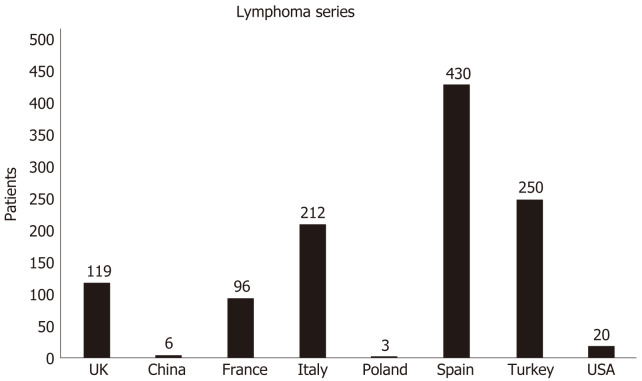
Severe acute respiratory syndrome coronavirus 2 (SARS-CoV-2) infection now has a global resonance and represents a major threat for several patient populations. Observations from initial case series suggested that cancer patients in general might have an unfavorable outcome following coronavirus disease 2019 (COVID-19), due to their underlying conditions and cytotoxic treatments. More recently, data regarding the incidence and clinical evolution of COVID-19 in lymphomas have been reported with the aim to identify those more frequently associated with severe complications and death. Patients with lymphoma appear particularly vulnerable to SARS-CoV-2 infection, only partly because of the detrimental effects of the anti-neoplastic regimens (chemotherapy, pathway inhibitors, monoclonal antibodies) on the immune system. Here, we systematically reviewed the current literature on COVID-19 in adult patients with lymphoma, with particular emphasis on disease course and prognostic factors. We also highlighted the potential differences in COVID-19 clinical picture according to lymphoma subtype, delivered treatment for the hematological disease and its relationship on how these patients have been managed thus far.
严重急性呼吸综合征冠状病毒2(SARS-CoV-2)感染目前已引起全球关注,并对多个患者群体构成重大威胁。最初病例系列的观察结果表明,由于其基础疾病和细胞毒性治疗,癌症患者总体上在感染2019冠状病毒病(COVID-19)后可能预后不良。最近,已有关于淋巴瘤患者中COVID-19发病率和临床演变的数据报道,目的是确定那些更常与严重并发症和死亡相关的因素。淋巴瘤患者似乎特别容易感染SARS-CoV-2,部分原因仅在于抗肿瘤方案(化疗、通路抑制剂、单克隆抗体)对免疫系统的有害影响。在此,我们系统回顾了目前关于成年淋巴瘤患者COVID-19的文献,特别强调了病程和预后因素。我们还强调了根据淋巴瘤亚型、针对血液系统疾病的已实施治疗以及迄今为止这些患者的管理方式,COVID-19临床表现可能存在的差异。