Department of Surgery, Busan Paik Hospital, College of Medicine, Inje University, Busan 47392, Republic of Korea.
KIRAMS Radiation Biobank, Korea Institute of Radiological and Medical Sciences, Seoul 01812, Republic of Korea.
Int J Oncol. 2022 Jan;60(1). doi: 10.3892/ijo.2021.5292. Epub 2021 Dec 16.
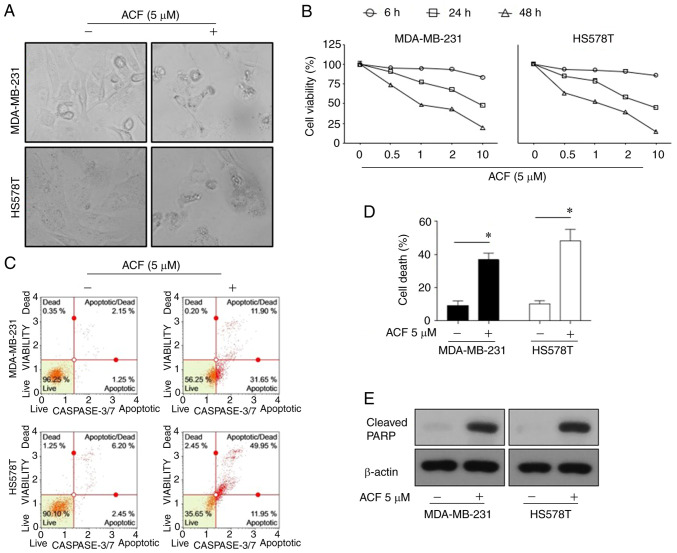
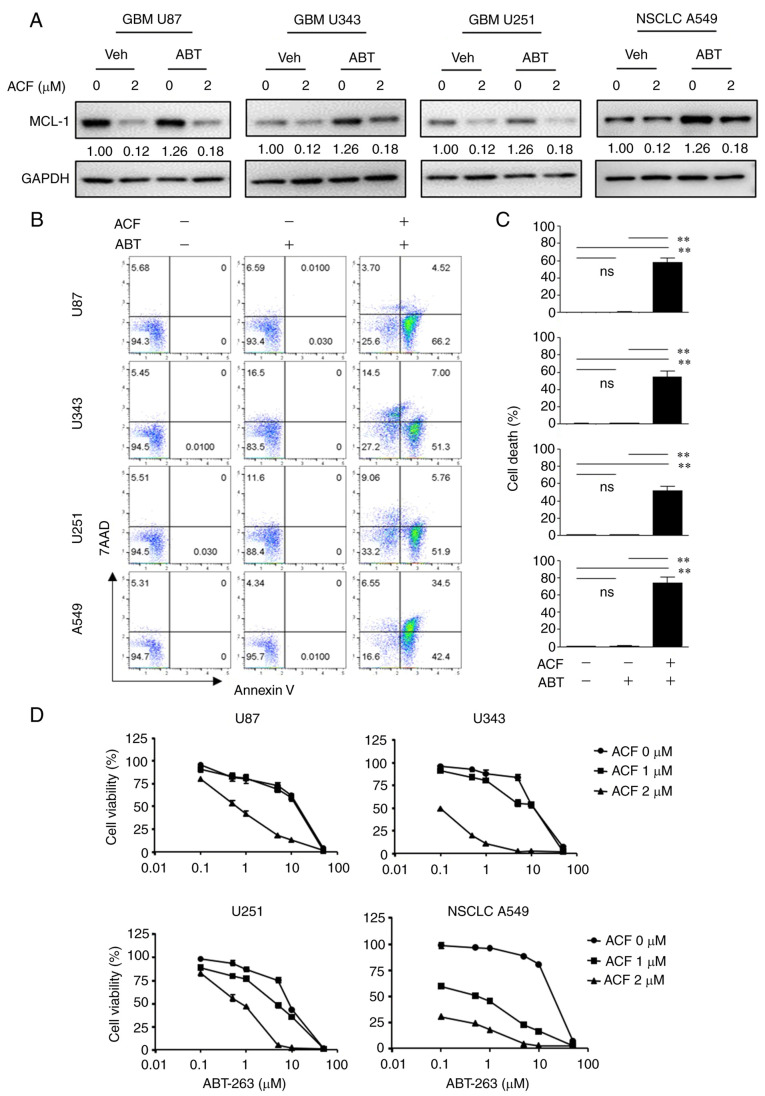
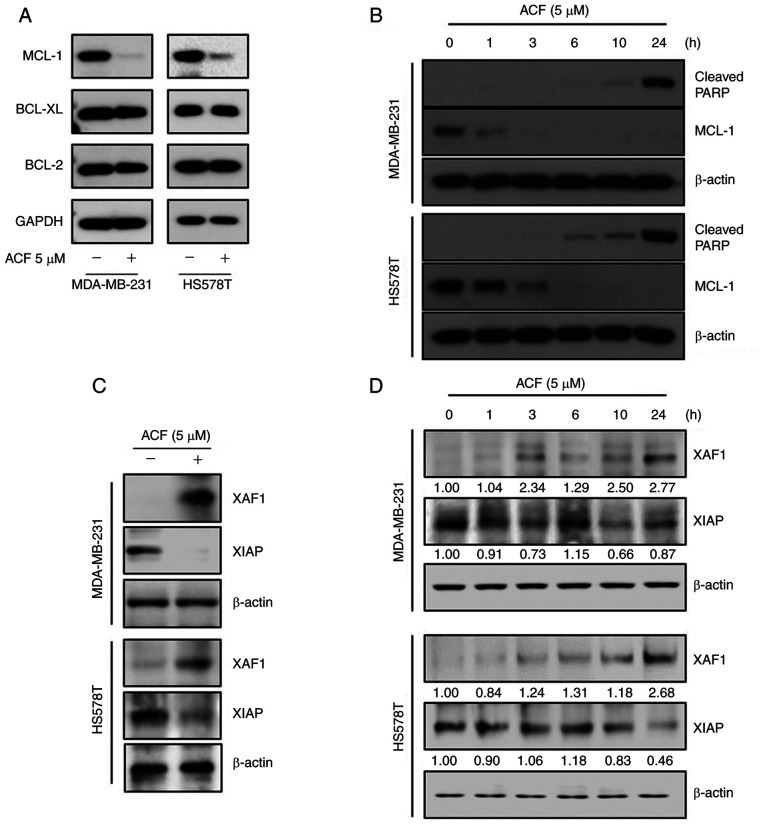
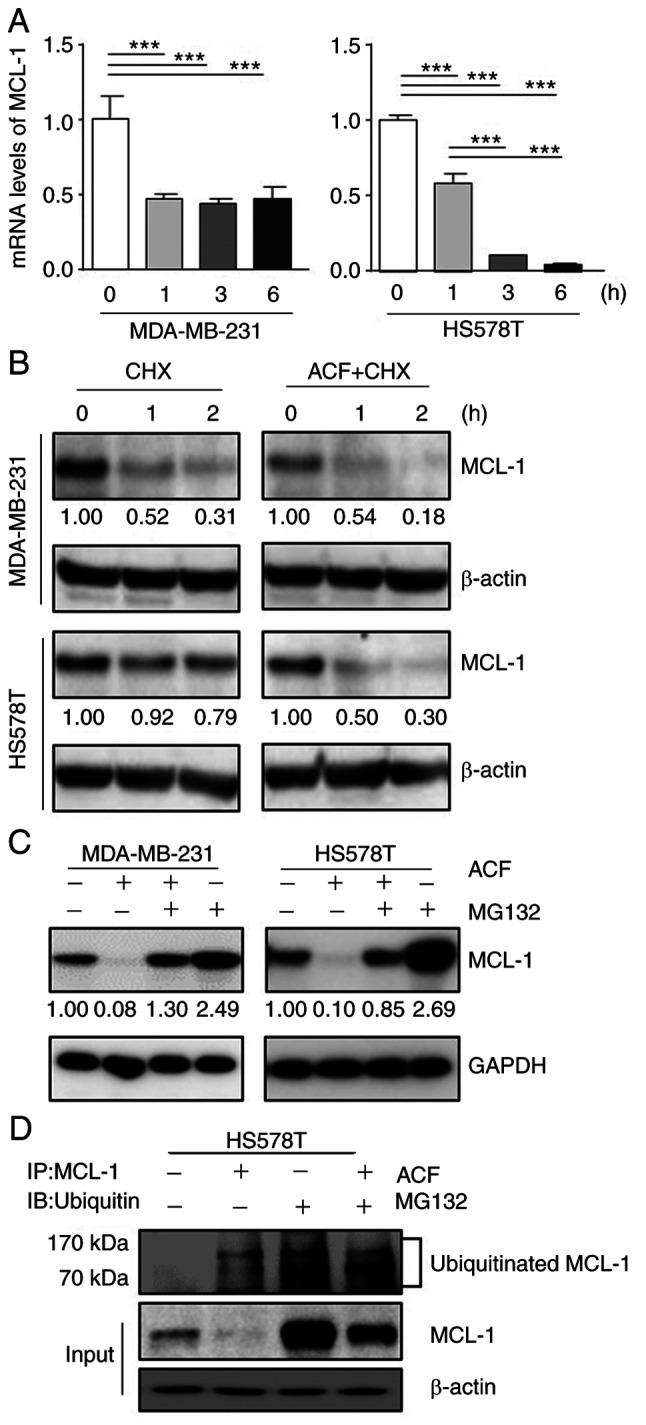
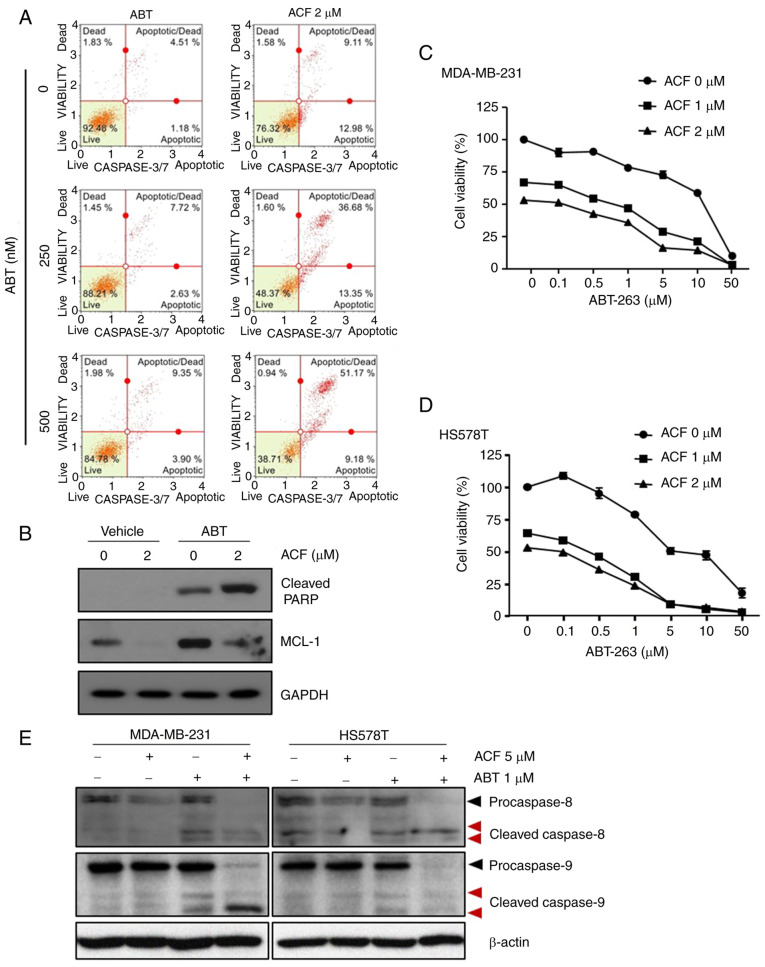
Myeloid cell leukemia sequence 1 (MCL‑1), an anti‑apoptotic B‑cell lymphoma 2 (BCL‑2) family molecule frequently amplified in various human cancer cells, is known to be critical for cancer cell survival. MCL‑1 has been recognized as a target molecule for cancer treatment. While various agents have emerged as potential MCL‑1 blockers, the present study presented acriflavine (ACF) as a novel MCL‑1 inhibitor in triple‑negative breast cancer (TNBC). Further evaluation of its treatment potential on lung adenocarcinoma and glioblastoma multiforme (GBM) was also investigated. The anticancer effect of ACF on TNBC cells was demonstrated when MDA‑MB‑231 and HS578T cells were treated with ACF. ACF significantly induced typical intrinsic apoptosis in TNBCs in a dose‑ and time‑dependent manner via MCL‑1 downregulation. MCL‑1 downregulation by ACF treatment was revealed at each phase of protein expression. Initially, transcriptional regulation via reverse transcription‑quantitative PCR was validated. Then, post‑translational regulation was explained by utilizing an inhibitor against protein biosynthesis and proteasome. Lastly, immunoprecipitation of ubiquitinated MCL‑1 confirmed the post‑translational downregulation of MCL‑1. In addition, the synergistic treatment efficacy of ACF with the well‑known MCL‑1 inhibitor ABT‑263 against the TNBC cells was explored [combination index (CI)<1]. Conjointly, the anticancer effect of ACF was assessed in GBM (U87, U251 and U343), and lung cancer (A549 and NCI‑H69) cell lines as well, using immunoblotting, cytotoxicity assay and FACS. The effect of the combination treatment using ACF and ABT‑263 was estimated in GBM (U87, U343 and U251), and non‑small cell lung cancer (A549) cells likewise. The present study suggested a novel MCL‑1 inhibitory function of ACF and the synergistic antitumor effect with ABT‑263.
髓系细胞白血病序列 1(MCL-1)是一种抗凋亡 B 细胞淋巴瘤 2(BCL-2)家族分子,在各种人类癌细胞中经常扩增,已知对癌细胞存活至关重要。MCL-1 已被视为癌症治疗的靶标分子。虽然已经出现了各种作为潜在 MCL-1 阻断剂的药物,但本研究提出吖啶黄素(ACF)作为三阴性乳腺癌(TNBC)的新型 MCL-1 抑制剂。还研究了其在肺腺癌和多形性胶质母细胞瘤(GBM)中的治疗潜力。当 MDA-MB-231 和 HS578T 细胞用 ACF 处理时,ACF 对 TNBC 细胞的抗癌作用得到了证明。ACF 通过下调 MCL-1 以剂量和时间依赖性方式在 TNBC 中显著诱导典型的内在细胞凋亡。ACF 处理后 MCL-1 下调在蛋白表达的各个阶段均得到揭示。最初,通过反转录定量 PCR 验证了转录调节。然后,通过利用针对蛋白质生物合成和蛋白酶体的抑制剂来解释翻译后调节。最后,泛素化 MCL-1 的免疫沉淀证实了 MCL-1 的翻译后下调。此外,还探索了 ACF 与众所周知的 MCL-1 抑制剂 ABT-263 联合治疗 TNBC 细胞的协同治疗效果[组合指数(CI)<1]。同样,通过免疫印迹、细胞毒性测定和 FACS 评估了 ACF 在 GBM(U87、U251 和 U343)和肺癌(A549 和 NCI-H69)细胞系中的抗癌作用。同样,估计了在 GBM(U87、U343 和 U251)和非小细胞肺癌(A549)细胞中使用 ACF 和 ABT-263 进行联合治疗的效果。本研究提出了 ACF 的新型 MCL-1 抑制功能以及与 ABT-263 的协同抗肿瘤作用。