Department of Psychiatry and Psychotherapy, University Medical Center (UMG), Georg-August-University, Von-Siebold-Str. 5, 37075, Göttingen, Germany.
Department of Neuropathology, Heinrich-Heine-University, Düsseldorf, Germany.
Cell Mol Life Sci. 2021 Dec 16;79(1):55. doi: 10.1007/s00018-021-04062-8.
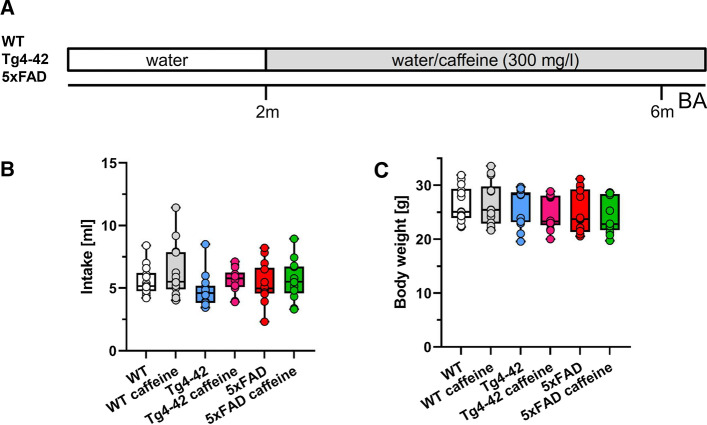
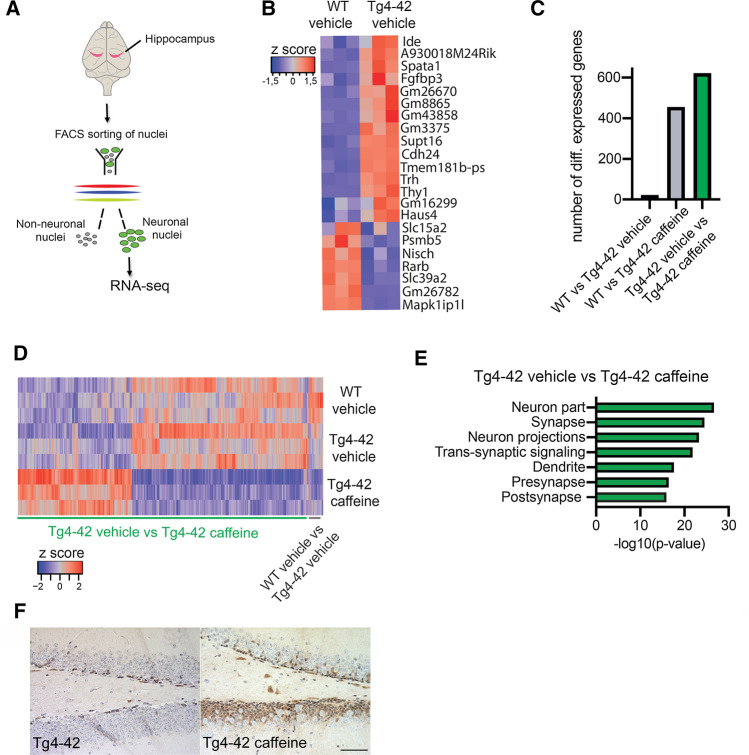
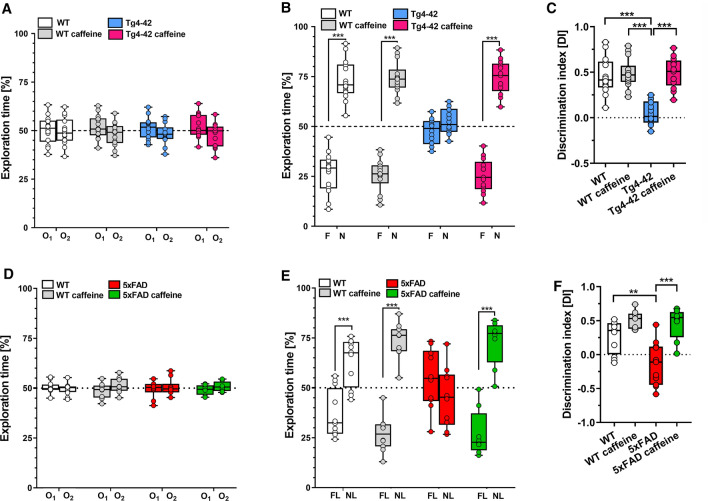
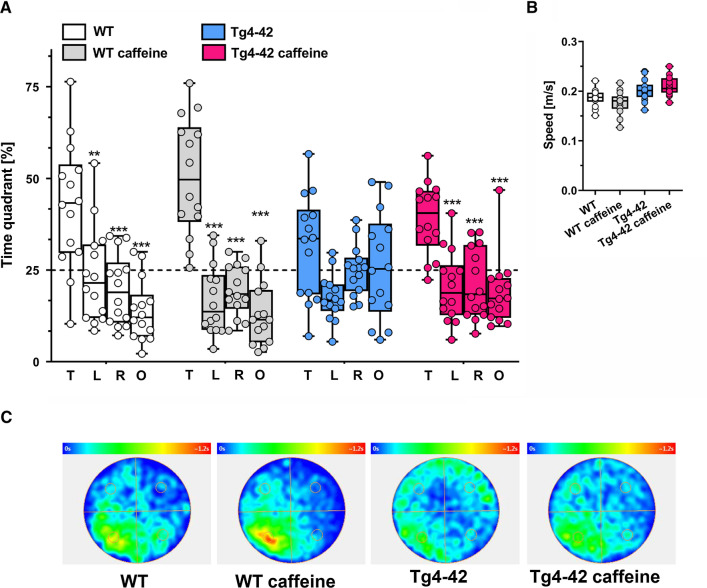
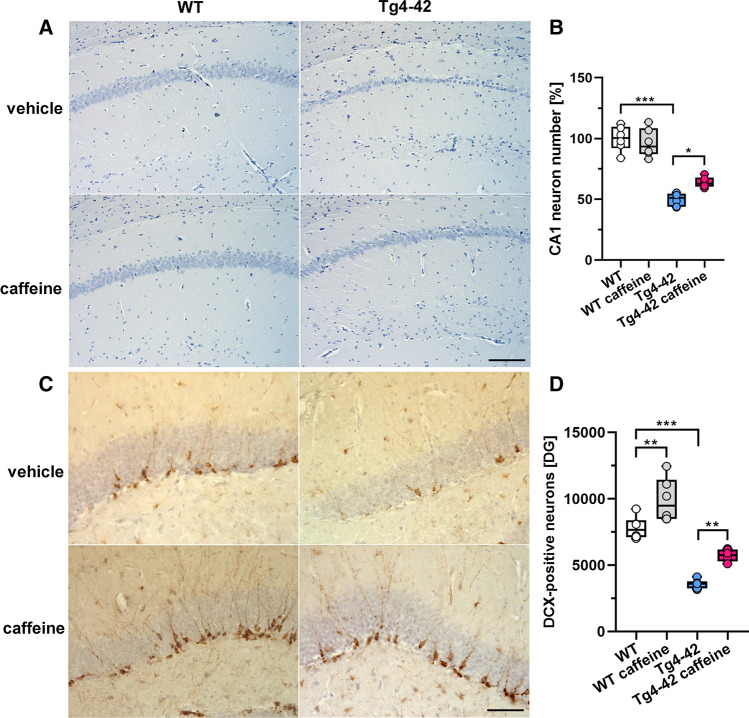
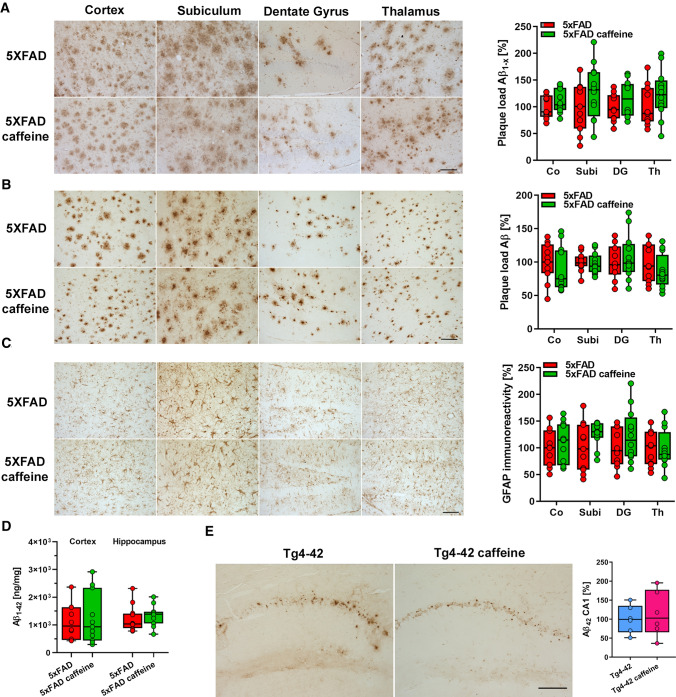
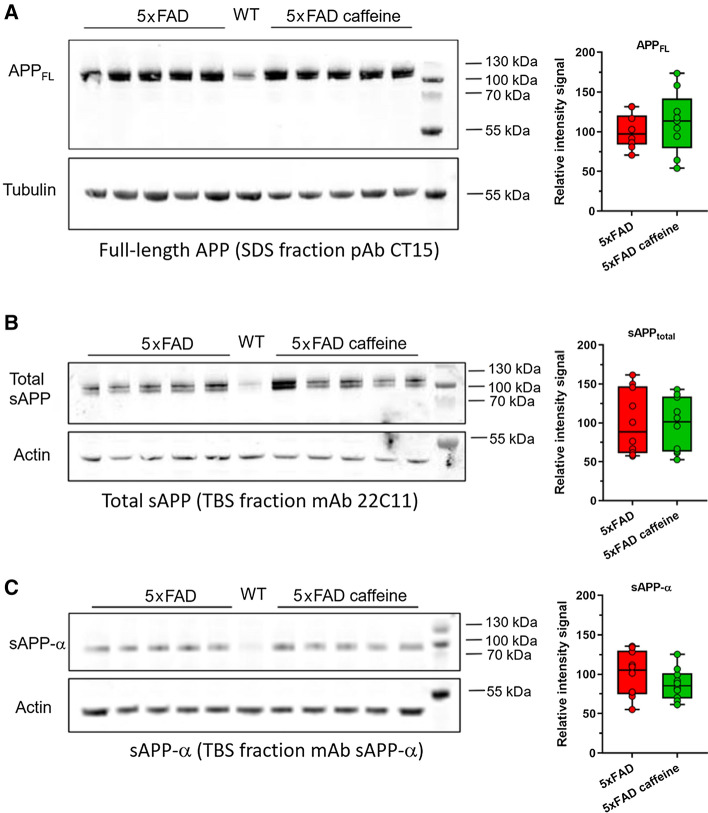
Epidemiological studies indicate that the consumption of caffeine, the most commonly ingested psychoactive substance found in coffee, tea or soft drinks, reduces the risk of developing Alzheimer's disease (AD). Previous treatment studies with transgenic AD mouse models reported a reduced amyloid plaque load and an amelioration of behavioral deficits. It has been further shown that moderate doses of caffeine have the potential to attenuate the health burden in preclinical mouse models of a variety of brain disorders (reviewed in Cunha in J Neurochem 139:1019-1055, 2016). In the current study, we assessed whether long-term caffeine consumption affected hippocampal neuron loss and associated behavioral deficits in the Tg4-42 mouse model of AD. Treatment over a 4-month period reduced hippocampal neuron loss, rescued learning and memory deficits, and ameliorated impaired neurogenesis. Neuron-specific RNA sequencing analysis in the hippocampus revealed an altered expression profile distinguished by the up-regulation of genes linked to synaptic function and processes, and to neural progenitor proliferation. Treatment of 5xFAD mice, which develop prominent amyloid pathology, with the same paradigm also rescued behavioral deficits but did not affect extracellular amyloid-β (Aβ) levels or amyloid precursor protein (APP) processing. These findings challenge previous assumptions that caffeine is anti-amyloidogenic and indicate that the promotion of neurogenesis might play a role in its beneficial effects.
流行病学研究表明,咖啡因是咖啡、茶或软饮料中最常见的摄入型精神活性物质,其消费可降低阿尔茨海默病(AD)的发病风险。先前对转基因 AD 小鼠模型的治疗研究报告称,咖啡因可减少淀粉样斑块负荷并改善行为缺陷。进一步的研究表明,中等剂量的咖啡因具有减轻各种脑疾病的临床前小鼠模型中的健康负担的潜力(Cunha 在 J Neurochem 139:1019-1055, 2016 中综述)。在本研究中,我们评估了长期咖啡因消耗是否会影响 AD 的 Tg4-42 小鼠模型中海马神经元的丢失和相关行为缺陷。经过 4 个月的治疗,可减少海马神经元的丢失,挽救学习和记忆缺陷,并改善受损的神经发生。海马中的神经元特异性 RNA 测序分析显示,表达谱发生改变,与突触功能和过程以及神经祖细胞增殖相关的基因上调。用相同的方案治疗 5xFAD 小鼠(其具有明显的淀粉样蛋白病理学)也可挽救行为缺陷,但不会影响细胞外淀粉样蛋白-β(Aβ)水平或淀粉样前体蛋白(APP)的处理。这些发现挑战了先前关于咖啡因具有抗淀粉样蛋白特性的假设,并表明促进神经发生可能在其有益作用中发挥作用。