Wennmann Merlin, Kathemann Simone, Kampmann Kristina, Ohlsson Sinja, Büscher Anja, Holzinger Dirk, Della Marina Adela, Lainka Elke
Department of Pediatric Gastroenterology, Hepatology and Liver Transplantation, University Children's Hospital, Essen, Germany.
Department of Pediatric Nephrology and Kidney Transplantation, University Children's Hospital, Essen, Germany.
Front Pediatr. 2021 Nov 30;9:651323. doi: 10.3389/fped.2021.651323. eCollection 2021.
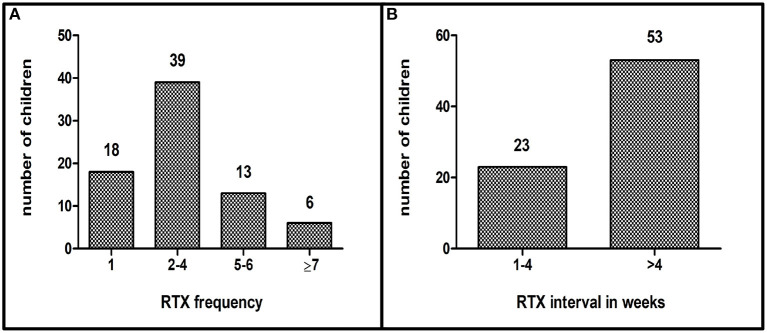
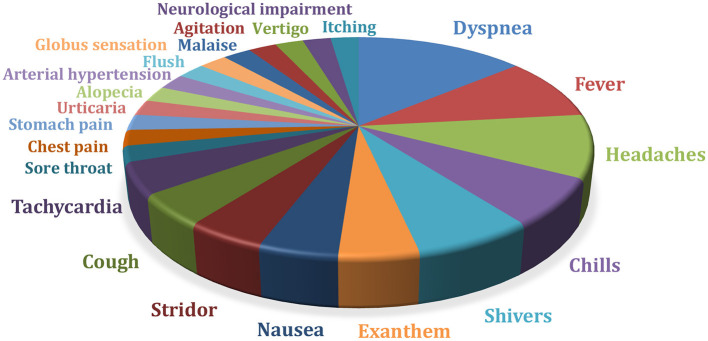
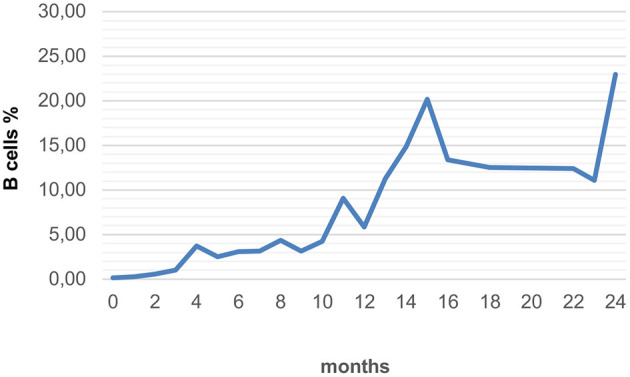
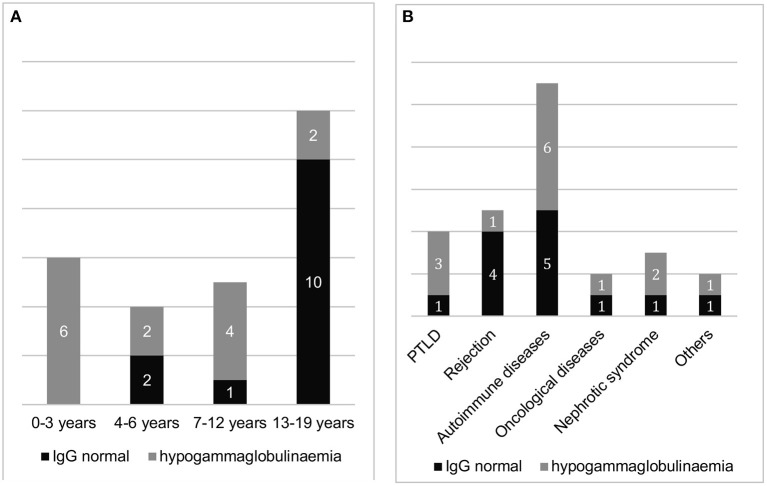
Rituximab (RTX) is used in cancer therapy as well as in the treatment of autoimmune diseases and alloimmune responses after transplantation. It depletes the disease-causing B cells by binding to the CD (cluster of differentiation) 20 antigen. We evaluate different pediatric treatment protocols (via fixed treatment schedule, B cell- or symptom-controlled) and their therapeutic effects. Demographic information, clinical and laboratory characteristics, and special laboratory values such as immunoglobulin G (IgG), CD19 positive B cells and Epstein-Barr viral load were retrospectively analyzed in children treated with RTX between 2008 and 2016. Seventy-six patients aged 1 to 19 (median 13) years were treated with 259 RTX infusions. The spectrum of diseases was very heterogeneous. RTX led to a complete depletion of the B cells. The reconstitution time varied between patients and was dependent on the application schedule (median 11.8 months). Fourteen out of 27 (52%) patients developed hypogammaglobulinaemia. The risk of IgG deficiency was 2.6 times higher in children under 4 years of age than in olderones. In the last group IgG deficiency developed in only 38% of the cases ( = 8). Recurrent and severe infections were observed each in 11/72 (15%) patients. Treatment-related reactions occurred in 24/76 (32%) cases; however, treatment had to be discontinued in only 1 case. In 16/25 (76%), the Epstein-Barr viral load dropped below the detection limit after the first RTX infusion. RTX is an effective and well-tolerated drug for the treatment of oncological diseases as well as autoimmune and alloimmune conditions in children. B cell depletion and reconstitution varies both intra- und interindividually, suggesting that symptom-oriented and B cell-controlled therapy may be favorable. Treatment-related reactions, IgG deficiency and infections must be taken into account.
利妥昔单抗(RTX)用于癌症治疗以及自身免疫性疾病的治疗和移植后的同种免疫反应。它通过与CD(分化簇)20抗原结合来清除致病B细胞。我们评估了不同的儿科治疗方案(通过固定治疗时间表、B细胞控制或症状控制)及其治疗效果。对2008年至2016年期间接受RTX治疗的儿童的人口统计学信息、临床和实验室特征以及特殊实验室值,如免疫球蛋白G(IgG)、CD19阳性B细胞和爱泼斯坦-巴尔病毒载量进行了回顾性分析。76例年龄在1至19岁(中位数13岁)的患者接受了259次RTX输注。疾病谱非常异质。RTX导致B细胞完全耗竭。重建时间因患者而异,并且取决于应用时间表(中位数11.8个月)。27例患者中有14例(52%)发生低丙种球蛋白血症。4岁以下儿童IgG缺乏的风险比年龄较大儿童高2.6倍。在最后一组中,仅38%的病例(n = 8)发生IgG缺乏。72例患者中有11例(15%)观察到反复严重感染。24/76(32%)例发生治疗相关反应;然而,仅1例治疗不得不中断。在16/25(76%)的患者中,首次RTX输注后爱泼斯坦-巴尔病毒载量降至检测限以下。RTX是治疗儿童肿瘤疾病以及自身免疫和同种免疫疾病的一种有效且耐受性良好的药物。B细胞耗竭和重建在个体内和个体间均有所不同,这表明以症状为导向和B细胞控制的治疗可能是有利的。必须考虑治疗相关反应、IgG缺乏和感染。