Minnig Margaret A, Park Tayun, Echeveste Sanchez Maria, Cottone Pietro, Sabino Valentina
Laboratory of Addictive Disorders, Department of Pharmacology and Experimental Therapeutics, Boston University School of Medicine, Boston, MA, United States.
Front Behav Neurosci. 2021 Dec 3;15:787362. doi: 10.3389/fnbeh.2021.787362. eCollection 2021.
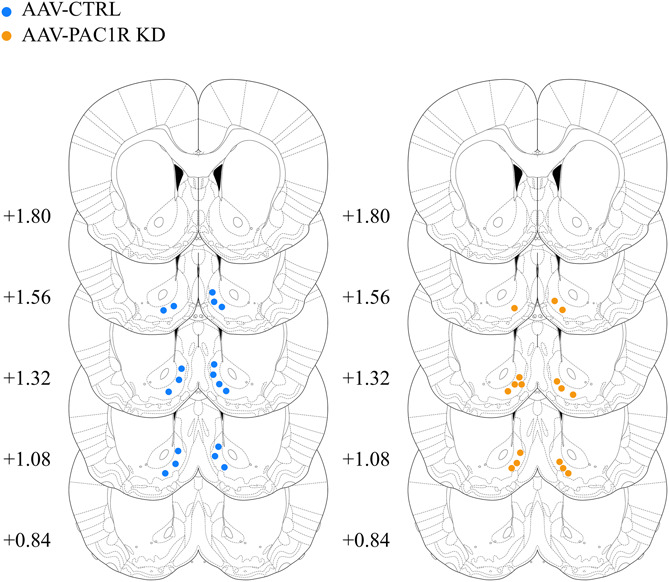
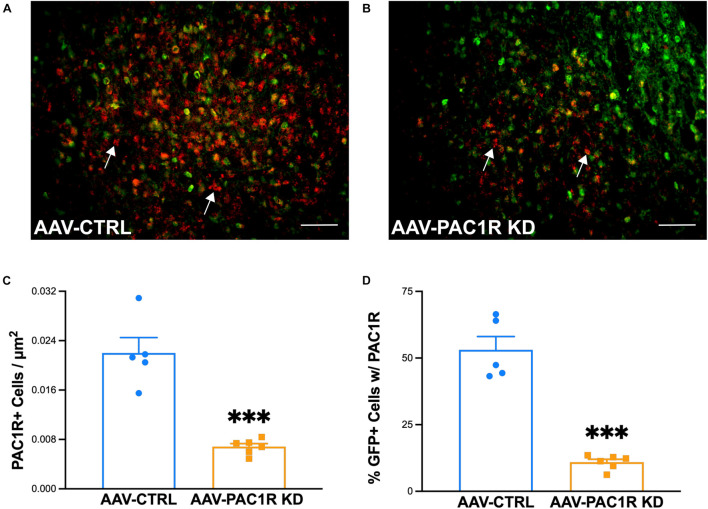
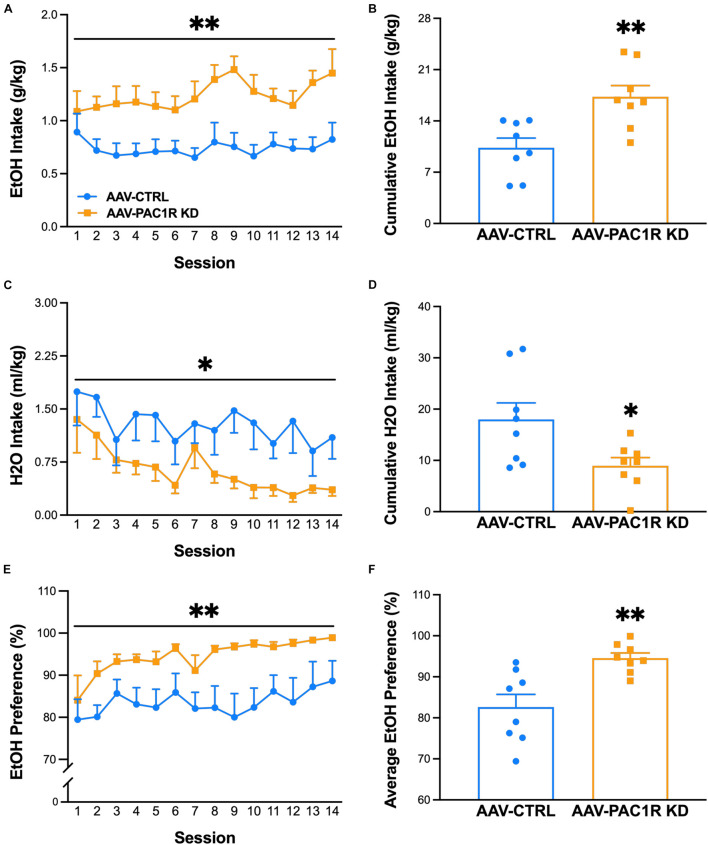
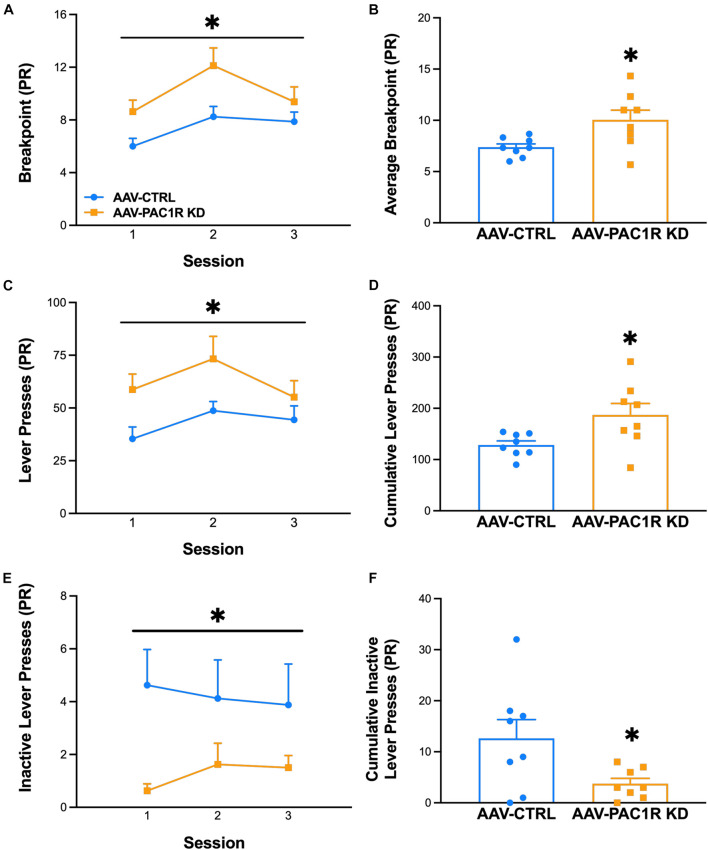
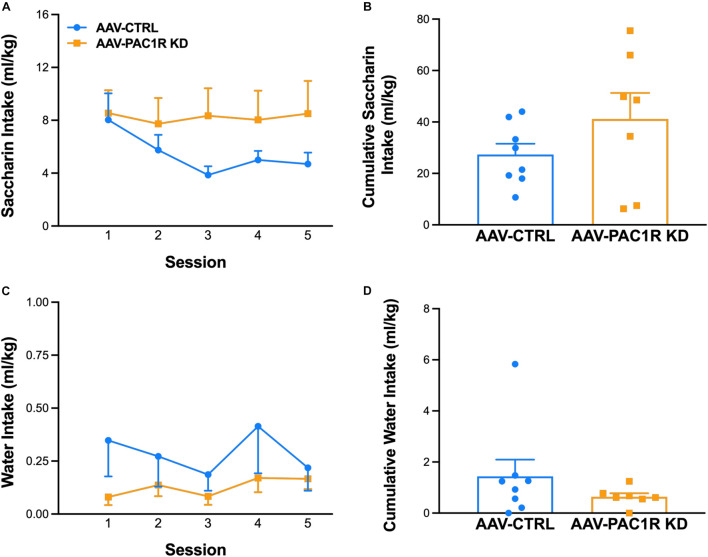
Alcohol use disorder (AUD) is a chronic, relapsing disorder whose genetic and environmental susceptibility components are not fully understood. Neuropeptidergic signaling has been repeatedly implicated in modulating excessive alcohol drinking, especially within sub-regions of the striatum. Here, we investigated the potential involvement of the selective receptor for pituitary adenylate cyclase-activating polypeptide (PACAP), PAC1R, in the nucleus accumbens shell (NAcc Shell) in excessive alcohol drinking in alcohol-preferring rats, an established animal model of the genetic propensity for alcoholism. Scr:sP alcohol-preferring rats were trained to operantly self-administer alcohol and then either an AAV virus short-hairpin RNA (shRNA) targeted to knockdown PAC1R, or an AAV control virus were microinfused into the NAcc Shell. NAcc Shell PAC1R shRNA knockdown virus was confirmed to significantly decrease PAC1R levels in the NAcc Shell. The effects of NAcc Shell PAC1R shRNA knockdown on ethanol self-administration were investigated using a Fixed Ratio (FR) 1 and a Progressive Ratio (PR) schedule of reinforcement. The effect of PAC1R knockdown on self-administration of an alternative reinforcer, saccharin, was also assessed. The results showed that the reduction in PAC1R in the NAcc Shell led to excessive ethanol drinking, increased preference for ethanol, and higher motivation to drink. NAcc Shell PAC1R shRNA knockdown did not comparably increase saccharin self-administration, suggesting selectivity of action. These data suggest that NAcc Shell PAC1R may serves as a "brake" on alcohol drinking, and thereby the loss of function of PAC1R leads to excessive alcohol consumption. Therefore, the PACAP/PAC1R system may represent a novel target for the treatment of AUD.
酒精使用障碍(AUD)是一种慢性复发性疾病,其遗传和环境易感性成分尚未完全明确。神经肽能信号传导反复参与调节过度饮酒,尤其是在纹状体的亚区域内。在此,我们研究了垂体腺苷酸环化酶激活多肽(PACAP)的选择性受体PAC1R在伏隔核壳(NAcc壳)中对酒精偏好大鼠过度饮酒的潜在作用,酒精偏好大鼠是一种已确立的酒精成瘾遗传倾向动物模型。将Scr:sP酒精偏好大鼠训练为通过操作自行摄入酒精,然后将靶向敲低PAC1R的腺相关病毒(AAV)短发夹RNA(shRNA)或AAV对照病毒微量注入NAcc壳。证实NAcc壳PAC1R shRNA敲低病毒可显著降低NAcc壳中的PAC1R水平。使用固定比率(FR)1和渐进比率(PR)强化程序研究了NAcc壳PAC1R shRNA敲低对乙醇自我给药的影响。还评估了PAC1R敲低对另一种强化剂糖精自我给药的影响。结果表明,NAcc壳中PAC1R的减少导致过度饮酒、对乙醇的偏好增加以及更高的饮酒动机。NAcc壳PAC1R shRNA敲低并没有同等程度地增加糖精自我给药,表明作用具有选择性。这些数据表明,NAcc壳PAC1R可能作为饮酒的“刹车”,因此PAC1R功能丧失会导致过度饮酒。因此,PACAP/PAC1R系统可能是治疗AUD的新靶点。