Enocsson Helena, Idoff Cornelia, Gustafsson Annette, Govender Melissa, Hopkins Francis, Larsson Marie, Nilsdotter-Augustinsson Åsa, Sjöwall Johanna
Division of Inflammation and Infection, Department of Biomedical and Clinical Sciences, Linköping University, Linköping, Sweden.
Department of Infectious Diseases, The Vrinnevi Hospital, Norrköping, Sweden.
Front Med (Lausanne). 2021 Dec 2;8:791716. doi: 10.3389/fmed.2021.791716. eCollection 2021.
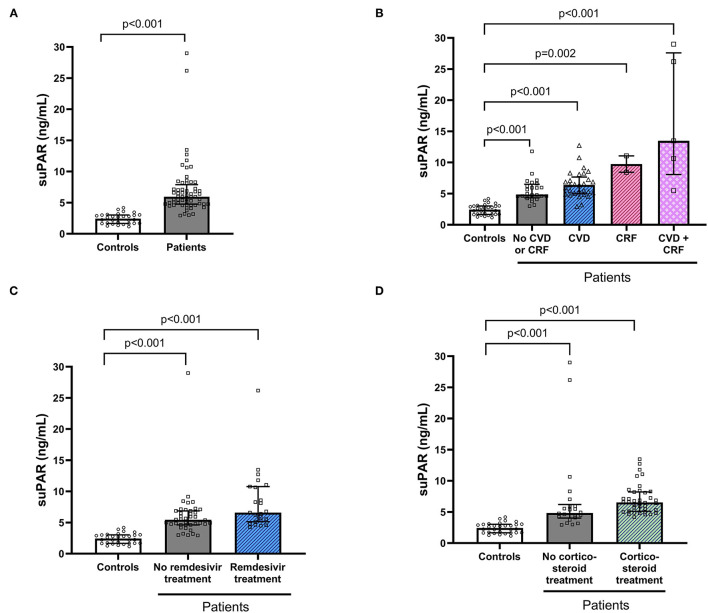
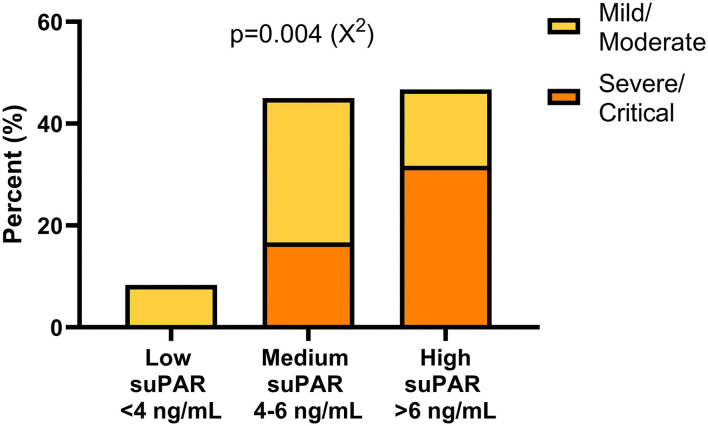
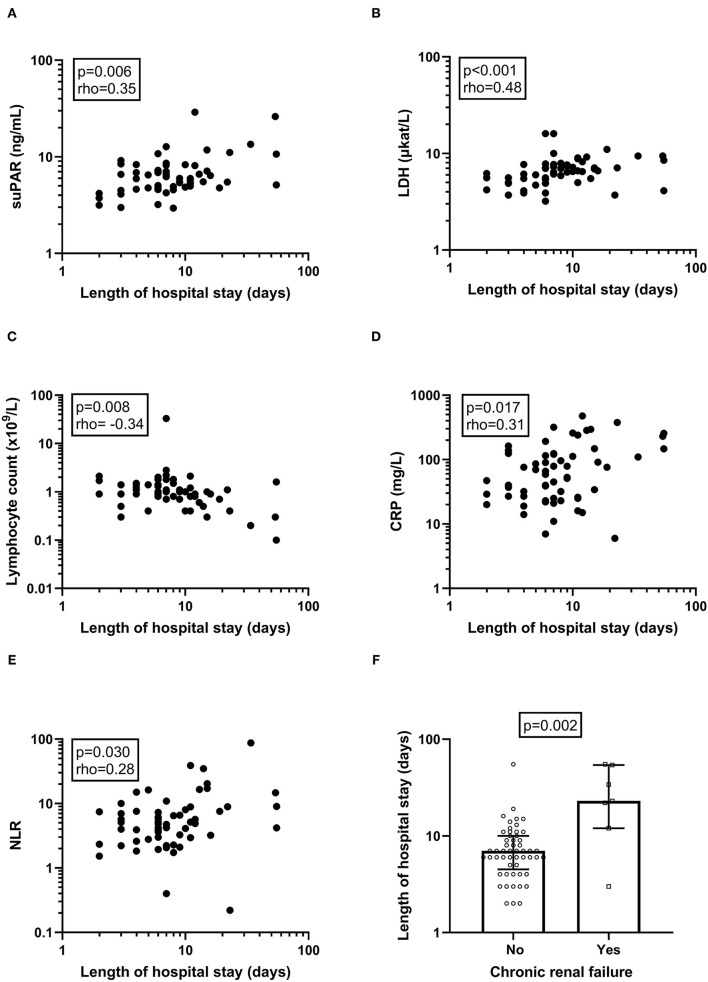
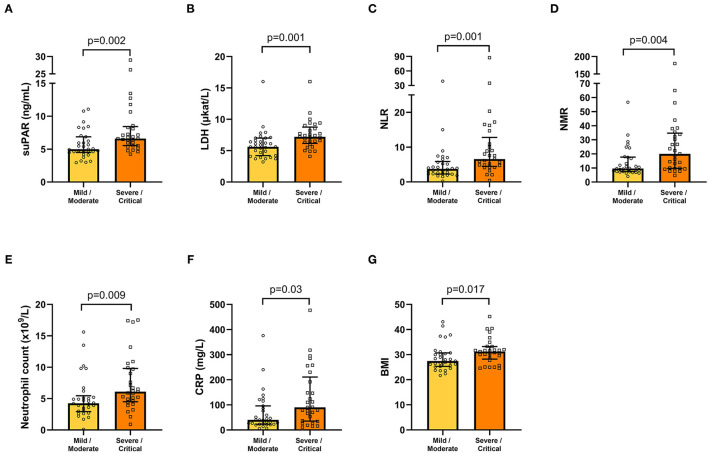
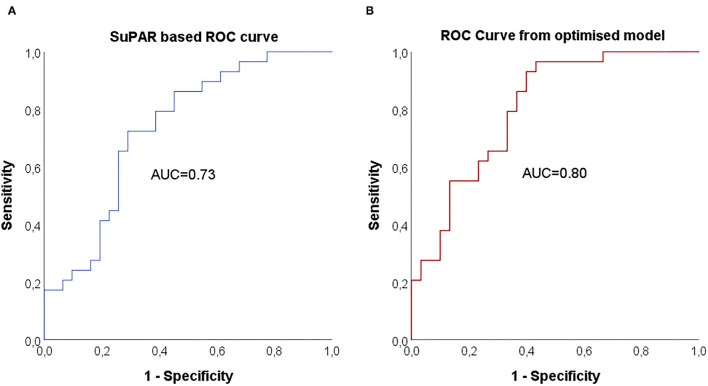
Efficient healthcare based on prognostic variables in hospitalised patients with COVID-19 could reduce the risk of complications and death. Recently, soluble urokinase Plasminogen Activator Receptor (suPAR) was shown to predict respiratory failure, kidney injury, and clinical outcome in patients with SARS-CoV-2 infection. The aim of this study was to investigate the value of suPAR as a prognostic tool, in comparison with other variables, regarding disease severity and length of hospital stay in patients with COVID-19. Individuals hospitalised with COVID-19 (40 males, 20 females; median age 57.5 years) with a median symptom duration of 10 days and matched, healthy controls ( = 30) were included. Admission levels of suPAR were measured in serum by enzyme-linked immunosorbent assay. Blood cell counts, C-reactive protein (CRP) levels, lactate dehydrogenase (LDH), plasma creatinine and estimated glomerular filtration rates were analysed and oxygen demand, level of care and length of hospitalisation recorded. Patients had significantly higher suPAR levels compared to controls ( < 0.001). Levels were higher in severely/critically (median 6.6 ng/mL) compared with moderately ill patients (median 5.0 ng/mL; = 0.002). In addition, suPAR levels correlated with length of hospitalisation (rho = 0.35; = 0.006). Besides suPAR, LDH, CRP, neutrophil count, neutrophil-to-monocyte and neutrophil-to-lymphocyte ratio, body mass index and chronic renal failure were discriminators of COVID-19 severity and/or predictors of length of hospitalisation. Admission levels of suPAR were higher in patients who developed severe/critical COVID-19 and associated with length of hospital stay. In addition, we showed that suPAR functioned as an independent predictor of COVID-19 disease severity.
基于新冠病毒肺炎住院患者预后变量的高效医疗可降低并发症和死亡风险。最近,可溶性尿激酶型纤溶酶原激活物受体(suPAR)被证明可预测新冠病毒感染患者的呼吸衰竭、肾损伤及临床结局。本研究旨在探讨与其他变量相比,suPAR作为预测工具对于新冠病毒肺炎患者疾病严重程度和住院时间的价值。纳入了新冠病毒肺炎住院患者(40例男性,20例女性;中位年龄57.5岁,症状持续时间中位数为10天)及匹配的健康对照者(n = 30)。采用酶联免疫吸附测定法检测血清中suPAR的入院水平。分析血细胞计数、C反应蛋白(CRP)水平、乳酸脱氢酶(LDH)、血浆肌酐及估算肾小球滤过率,并记录氧需求、护理级别及住院时间。与对照组相比,患者的suPAR水平显著更高(P < 0.001)。重度/危重症患者的suPAR水平(中位数6.6 ng/mL)高于中度患者(中位数5.0 ng/mL;P = 0.002)。此外,suPAR水平与住院时间相关(rho = 0.35;P = 0.006)。除suPAR外,LDH、CRP、中性粒细胞计数、中性粒细胞与单核细胞比值及中性粒细胞与淋巴细胞比值、体重指数和慢性肾衰竭是新冠病毒肺炎严重程度和/或住院时间预测指标。发生重度/危重症新冠病毒肺炎患者的suPAR入院水平更高,且与住院时间相关。此外,我们表明suPAR可作为新冠病毒肺炎疾病严重程度的独立预测指标。