Kelly James M, Amor-Coarasa Alejandro, Sweeney Elizabeth, Wilson Justin J, Causey Patrick W, Babich John W
Department of Radiology, Molecular Imaging Innovations Institute (MI3), Weill Cornell Medicine, New York, NY, 10065, USA.
Department of Radiology, Albert Einstein College of Medicine, Bronx, NY, 10461, USA.
EJNMMI Radiopharm Chem. 2021 Dec 20;6(1):38. doi: 10.1186/s41181-021-00151-y.
As Ac-labeled radiopharmaceuticals continue to show promise as targeted alpha therapeutics, there is a growing need to standardize quality control (QC) testing procedures. The determination of radiochemical purity (RCP) is an essential QC test. A significant obstacle to RCP testing is the disruption of the secular equilibrium between actinium-225 and its daughter radionuclides during labeling and QC testing. In order to accelerate translation of actinium-225 targeted alpha therapy, we aimed to determine the earliest time point at which the RCP of an Ac-labeled radiopharmaceutical can be accurately quantified.
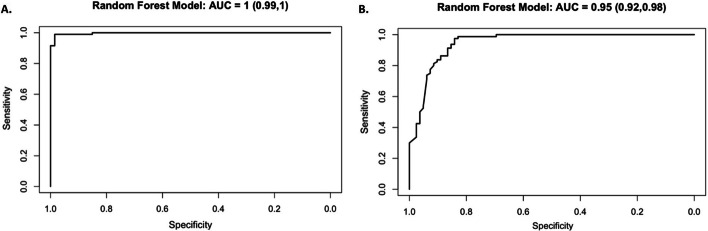
Six ligands were conjugated to macrocyclic metal chelators and labeled with actinium-225 under conditions designed to generate diverse incorporation yields. RCP was determined by radio thin layer chromatography (radioTLC) followed by exposure of the TLC plate on a phosphor screen either 0.5, 2, 3.5, 5, 6.5, or 26 h after the plate was developed. The dataset was used to create models for predicting the true RCP for any pre-equilibrium measurement taken at an early time point. The 585 TLC measurements span RCP values of 1.8-99.5%. The statistical model created from these data predicted an independent data set with high accuracy. Predictions made at 0.5 h are more uncertain than predictions made at later time points. This is primarily due to the decay of bismuth-213. A measurement of RCP > 90% at 2 h predicts a true RCP > 97% and guarantees that RCP will exceed 90% after secular equilibrium is reached. These findings were independently validated using NaI(Tl) scintillation counting and high resolution gamma spectroscopy on a smaller set of samples with 10% ≤ RCP ≤ 100%.
RCP of Ac-labeled radiopharmaceuticals can be quantified with acceptable accuracy at least 2 h after radioTLC using various methods of quantifying particle emissions. This time point best balances the need to accurately quantify RCP with the need to safely release the batch as quickly as possible.
随着锕标记的放射性药物作为靶向α治疗剂持续展现出前景,对质量控制(QC)测试程序进行标准化的需求日益增长。放射化学纯度(RCP)的测定是一项至关重要的QC测试。RCP测试的一个重大障碍是在标记和QC测试过程中,锕-225与其子放射性核素之间的长期平衡被破坏。为了加速锕-225靶向α治疗的转化,我们旨在确定能够准确量化锕标记放射性药物RCP的最早时间点。
六种配体与大环金属螯合剂共轭,并在旨在产生不同掺入产率的条件下用锕-225进行标记。通过放射性薄层色谱法(radioTLC)测定RCP,然后在展开后的TLC板上分别于0.5、2、3.5、5、6.5或26小时后将TLC板暴露于磷光屏上。该数据集用于创建模型,以预测在早期时间点进行的任何预平衡测量的真实RCP。这585次TLC测量的RCP值范围为1.8 - 99.5%。根据这些数据创建的统计模型对独立数据集的预测具有很高的准确性。在0.5小时时做出的预测比在稍后时间点做出的预测更具不确定性。这主要是由于铋-213的衰变。在2小时时RCP>90%的测量预测真实RCP>97%,并保证在达到长期平衡后RCP将超过90%。使用碘化钠(铊)闪烁计数和高分辨率γ能谱对一组较小的RCP在10%≤RCP≤100%的样品进行独立验证,证实了这些发现。
使用各种量化粒子发射的方法,在radioTLC后至少2小时,可以以可接受的准确度量化锕标记放射性药物的RCP。这个时间点在准确量化RCP的需求与尽快安全放行批次的需求之间达到了最佳平衡。