Federal State Autonomous Institution N. N. Burdenko National Medical Research Center of Neurosurgery of the Ministry of Health of the Russian Federation, Moscow, Russian Federation.
Federal State Budget Educational Institution of Higher Education M. V. Lomonosov Moscow State University, Moscow, Russian Federation.
Eur J Med Res. 2021 Dec 20;26(1):151. doi: 10.1186/s40001-021-00614-7.
For patients with primary brain injury, septic shock is especially dangerous due to the possibility of secondary cerebral damage. The key factor of sepsis-associated brain injury is inflammatory mediators, pathogen and damage-associated molecular patterns (PAMPs, DAMPs) release. Theoretically, blood purification may be beneficial for patients with primary brain injury due to its possibility for fast removal of inflammatory mediators.
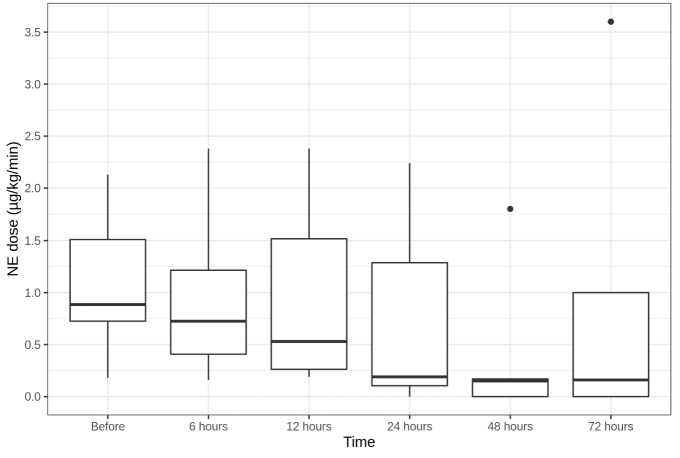
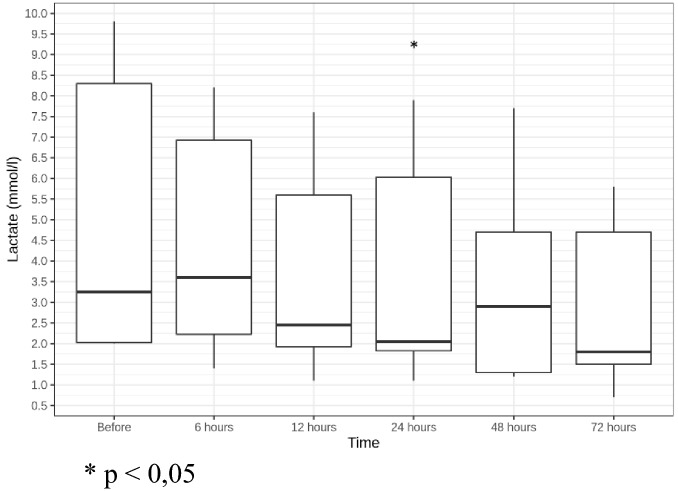
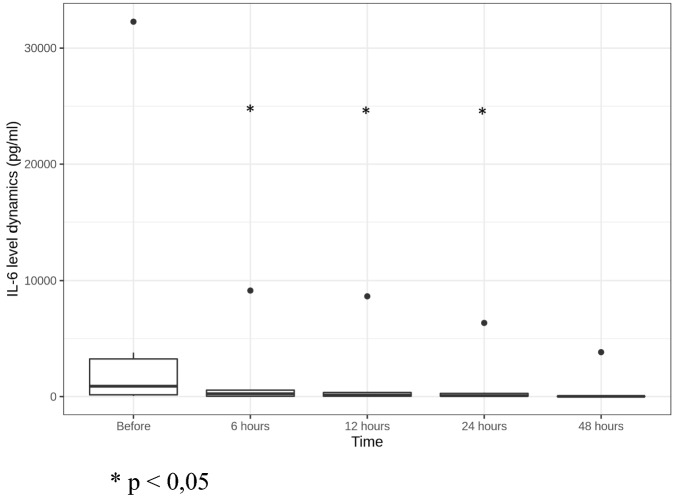
We report on six post-neurosurgery septic shock patients treated with combined blood purification (CBP), which included CRRT with high adsorption capacity membrane in combination with CytoSorb adsorber. Clinical improvement in the course of CBP was registered in all patients. Three patients had a stable clinical improvement; the other three patients had only a transient improvement due to underlying neurological and cardiac deficits aggravation. We observed septic shock reversal in four patients. The key observations of the case series are a significant decrease in MOF severity (measured by SOFA score) and in catecholamine need (not statistically significant). By the end of CBP we observed a significant decrease in blood lactate, PCT and IL-6 levels. Two patients demonstrated level of consciousness increase in the setting of CBP therapy measured by GCS and FOUR score.
This case series demonstrates that CBP therapy may have a role for septic shock patients with primary brain injury.
对于原发性脑损伤患者,由于可能发生继发性脑损伤,感染性休克尤其危险。与脓毒症相关的脑损伤的关键因素是炎症介质、病原体和损伤相关分子模式(PAMPs、DAMPs)的释放。理论上,由于可能快速清除炎症介质,血液净化可能对原发性脑损伤患者有益。
我们报告了 6 例神经外科手术后感染性休克患者接受联合血液净化(CBP)治疗的情况,其中包括高通量吸附膜 CRRT 与 CytoSorb 吸附剂联合使用。在 CBP 过程中,所有患者的临床状况均得到改善。3 例患者的临床改善稳定,另外 3 例患者仅因潜在的神经和心脏缺陷加重而出现短暂改善。我们观察到 4 例患者的感染性休克得到逆转。本病例系列的主要观察结果是多器官功能衰竭严重程度(通过 SOFA 评分衡量)和儿茶酚胺需求显著降低(无统计学意义)。在 CBP 结束时,我们观察到血液乳酸、PCT 和 IL-6 水平显著降低。在 CBP 治疗期间,2 例患者的意识水平增加,通过 GCS 和 FOUR 评分进行评估。
本病例系列表明,CBP 治疗可能对原发性脑损伤合并感染性休克患者有作用。