Li Changyan, Su Feng, Zhang Le, Liu Fang, Fan Wenxing, Li Zhen, Ma JingYuan
Department of Nephrology, the First Affiliated Hospital of Kunming Medical University, Kunming, Yunnan Province, People's Republic of China.
Institute for Integrative Genome Biology, University of California Riverside, Riverside, CA, USA.
J Inflamm Res. 2021 Dec 14;14:6871-6891. doi: 10.2147/JIR.S341032. eCollection 2021.
The prognosis of diabetic nephropathy is poor, and early diagnosis of diabetic nephropathy is challenging. Fortunately, searching for DN-specific markers based on machine algorithms can facilitate diagnosis.
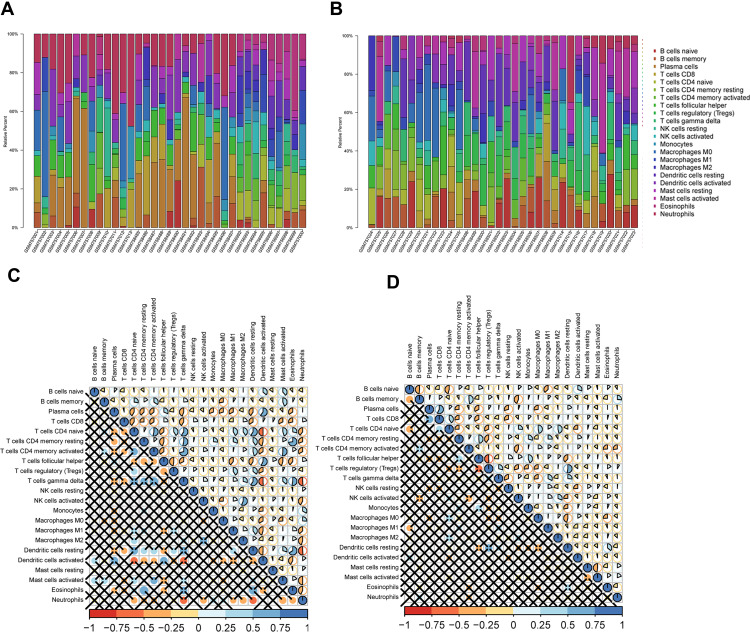
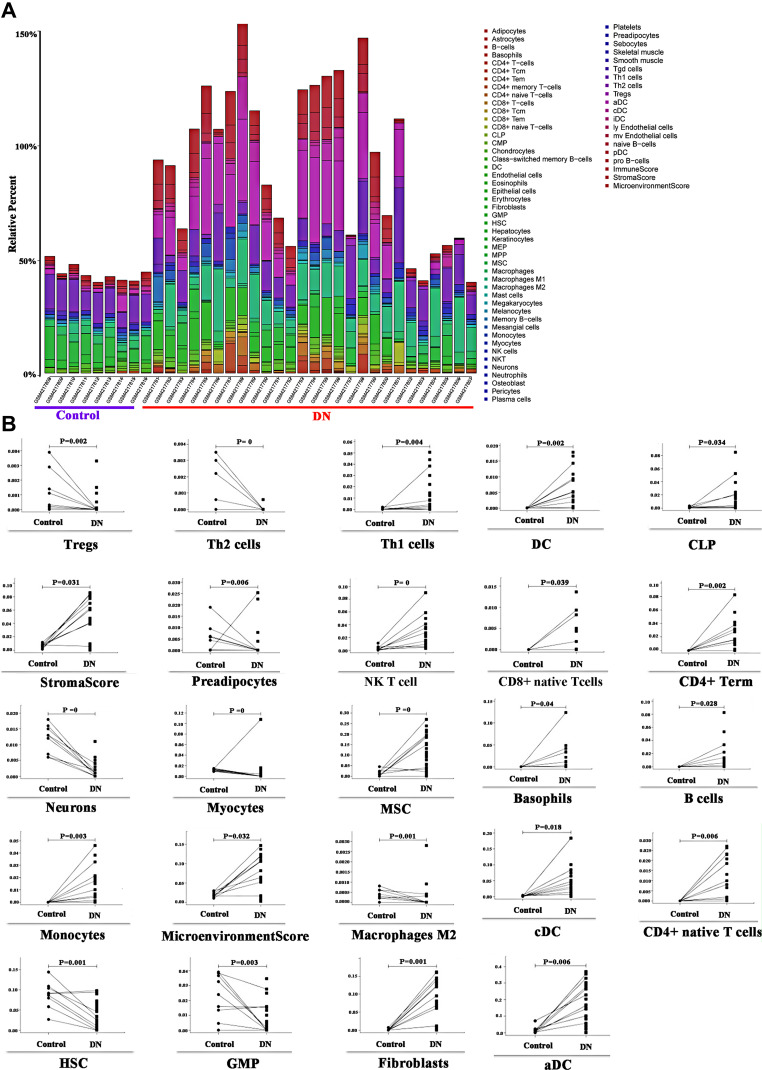
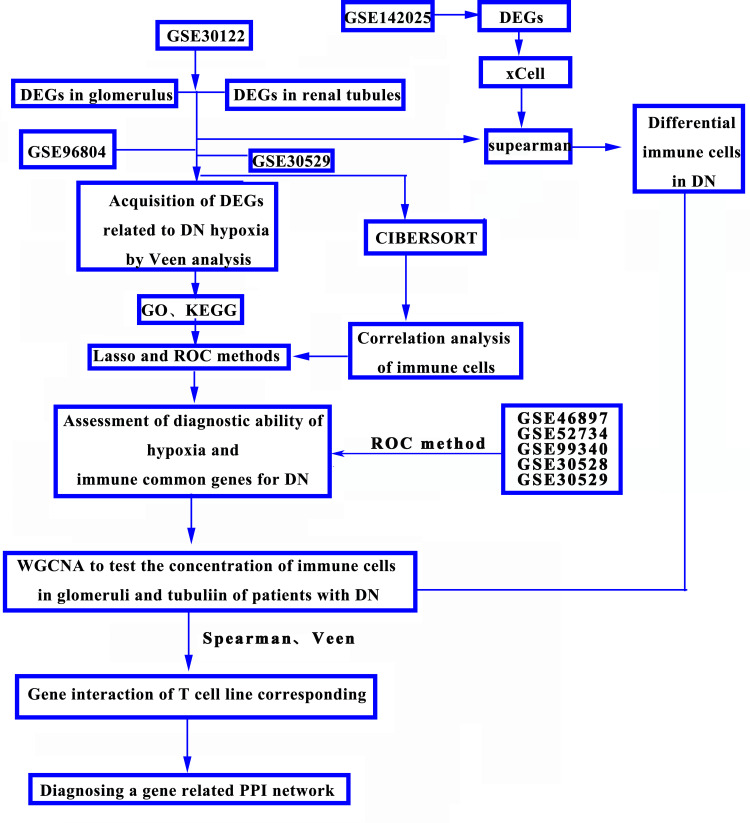
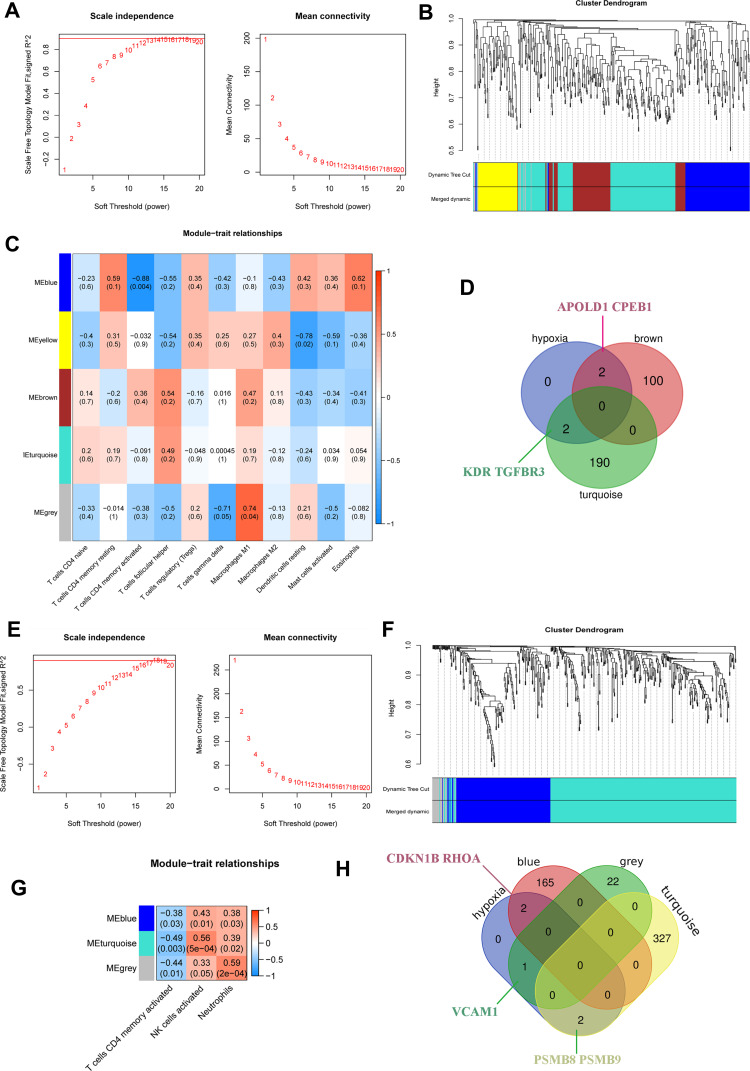
xCell model and CIBERSORT algorithm were used to analyze the relationship between immune cells and DN, and WGCNA analysis was used to evaluate the regulatory relationship between hypoxia gene and DN-related immune cells. Lasso regression and ROC regression were used to detect the ability of core genes to diagnose DN, the PPI network of core genes with high diagnostic ability was constructed, and the interaction between core genes was discussed.
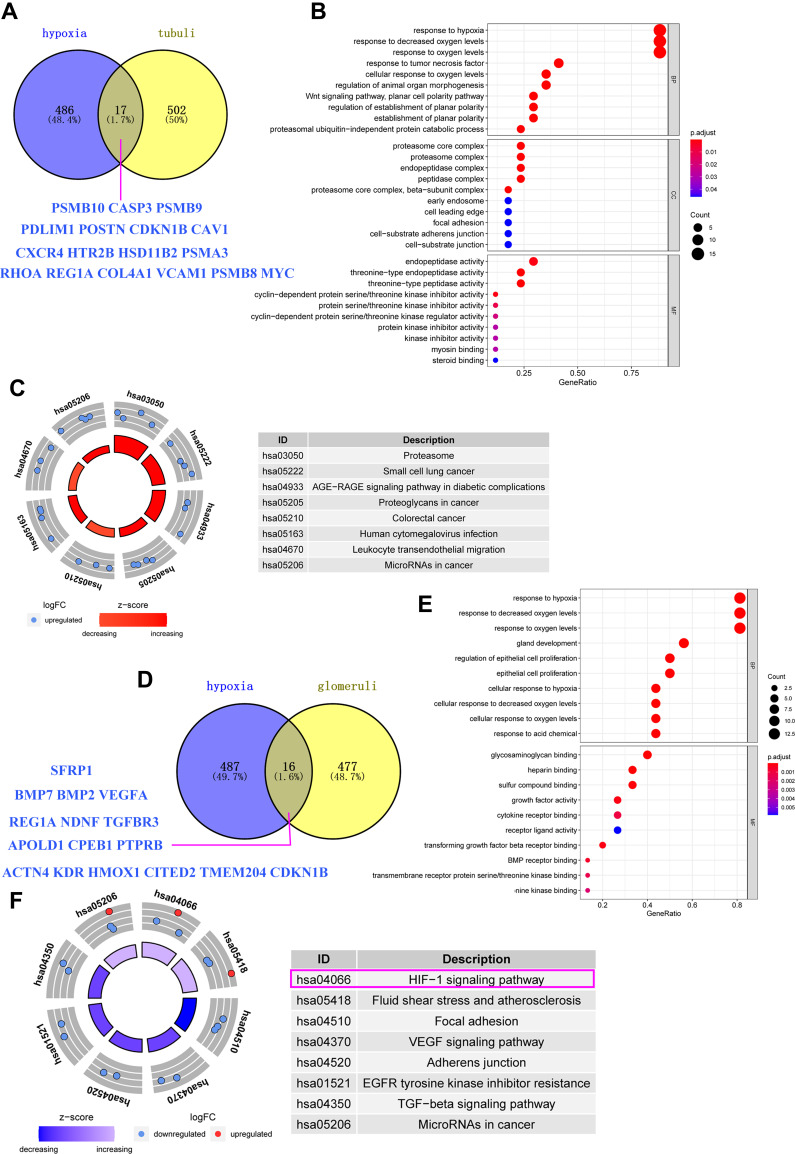
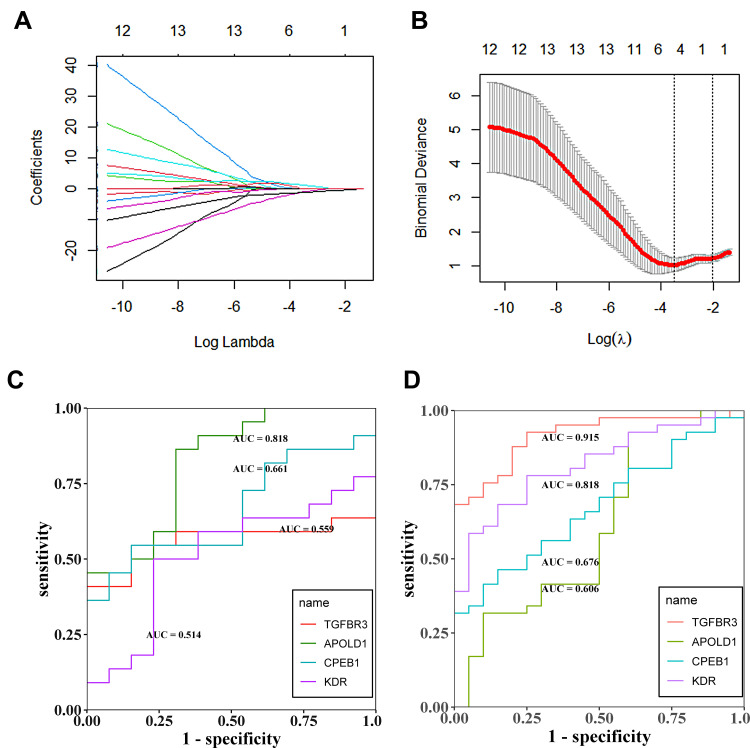
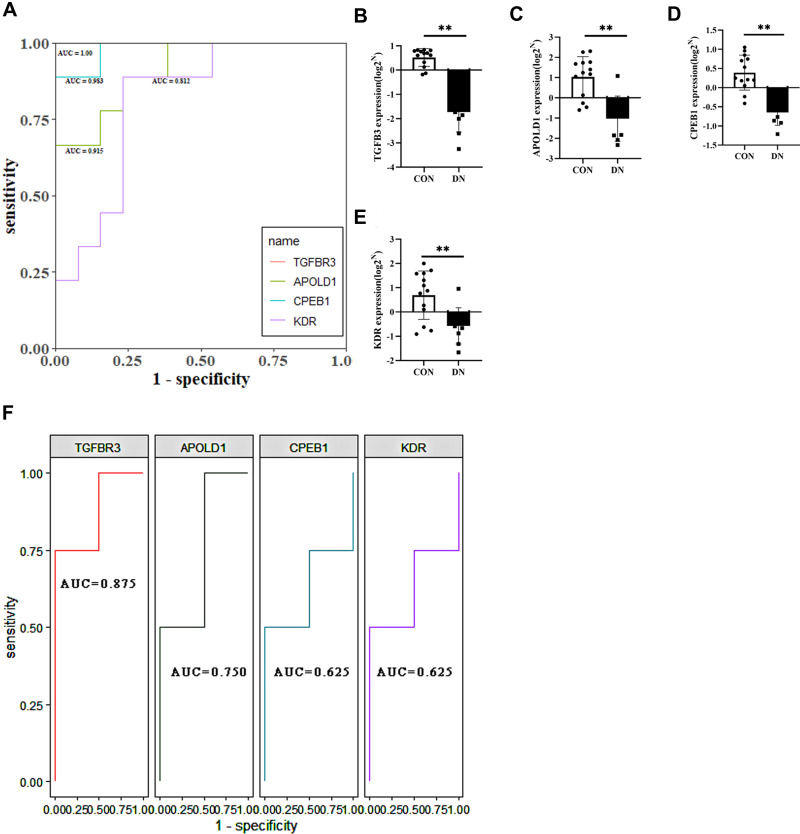
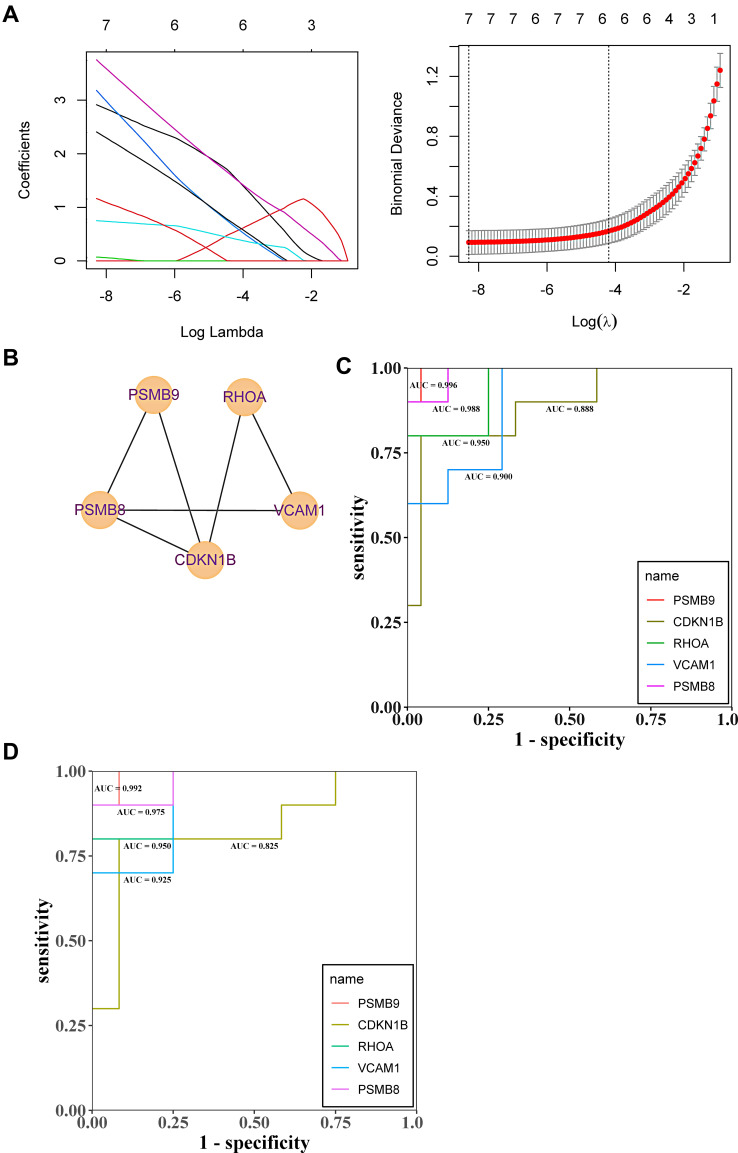
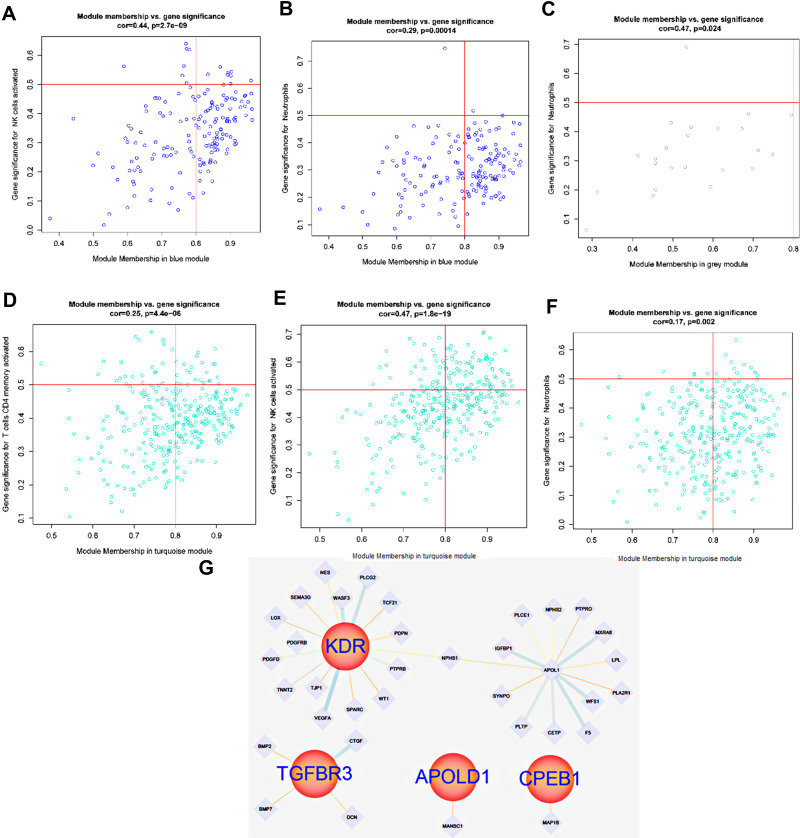
There were 519 differentially expressed genes in renal tubules and 493 differentially expressed genes in glomeruli. Immune and hypoxia responses are involved in the regulation of renal glomerulus and renal tubules. We found that there are 16 hypoxia-related genes involved in the regulation of hypoxia response. Seventeen hypoxia-related genes in renal tubules are involved in regulating hypoxia response on the proteasome signal pathway. Lasso and ROC regression were used to screen anoxic core genes. Further, we found that TGFBR3, APOLD1, CPEB1, and KDR are important in diagnosing DN glomerulopathy, respectively, PSMB8, PSMB9, RHOA, VCAM1, and CDKN1B, which have high specificity for renal tubulopathy in DN.
Hypoxia and immune reactions are involved in the progression of DN. T cells are the central immune response cells. TGFBR3, APOLD1, CPEB1, and KDR have higher diagnostic accuracy in the diagnosis of DN. PSMB8, PSMB9, RHOA, VCAM1, and CDKN1B have higher diagnostic accuracy in DN diagnosis.
糖尿病肾病预后较差,糖尿病肾病的早期诊断具有挑战性。幸运的是,基于机器学习算法寻找糖尿病肾病特异性标志物有助于诊断。
采用xCell模型和CIBERSORT算法分析免疫细胞与糖尿病肾病之间的关系,采用加权基因共表达网络分析(WGCNA)评估缺氧基因与糖尿病肾病相关免疫细胞之间的调控关系。采用套索回归和ROC回归检测核心基因诊断糖尿病肾病的能力,构建诊断能力高的核心基因的蛋白质-蛋白质相互作用(PPI)网络,并探讨核心基因之间的相互作用。
肾小管中有519个差异表达基因,肾小球中有493个差异表达基因。免疫和缺氧反应参与肾小球和肾小管的调节。我们发现有16个缺氧相关基因参与缺氧反应的调节。肾小管中的17个缺氧相关基因参与蛋白酶体信号通路的缺氧反应调节。采用套索回归和ROC回归筛选缺氧核心基因。此外,我们发现转化生长因子β受体3(TGFBR3)、无嘌呤/无嘧啶核酸内切酶1(APOLD1)、细胞质聚腺苷酸结合蛋白1(CPEB1)和激酶插入结构域受体(KDR)分别在诊断糖尿病肾病肾小球病变中起重要作用,蛋白酶体β型亚基8(PSMB8)、蛋白酶体β型亚基9(PSMB9)、RhoA小G蛋白(RHOA)、血管细胞黏附分子1(VCAM1)和细胞周期蛋白依赖性激酶抑制剂1B(CDKN1B)对糖尿病肾病肾小管病变具有高特异性。
缺氧和免疫反应参与糖尿病肾病的进展。T细胞是主要的免疫反应细胞。TGFBR3、APOLD1、CPEB1和KDR在糖尿病肾病诊断中具有较高诊断准确性。PSMB8、PSMB9、RHOA、VCAM1和CDKN1B在糖尿病肾病诊断中具有较高诊断准确性。