Boeijen Josi A, van der Velden Alike W, Hullegie Saskia, Platteel Tamara N, Zwart Dorien L M, Damoiseaux Roger A M J, Venekamp Roderick P, van de Pol Alma C
Julius Center for Health Sciences and Primary Care, University Medical Center Utrecht, Utrecht University, Heidelberglaan 100, 3584 CX Utrecht, The Netherlands.
Antibiotics (Basel). 2021 Dec 13;10(12):1521. doi: 10.3390/antibiotics10121521.
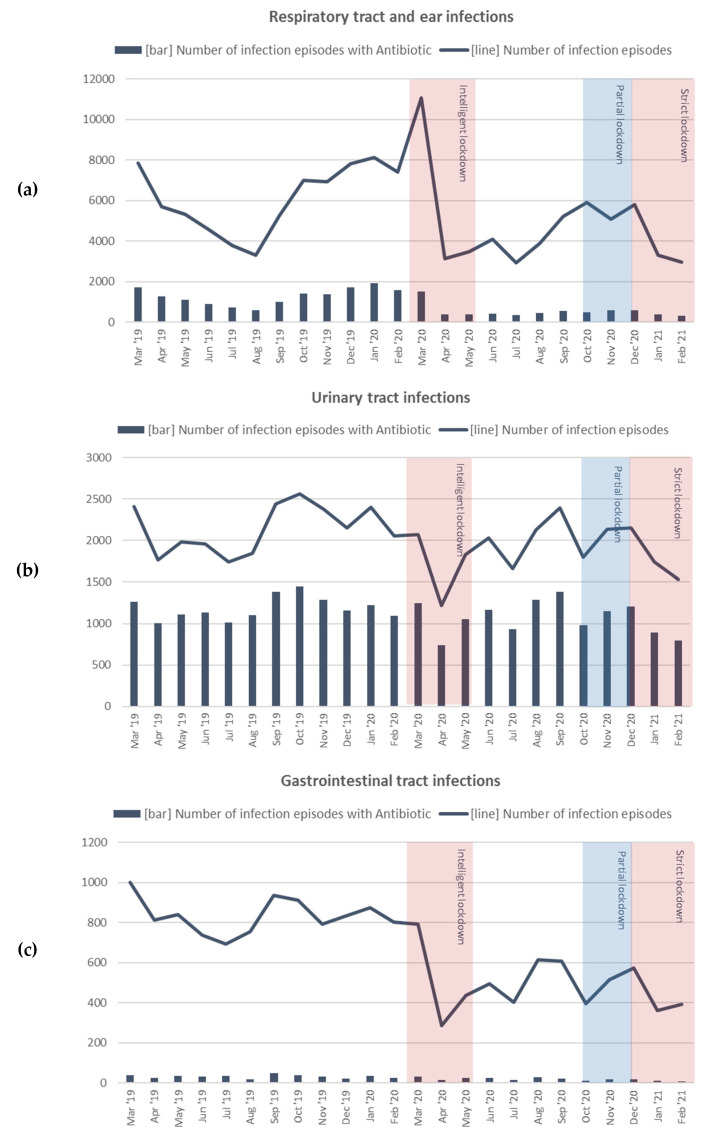
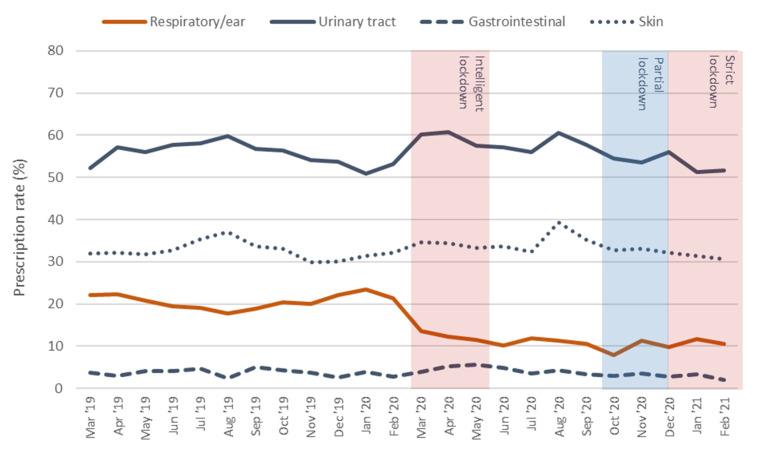
Presentation and antibiotic prescribing for common infectious disease episodes decreased substantially during the first COVID-19 pandemic wave in Dutch general practice. We set out to determine the course of these variables during the first pandemic year. We conducted a retrospective observational cohort study using routine health care data from the Julius General Practitioners' Network. All patients registered in the pre-pandemic year ( = 425,129) and/or during the first pandemic year ( = 432,122) were included. Relative risks for the number of infectious disease episodes (respiratory tract/ear, urinary tract, gastrointestinal, and skin), in total and those treated with antibiotics, and proportions of episodes treated with antibiotics (prescription rates) were calculated. Compared to the pre-pandemic year, primary care presentation for common infections remained lower during the full first pandemic year (RR, 0.77; CI, 0.76-0.78), mainly attributed to a sustained decline in respiratory tract/ear and gastrointestinal infection episodes. Presentation for urinary tract and skin infection episodes declined during the first wave, but returned to pre-pandemic levels during the second and start of the third wave. Antibiotic prescription rates were lower during the full first pandemic year (24%) as compared to the pre-pandemic year (28%), mainly attributed to a 10% lower prescription rate for respiratory tract/ear infections; the latter was not accompanied by an increase in complications. The decline in primary care presentation for common infections during the full first COVID-19 pandemic year, together with lower prescription rates for respiratory tract/ear infections, resulted in a substantial reduction in antibiotic prescribing in Dutch primary care.
在荷兰全科医疗中,新冠疫情第一波期间常见传染病发作的就诊情况及抗生素处方量大幅下降。我们着手确定在疫情第一年这些变量的变化过程。我们利用尤利乌斯全科医生网络的常规医疗数据进行了一项回顾性观察队列研究。纳入了在疫情前一年(n = 425,129)和/或疫情第一年(n = 432,122)登记的所有患者。计算了传染病发作次数(呼吸道/耳部、泌尿道、胃肠道和皮肤)的相对风险,包括总的发作次数以及接受抗生素治疗的发作次数,还有接受抗生素治疗的发作比例(处方率)。与疫情前一年相比,在整个疫情第一年,常见感染的初级保健就诊率仍然较低(相对风险,0.77;95%置信区间,0.76 - 0.78),主要归因于呼吸道/耳部和胃肠道感染发作次数持续下降。泌尿道和皮肤感染发作的就诊率在第一波期间下降,但在第二波和第三波开始时恢复到疫情前水平。与疫情前一年(28%)相比,在整个疫情第一年抗生素处方率较低(24%),主要归因于呼吸道/耳部感染的处方率降低了10%;后者并未伴随并发症增加。在整个新冠疫情第一年,常见感染的初级保健就诊率下降,以及呼吸道/耳部感染的处方率降低,导致荷兰初级保健中的抗生素处方量大幅减少。