Chandra Raghav, Karalis John D, Liu Charles, Murimwa Gilbert Z, Voth Park Josiah, Heid Christopher A, Reznik Scott I, Huang Emina, Minna John D, Brekken Rolf A
Division of Surgical Oncology, Department of Surgery, University of Texas Southwestern Medical Center, Dallas, TX 75390, USA.
Hamon Center for Therapeutic Oncology Research, Simmons Comprehensive Cancer Center, University of Texas Southwestern Medical Center, Dallas, TX 75390, USA.
Cancers (Basel). 2021 Dec 9;13(24):6206. doi: 10.3390/cancers13246206.
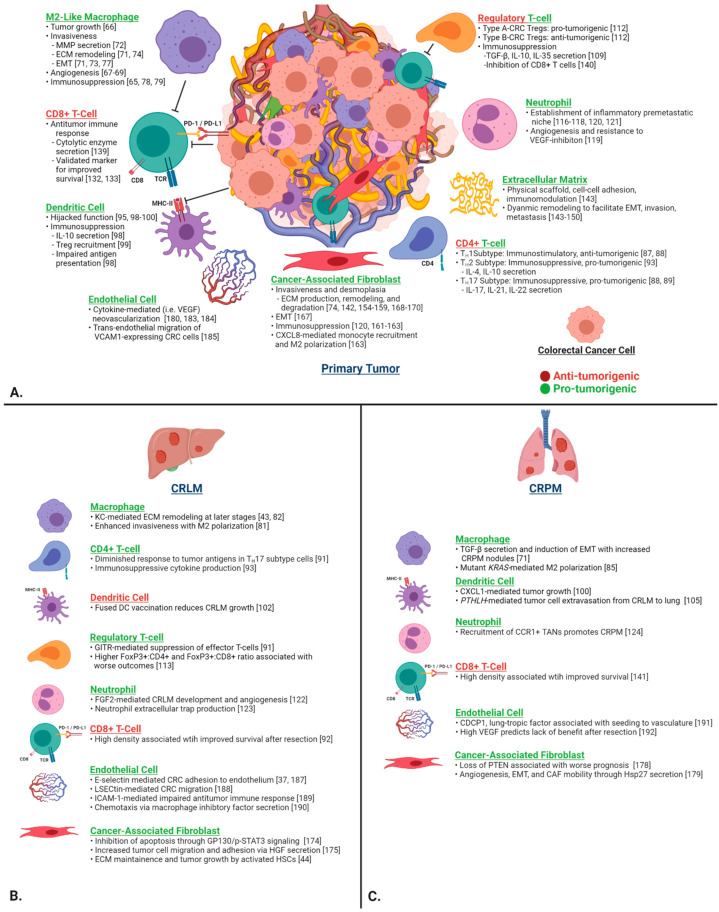
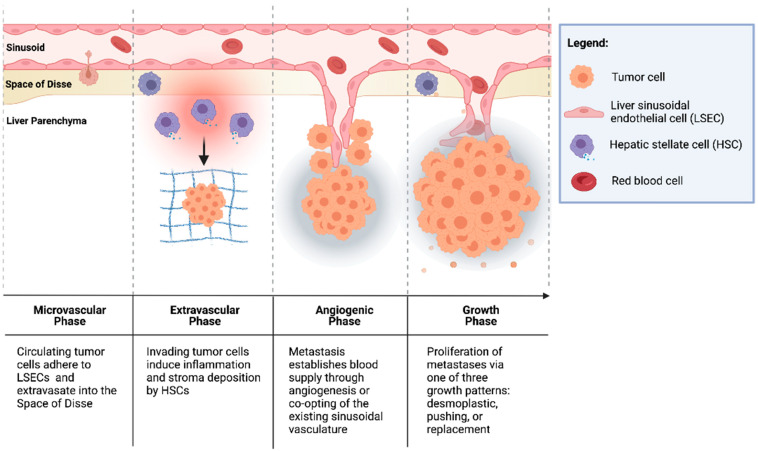
Colorectal cancer (CRC) is the third most common malignancy and the second most common cause of cancer-related mortality worldwide. A total of 20% of CRC patients present with distant metastases, most frequently to the liver and lung. In the primary tumor, as well as at each metastatic site, the cellular components of the tumor microenvironment (TME) contribute to tumor engraftment and metastasis. These include immune cells (macrophages, neutrophils, T lymphocytes, and dendritic cells) and stromal cells (cancer-associated fibroblasts and endothelial cells). In this review, we highlight how the TME influences tumor progression and invasion at the primary site and its function in fostering metastatic niches in the liver and lungs. We also discuss emerging clinical strategies to target the CRC TME.
结直肠癌(CRC)是全球第三大常见恶性肿瘤,也是癌症相关死亡的第二大常见原因。共有20%的CRC患者出现远处转移,最常见的转移部位是肝脏和肺。在原发性肿瘤以及每个转移部位,肿瘤微环境(TME)的细胞成分都有助于肿瘤的植入和转移。这些细胞包括免疫细胞(巨噬细胞、中性粒细胞、T淋巴细胞和树突状细胞)和基质细胞(癌症相关成纤维细胞和内皮细胞)。在本综述中,我们重点介绍了TME如何影响原发性肿瘤部位的肿瘤进展和侵袭,以及其在促进肝脏和肺转移龛形成中的作用。我们还讨论了针对CRC TME的新兴临床策略。