Granell-Geli Júlia, Izquierdo-Gracia Cristina, Sellés-Rius Ares, Teniente-Serra Aina, Presas-Rodríguez Silvia, Mansilla María José, Brieva Luis, Sotoca Javier, Mañé-Martínez María Alba, Moral Ester, Bragado Irene, Goelz Susan, Martínez-Cáceres Eva, Ramo-Tello Cristina
Division of Immunology, LCMN Hospital Universitari Germans Trias i Pujol and Research Institute, Campus Can Ruti, 08916 Badalona, Spain.
Department of Cellular Biology, Physiology and Immunology, Universitat Autònoma de Barcelona, 08193 Bellaterra, Spain.
J Pers Med. 2021 Dec 10;11(12):1347. doi: 10.3390/jpm11121347.
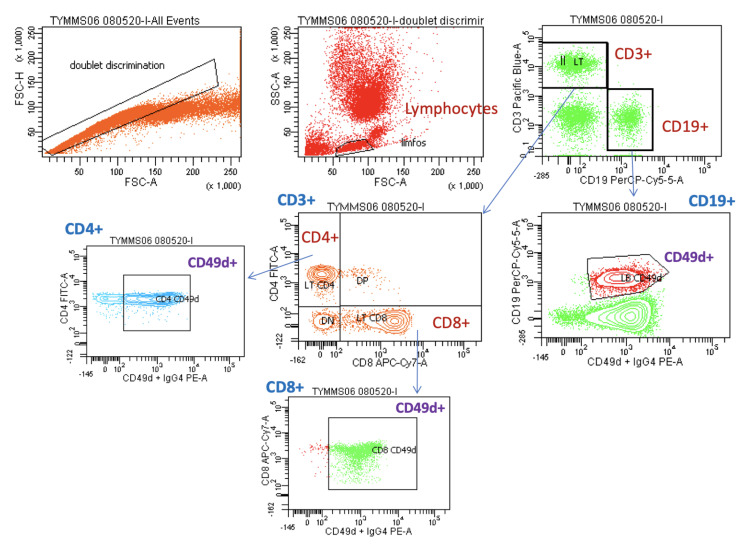
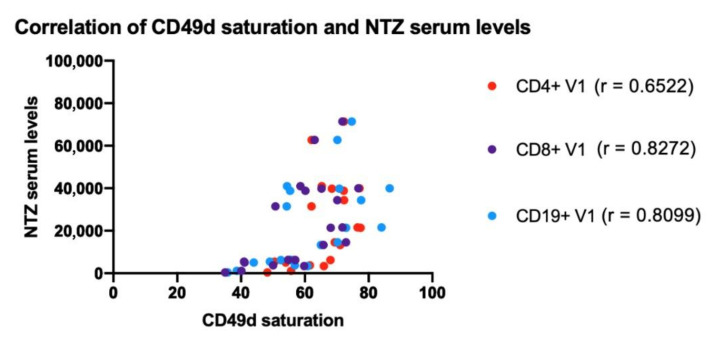
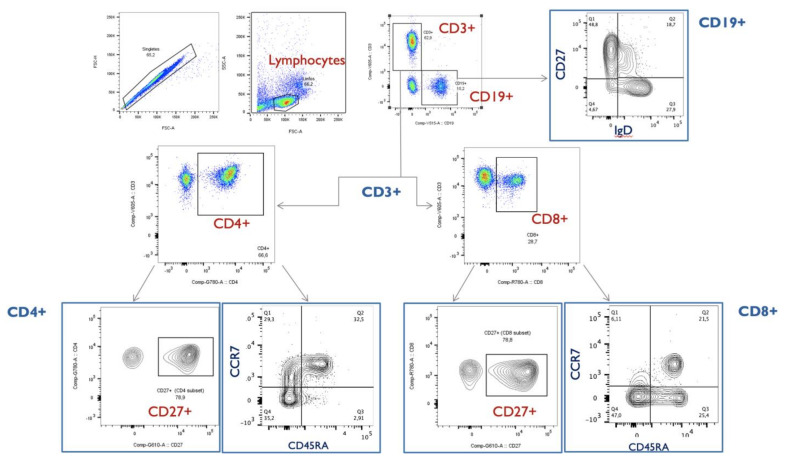
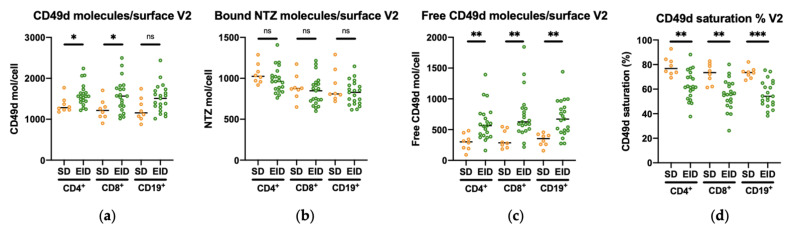
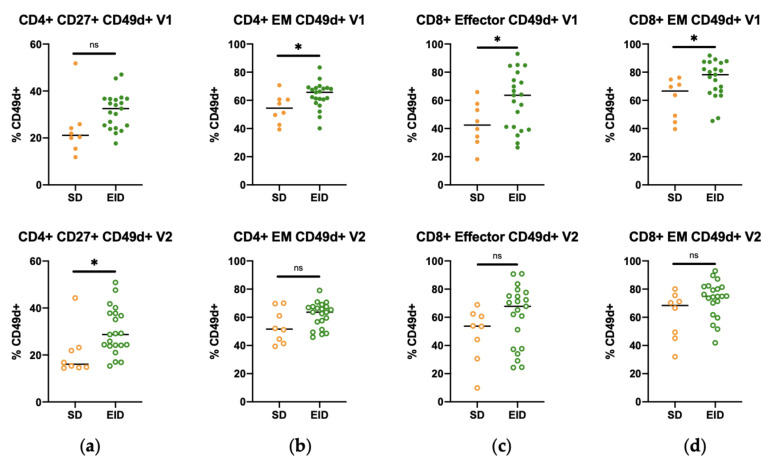
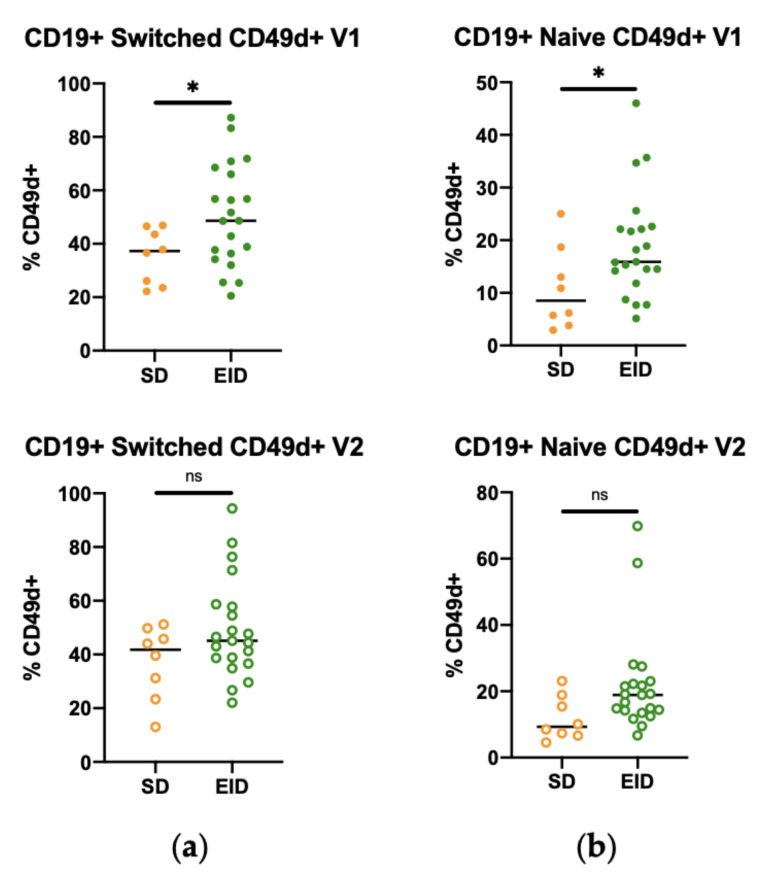
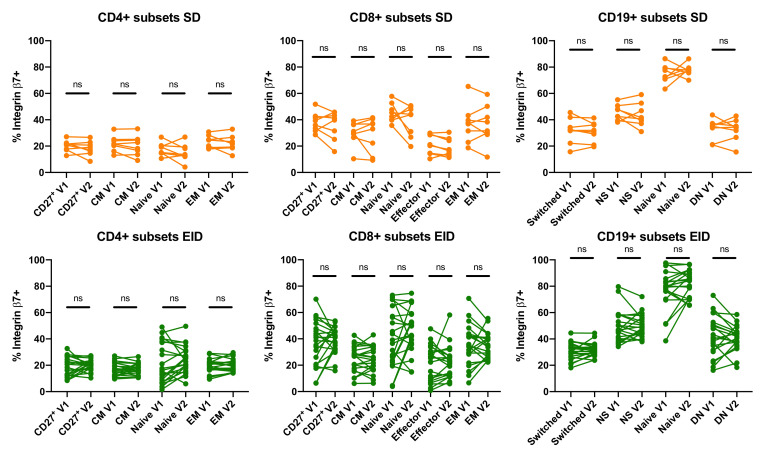
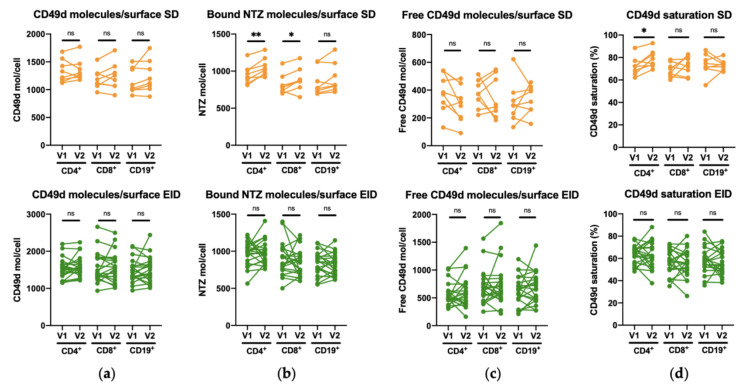
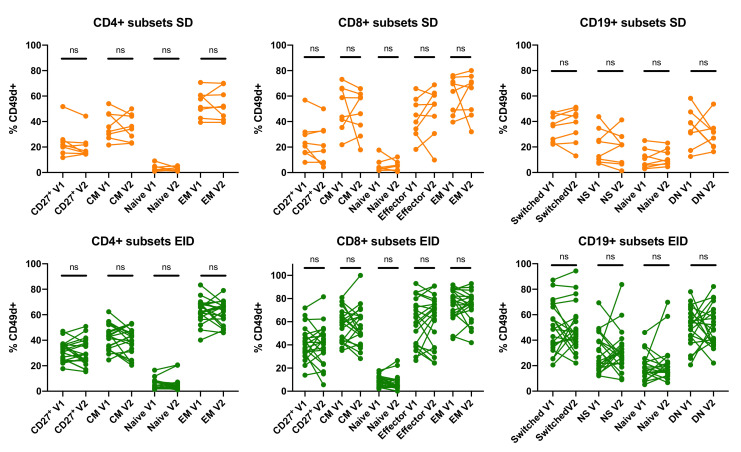
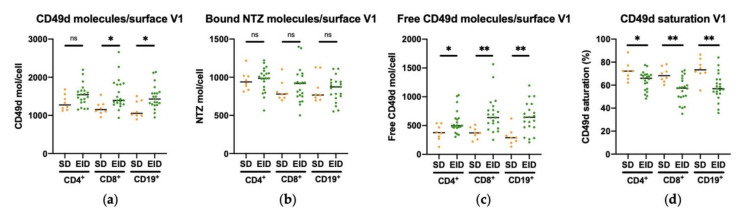
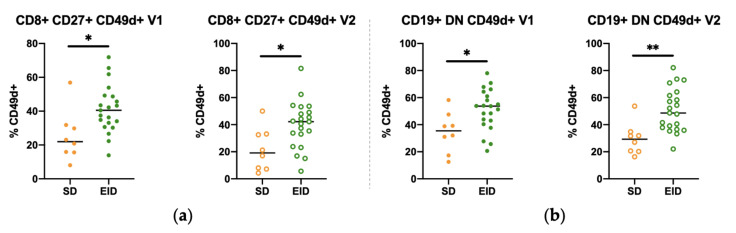
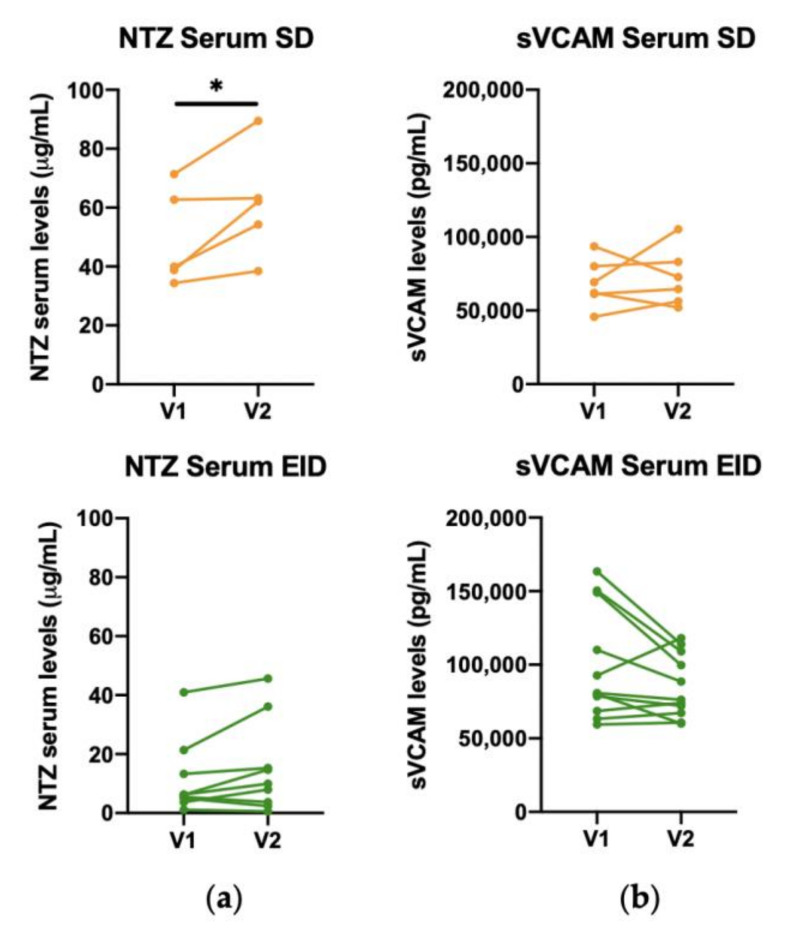
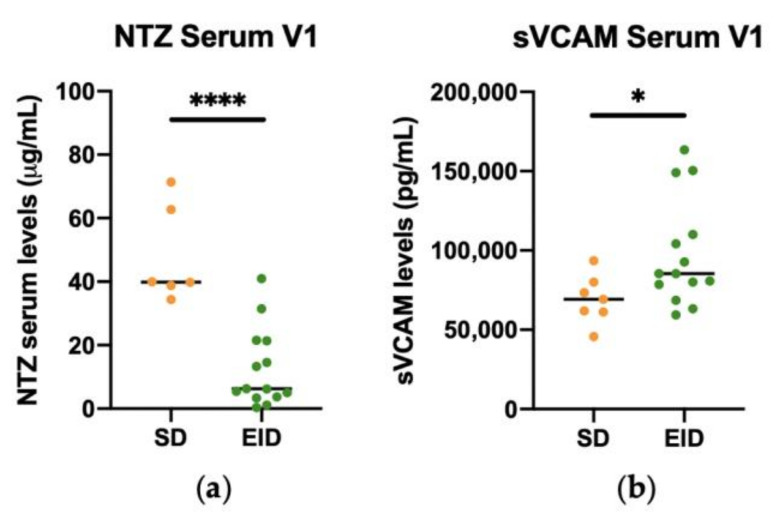
Natalizumab is a monoclonal antibody that binds CD49d. Although it is one of the most effective treatments for Relapsing-Remitting Multiple Sclerosis (RRMS), a dosing regimen has not been optimized for safety and efficacy in individual patients. We aimed to identify biomarkers to monitor Natalizumab treatment and to establish a personalized dose utilizing an ongoing longitudinal study in 29 RRMS patients under Natalizumab with standard interval dose (SD) of 300 mg/4wks or extended interval dose (EID) of 300 mg/6wks. Blood samples were analyzed by flow cytometry to determine CD49d saturation and expression in several T and B lymphocytes subpopulations. Each patient was analyzed at two different timepoints separated by 3 Natalizumab administrations. Natalizumab and sVCAM-1 levels in serum were also analyzed using ELISA. To determine the reproducibility of various markers, two different timepoints were compared and no significant differences were observed for CD49d expression nor for saturation; SD patients had higher saturation levels (80%) than EID patients (60%). A positive correlation exists between CD49d saturation and Natalizumab serum levels. CD49d expression and saturation are stable parameters that could be used as biomarkers in the immunomonitoring of Natalizumab treatment. Moreover, Natalizumab and sVCAM-1 serum levels could be used to optimize an individual's dosing schedule.
那他珠单抗是一种可结合CD49d的单克隆抗体。尽管它是复发缓解型多发性硬化症(RRMS)最有效的治疗方法之一,但尚未针对个体患者的安全性和疗效对给药方案进行优化。我们旨在通过一项正在进行的纵向研究,在29例接受那他珠单抗治疗的RRMS患者中确定监测那他珠单抗治疗的生物标志物,并建立个性化剂量,这些患者接受标准间隔剂量(SD)300mg/4周或延长间隔剂量(EID)300mg/6周的治疗。通过流式细胞术分析血样,以确定几种T和B淋巴细胞亚群中CD49d的饱和度和表达。在两次不同的时间点对每位患者进行分析,两次时间点间隔3次那他珠单抗给药。还使用酶联免疫吸附测定法(ELISA)分析血清中的那他珠单抗和可溶性血管细胞黏附分子-1(sVCAM-1)水平。为了确定各种标志物的可重复性,比较了两个不同的时间点,未观察到CD49d表达和饱和度有显著差异;SD组患者的饱和度水平(约80%)高于EID组患者(约60%)。CD49d饱和度与那他珠单抗血清水平之间存在正相关。CD49d表达和饱和度是稳定的参数,可作为那他珠单抗治疗免疫监测中的生物标志物。此外,那他珠单抗和sVCAM-1血清水平可用于优化个体给药方案。