Sagnelli Domenico, Calabrese Marcella, Kaczmarczyk Olga, Rippa Massimo, Vestri Ambra, Marchesano Valentina, Kortsen Kristoffer, Cuzzucoli Crucitti Valentina, Villani Fulvia, Loffredo Fausta, Borriello Carmela, Nenna Giuseppe, Cocca Mariacristina, Ambrogi Veronica, Matczyszyn Katarzyna, Simoni Francesco, Petti Lucia
Institute of Applied Sciences and Intelligent Systems of CNR, 80072 Pozzuoli, Italy.
Department of Chemical, Materials and Production Engineering, University of Naples Federico II, 80125 Naples, Italy.
Nanomaterials (Basel). 2021 Dec 7;11(12):3320. doi: 10.3390/nano11123320.
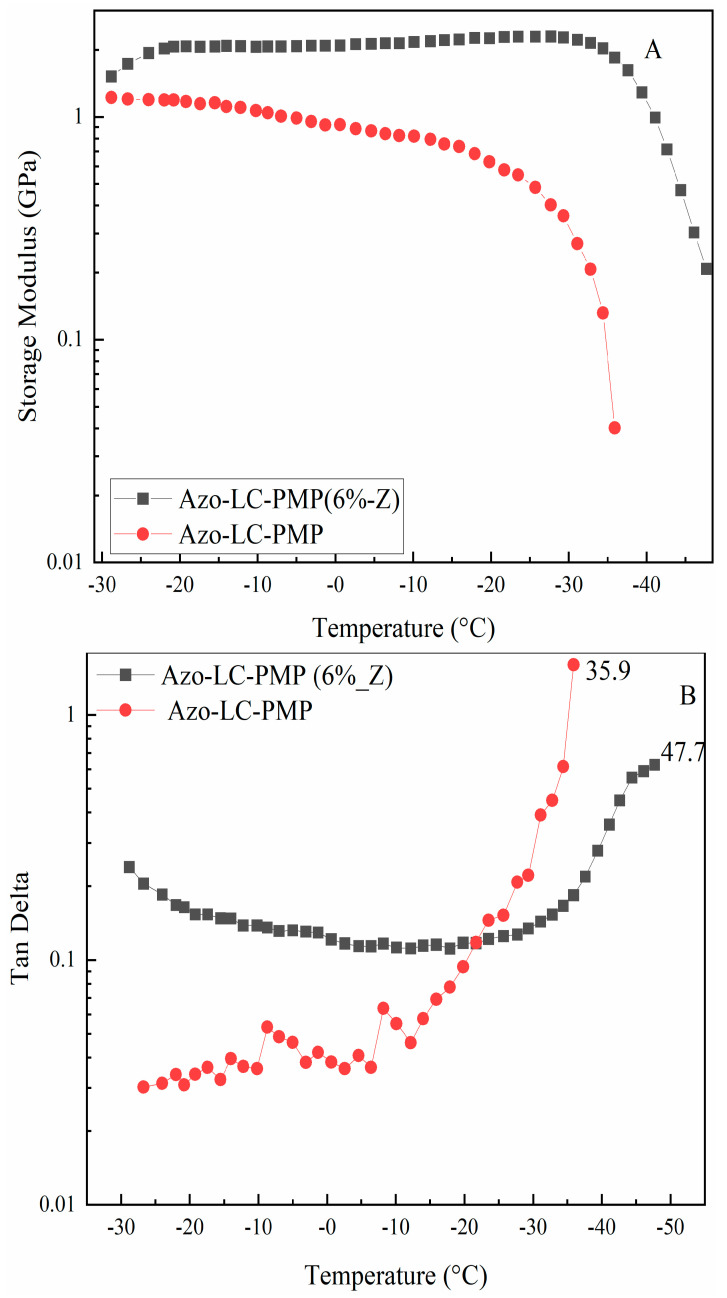
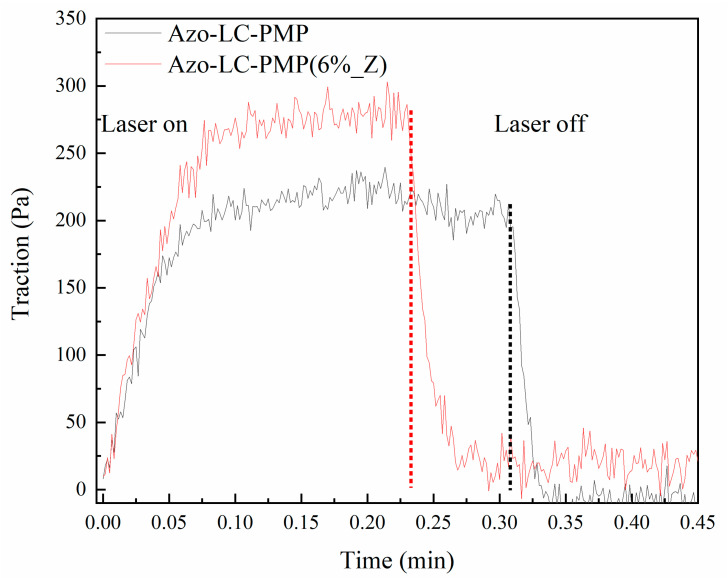
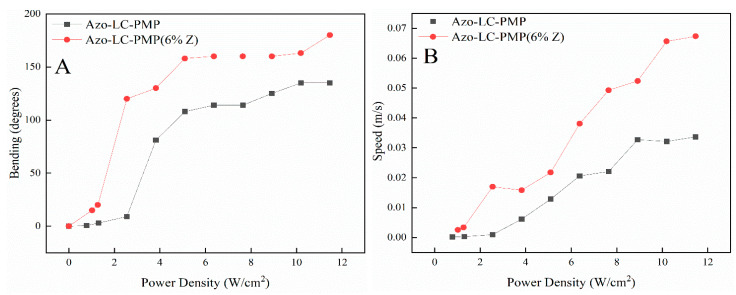
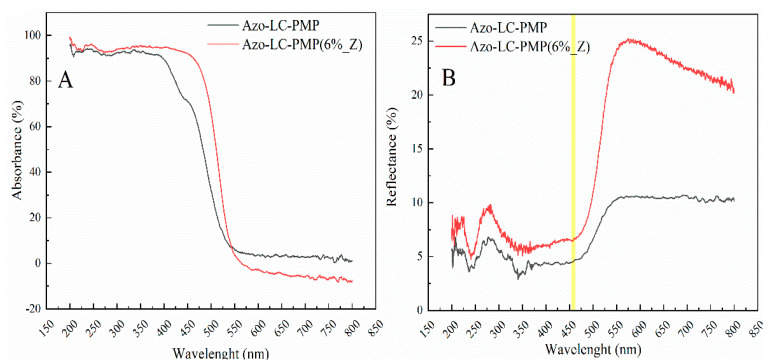
The efficiency of photomobile polymers (PMP) in the conversion of light into mechanical work plays a fundamental role in achieving cutting-edge innovation in the development of novel applications ranging from energy harvesting to sensor approaches. Because of their photochromic properties, azobenzene monomers have been shown to be an efficient material for the preparation of PMPs with appropriate photoresponsivity. Upon integration of the azobenzene molecules as moieties into a polymer, they act as an engine, allowing fast movements of up to 50 Hz. In this work we show a promising approach for integrating ZnO nanoparticles into a liquid crystalline polymer network. The addition of such nanoparticles allows the trapping of incoming light, which acts as diffusive points in the polymer matrix. We characterized the achieved nanocomposite material in terms of thermomechanical and optical properties and finally demonstrated that the doped PMP was better performing that the undoped PMP film.
光驱动聚合物(PMP)将光转化为机械功的效率在实现从能量收集到传感器方法等新型应用开发的前沿创新中起着至关重要的作用。由于其光致变色特性,偶氮苯单体已被证明是制备具有适当光响应性的PMP的有效材料。当将偶氮苯分子作为部分整合到聚合物中时,它们就像一个发动机,允许高达50 Hz的快速运动。在这项工作中,我们展示了一种将ZnO纳米颗粒整合到液晶聚合物网络中的有前景的方法。添加此类纳米颗粒可以捕获入射光,这些光在聚合物基质中充当扩散点。我们从热机械和光学性能方面对所制备的纳米复合材料进行了表征,最终证明掺杂的PMP比未掺杂的PMP薄膜性能更好。