Laboratory of Cardiac Cellular Physiology, Department of Biotechnology and Bioscience, University of Milano-Bicocca, 20126 Milan, Italy.
Department of Experimental Pharmacology and Toxicology, Cardiovascular Research Center, University Medical Center Hamburg-Eppendorf, 20246 Hamburg, Germany.
Int J Mol Sci. 2021 Dec 16;22(24):13500. doi: 10.3390/ijms222413500.
Phospholamban (PLN) is the natural inhibitor of the sarco/endoplasmic reticulum Ca ATP-ase (SERCA2a). Heterozygous PLN p.Arg14del mutation is associated with an arrhythmogenic dilated cardiomyopathy (DCM), whose pathogenesis has been attributed to SERCA2a "superinhibition".
To test in cardiomyocytes (hiPSC-CMs) derived from a PLN p.Arg14del carrier whether (1) Ca dynamics and protein localization were compatible with SERCA2a superinhibition and (2) if functional abnormalities could be reverted by pharmacological SERCA2a activation (PST3093).
Ca transients (CaT) were recorded at 36 °C in hiPSC-CMs clusters during field stimulation. SERCA2a and PLN where immunolabeled in single hiPSC-CMs. Mutant preparations (MUT) were compared to isogenic wild-type ones (WT), obtained by mutation reversal.
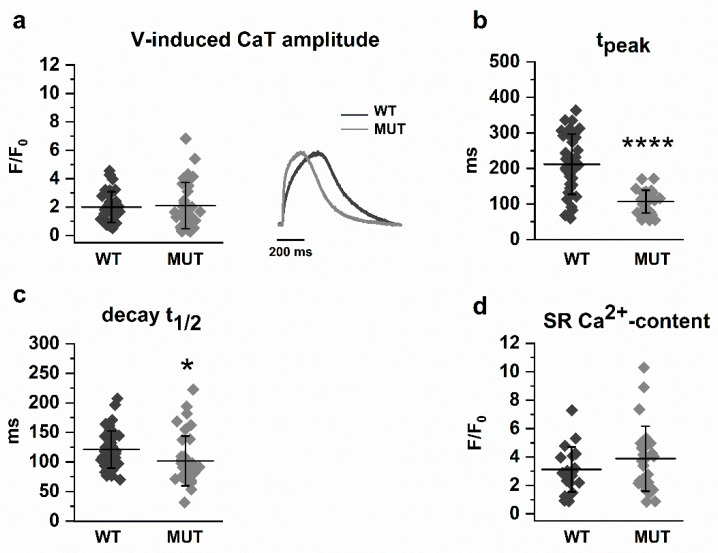
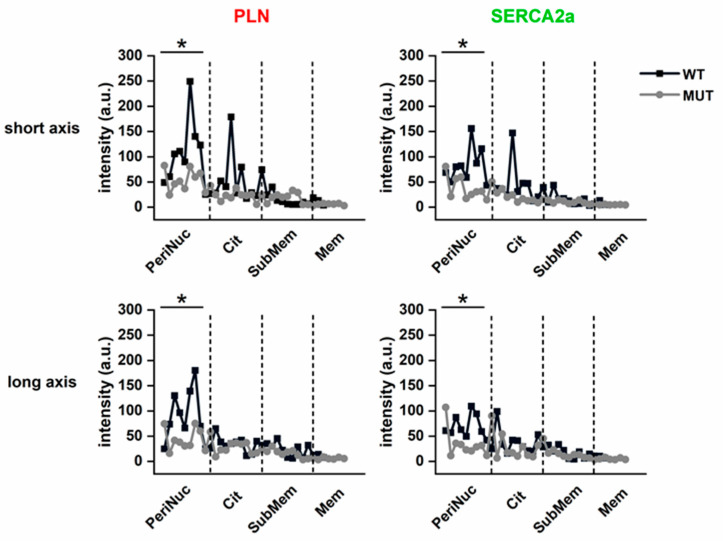
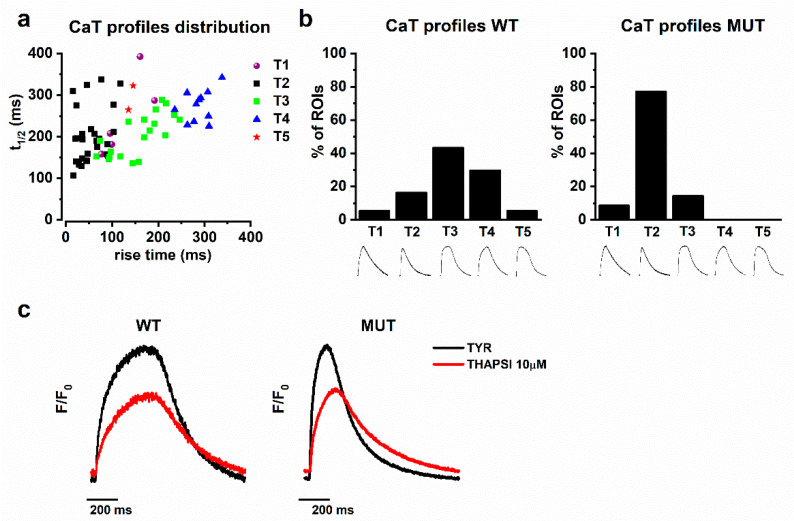
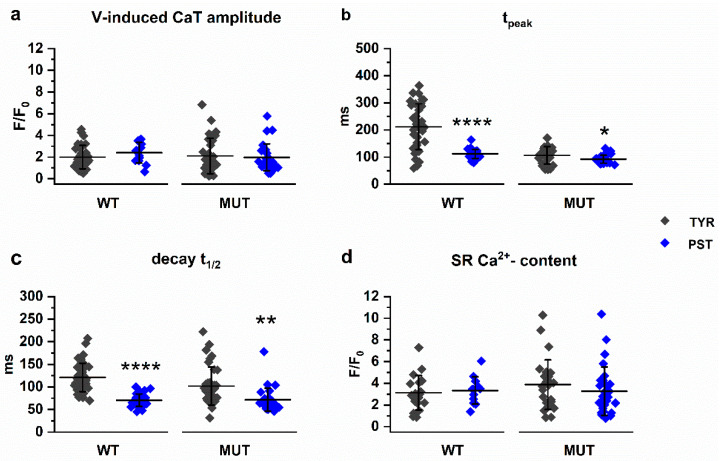
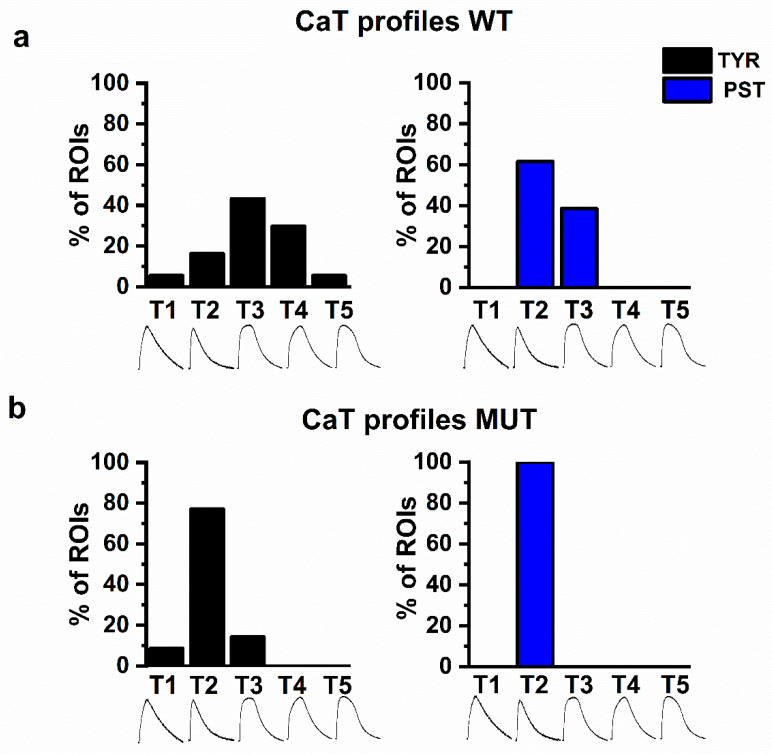
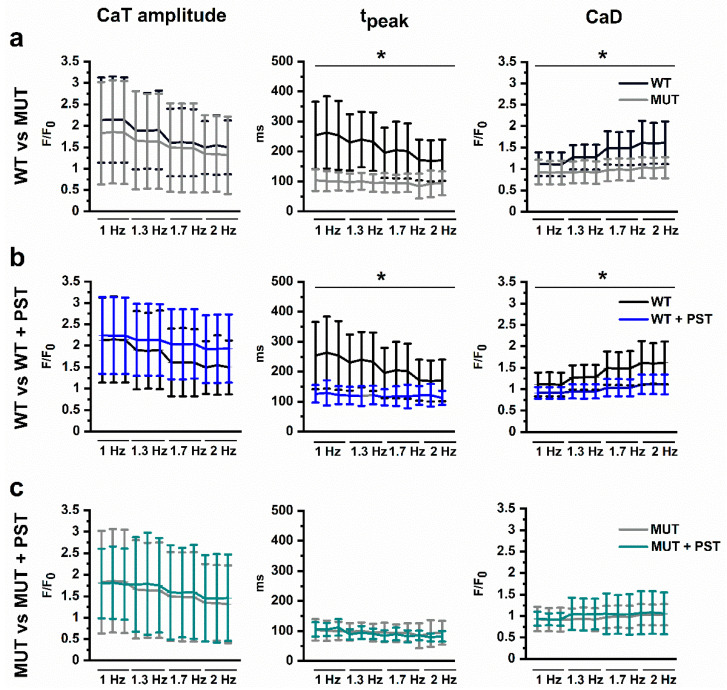
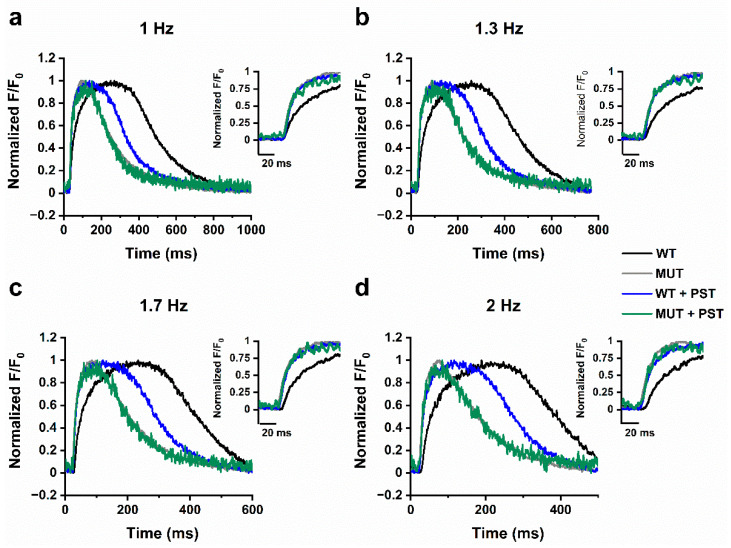
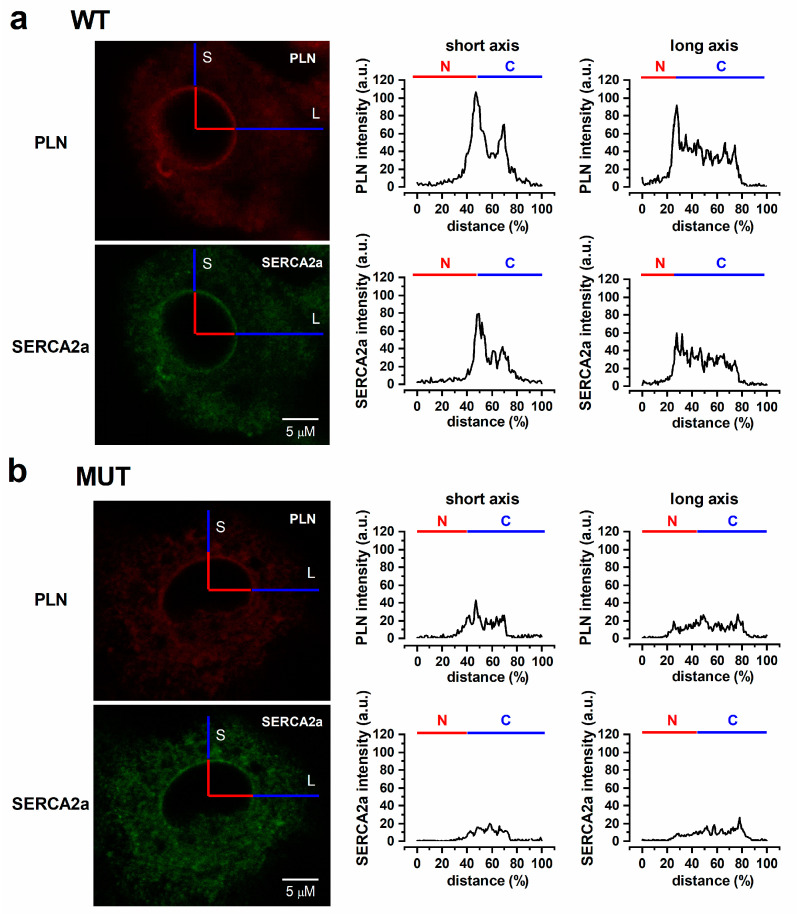
WT and MUT differed for the following properties: (1) CaT time to peak (t) and half-time of CaT decay were shorter in MUT; (2) several CaT profiles were identified in WT, "hyperdynamic" ones largely prevailed in MUT; (3) whereas t rate-dependently declined in WT, it was shorter and rate-independent in MUT; (4) diastolic Ca rate-dependently accumulated in WT, but not in MUT. When applied to WT, PST3093 turned all the above properties to resemble those of MUT; when applied to MUT, PST3093 had a smaller or negligible effect. Preferential perinuclear SERCA2a-PLN localization was lost in MUT hiPSC-CMs.
Functional data converge to argue for PLN p.Arg14del incompetence in inhibiting SERCA2a in the tested case, thus weakening the rationale for therapeutic SERCA2a activation. Mechanisms alternative to SERCA2a superinhibition should be considered in the pathogenesis of DCM, possibly including dysregulation of Ca-dependent transcription.
在携带 PLN p.Arg14del 突变的心肌细胞(hiPSC-CMs)中测试(1)钙动力学和蛋白定位是否与 SERCA2a 过度抑制兼容,以及(2)如果通过药理学 SERCA2a 激活(PST3093)是否可以逆转功能异常。
在心肌细胞簇中,通过场刺激记录 36°C 时的钙瞬变(CaT)。在单个 hiPSC-CMs 中免疫标记 SERCA2a 和 PLN。将突变制剂(MUT)与通过突变逆转获得的同基因野生型(WT)进行比较。
WT 和 MUT 在以下特性上存在差异:(1)WT 中的 CaT 峰值时间(t)和 CaT 衰减的半衰期较短,而 MUT 中的 CaT 衰减更快;(2)在 WT 中鉴定出几种 CaT 谱,“高动力”谱在 MUT 中占主导地位;(3)WT 中 t 随时间依赖性下降,而 MUT 中 t 更短且与时间无关;(4)WT 中舒张期 Ca 随时间依赖性积累,而 MUT 中则没有。当应用于 WT 时,PST3093 使所有上述特性都类似于 MUT;当应用于 MUT 时,PST3093 的效果较小或可以忽略不计。MUT hiPSC-CMs 中优先的核周 SERCA2a-PLN 定位丢失。
功能数据趋于证明在测试病例中,PLN p.Arg14del 不能有效地抑制 SERCA2a,从而削弱了治疗性 SERCA2a 激活的合理性。在 DCM 的发病机制中,应该考虑到 SERCA2a 过度抑制之外的机制,可能包括 Ca 依赖性转录的失调。