
基于土地碳预算核算的中国省级碳排放与生态补偿的时空差异研究。
Research on the Spatial and Temporal Differences of China's Provincial Carbon Emissions and Ecological Compensation Based on Land Carbon Budget Accounting.
机构信息
Business School, Hohai University, Nanjing 211100, China.
School of Economics and Finance, Hohai University, Nanjing 211100, China.
出版信息
Int J Environ Res Public Health. 2021 Dec 7;18(24):12892. doi: 10.3390/ijerph182412892.
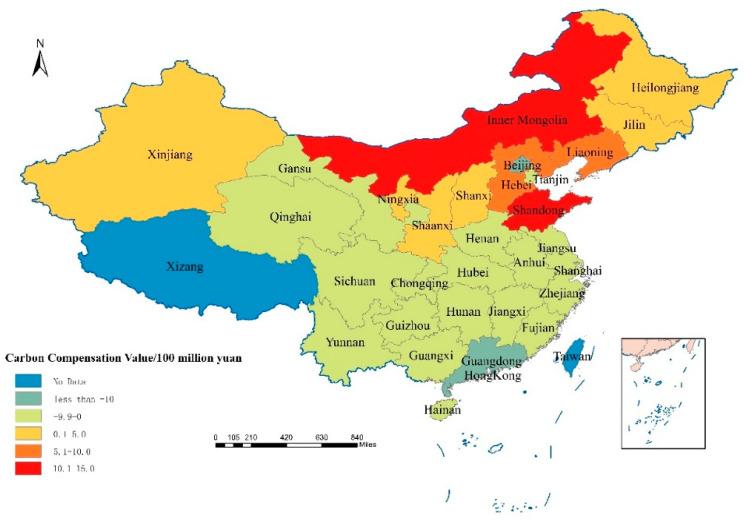
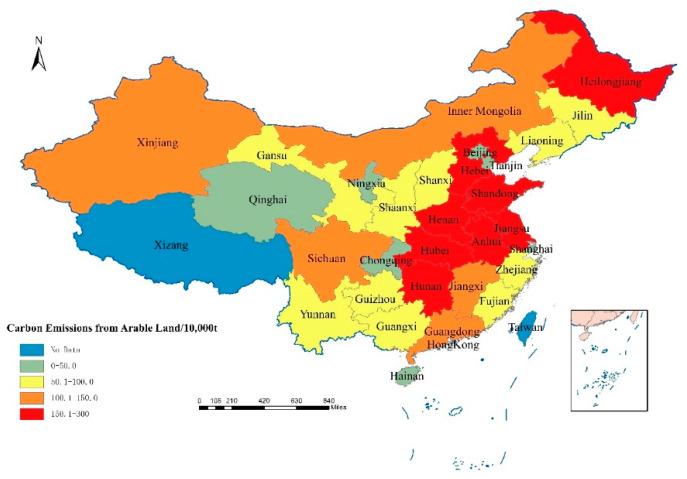
The establishment of a complete carbon ecological compensation mechanism is of great significance for China to achieve "carbon peak and carbon neutrality" as soon as possible. From the perspective of land carbon budget accounting, this paper measures the carbon emissions and the value of carbon ecological compensation in 30 provinces in China from 2010 to 2019, by constructing a carbon ecological compensation model, and analyzes it from both time and space perspectives. The study found that: (1) during the period 2010-2019, China's carbon absorption remained basically stable, and woodland and grassland were the main carriers of China's land carbon absorption. The total carbon sequestration of woodland and grassland showed a pattern of being high in the west and low in the east, and the total carbon sequestration of cultivated land showed a pattern of being high in the east and low in the west. (2) Construction land is the main source of carbon emissions in China. Cultivated land carbon emissions mainly come from major agricultural provinces such as Henan and Heilongjiang, while construction land carbon emissions are mainly concentrated in energy-consuming provinces such as Shandong and Shanxi. (3) After revising the carbon compensation benchmark value, it is found that provinces such as Guangdong and Jiangsu should receive carbon ecological compensation, while provinces dominated by heavy industries such as Shanxi and Shandong need to pay corresponding carbon compensation fees. Finally, this article puts forward corresponding policy recommendations, such as that China should give full play to the role of the government and the market, accelerate the optimization and improvement of the ecological resource asset property rights system, and optimize the development and utilization of land.
建立完备的碳生态补偿机制,对于中国尽早实现“碳达峰、碳中和”目标意义重大。本文从土地碳收支核算视角出发,通过构建碳生态补偿模型,测算了 2010-2019 年中国 30 个省份的碳排放量和碳生态补偿价值,并从时间和空间两个维度进行分析。结果表明:①2010-2019 年中国碳吸收量基本保持稳定,林地和草地是中国陆地碳吸收的主要载体,林地和草地的总碳储量呈现西高东低的格局,耕地的总碳储量呈现东高西低的格局;②建设用地是中国碳排放的主要来源,耕地碳排放主要来源于河南、黑龙江等农业大省,建设用地碳排放主要集中于山东、山西等能源消耗大省;③修正碳补偿基准值后发现,广东、江苏等省份需要获得碳生态补偿,山西、山东等以重工业为主的省份需要缴纳相应的碳补偿费用。最后,本文提出了相应的政策建议,如充分发挥政府和市场的作用、加快优化完善生态资源资产产权制度、优化土地开发利用等。




 Zotero 插件