Physical Medicine and Rehabilitation Unit, Azienda ULSS 3 Serenissima, 30126 Venice, Italy.
Medical Physics Department-Clinical Engineering, Salford Care Organisation, Salford M6 8HD, UK.
Sensors (Basel). 2021 Dec 7;21(24):8175. doi: 10.3390/s21248175.
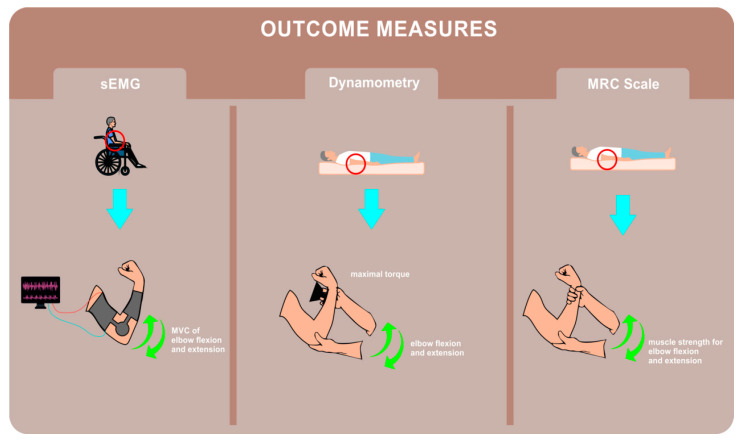
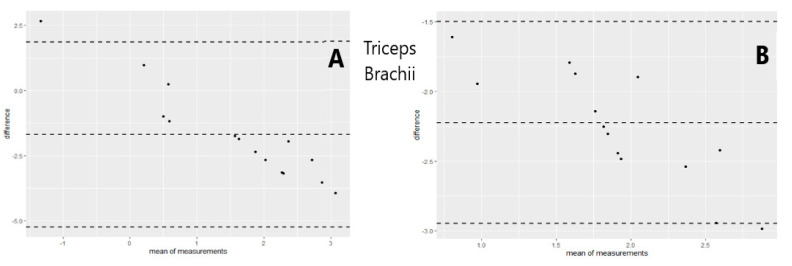
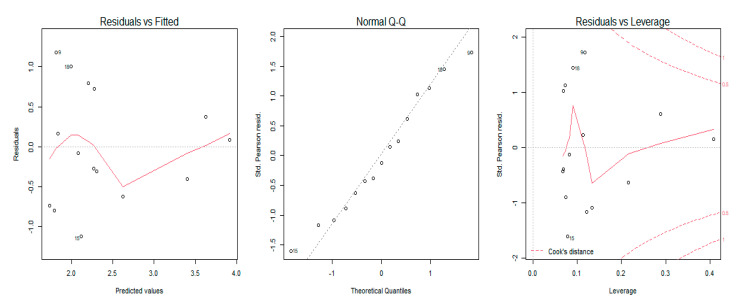
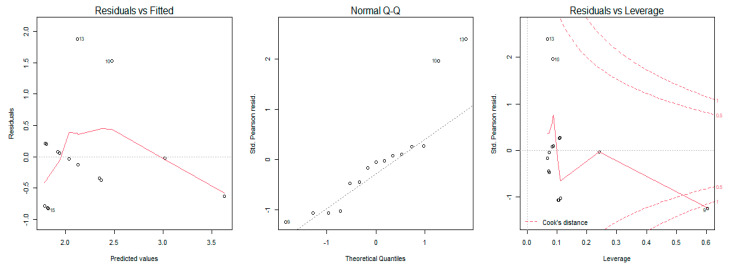
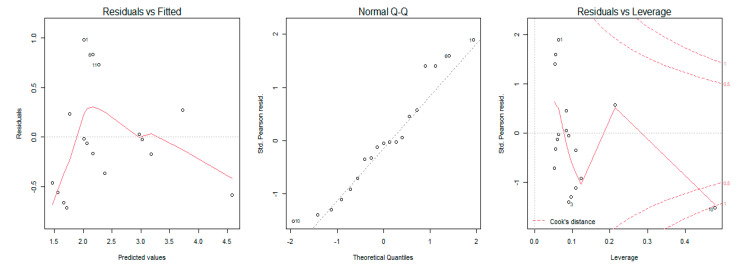
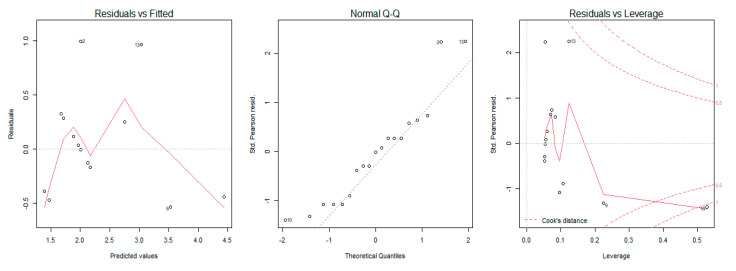
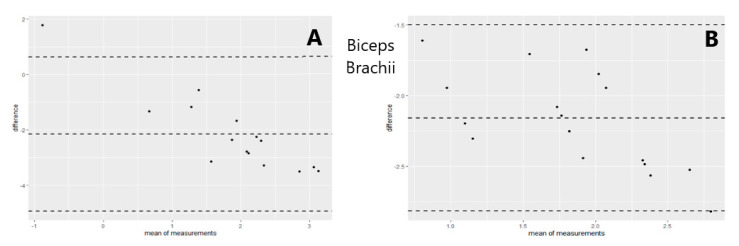
It remains unknown whether variation of scores on the Medical Research Council (MRC) scale for muscle strength is associated with operator-independent techniques: dynamometry and surface electromyography (sEMG). This study aimed to evaluate whether the scores of the MRC strength scale are associated with instrumented measures of torque and muscle activity in post-stroke survivors with severe hemiparesis both before and after an intervention. Patients affected by a first ischemic or hemorrhagic stroke within 6 months before enrollment and with complete paresis were included in the study. The pre- and post-treatment assessments included the MRC strength scale, sEMG, and dynamometry assessment of the triceps brachii (TB) and biceps brachii (BB) as measures of maximal elbow extension and flexion torque, respectively. Proprioceptive-based training was used as a treatment model, which consisted of multidirectional exercises with verbal feedback. Each treatment session lasted 1 h/day, 5 days a week for a total 15 sessions. Nineteen individuals with stroke participated in the study. A significant correlation between outcome measures for the BB (MRC and sEMG = 0.0177, ρ = 0.601; MRC and torque = 0.0001, ρ = 0.867) and TB (MRC and sEMG = 0.0026, ρ = 0.717; MRC and torque = 0.0001, ρ = 0.873) were observed post intervention. Regression models revealed a relationship between the MRC score and sEMG and torque measures for both the TB and BB. The results confirmed that variation on the MRC strength scale is associated with variation in sEMG and torque measures, especially post intervention. The regression model showed a causal relationship between MRC scale scores, sEMG, and torque assessments.
肌肉力量的医学研究委员会(MRC)评分变化是否与独立于操作者的技术(测力和表面肌电图[sEMG])相关尚不清楚。本研究旨在评估 MRC 力量评分与卒中后严重偏瘫患者干预前后仪器测量的扭矩和肌肉活动之间是否存在相关性。研究纳入了在入组前 6 个月内首次发生缺血性或出血性卒中且完全偏瘫的患者。治疗前后评估包括 MRC 力量评分、sEMG 以及肱三头肌(TB)和肱二头肌(BB)的测力评估,分别作为最大肘伸肌和屈肌扭矩的测量指标。使用基于本体感受的训练作为治疗模型,包括带有口头反馈的多方向运动。每次治疗持续 1 小时/天,每周 5 天,共 15 次。19 名卒中患者参与了本研究。BB(MRC 和 sEMG = 0.0177,ρ = 0.601;MRC 和扭矩 = 0.0001,ρ = 0.867)和 TB(MRC 和 sEMG = 0.0026,ρ = 0.717;MRC 和扭矩 = 0.0001,ρ = 0.873)的治疗后观察到结果测量值之间存在显著相关性。回归模型显示,MRC 评分与 TB 和 BB 的 sEMG 和扭矩测量值之间存在关系。结果证实,MRC 力量评分的变化与 sEMG 和扭矩测量值的变化相关,尤其是治疗后。回归模型显示 MRC 评分、sEMG 和扭矩评估之间存在因果关系。