Karuppannan Gopalraj Sankar, Deviatkin Ivan, Horttanainen Mika, Kärki Timo
Fiber Composite Laboratory, Department of Mechanical Engineering, LUT University, P.O. Box 20, 53850 Lappeenranta, Finland.
Department of Sustainability Science, LUT University, P.O. Box 20, 53850 Lappeenranta, Finland.
Polymers (Basel). 2021 Dec 17;13(24):4430. doi: 10.3390/polym13244430.
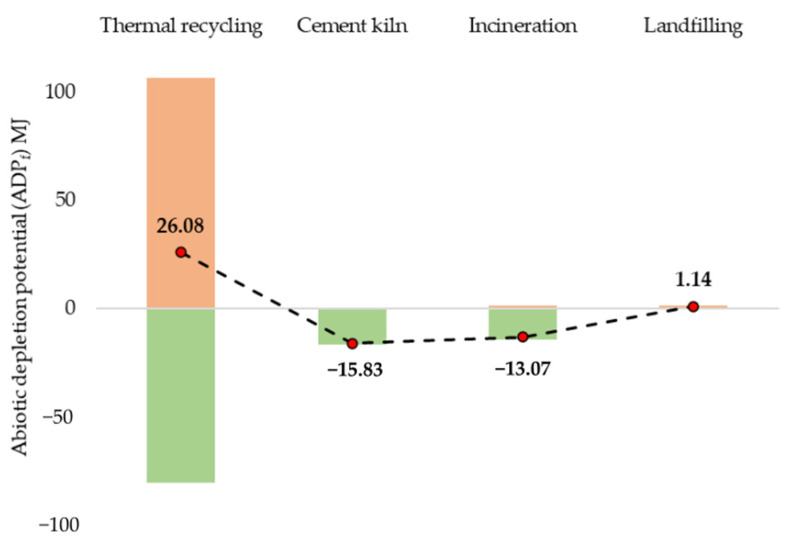
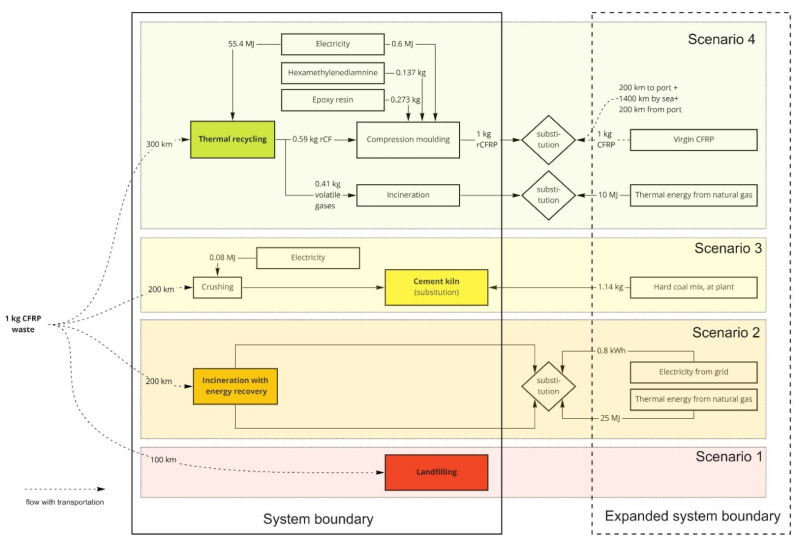
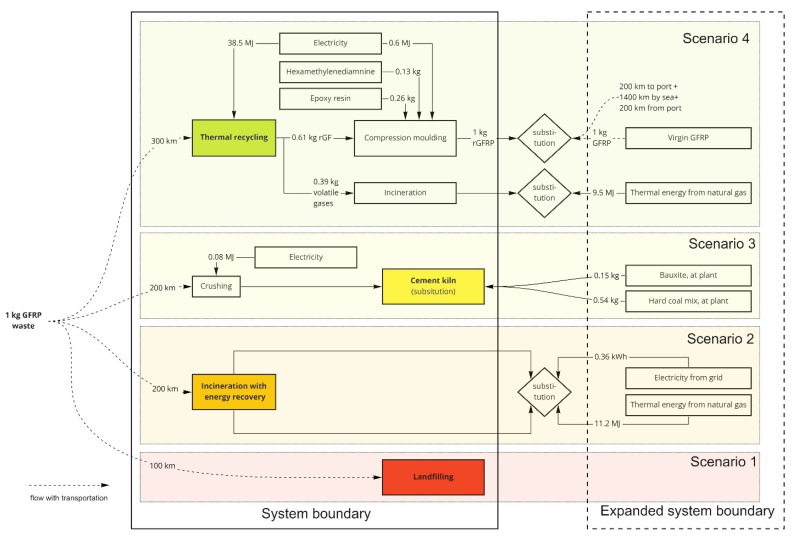
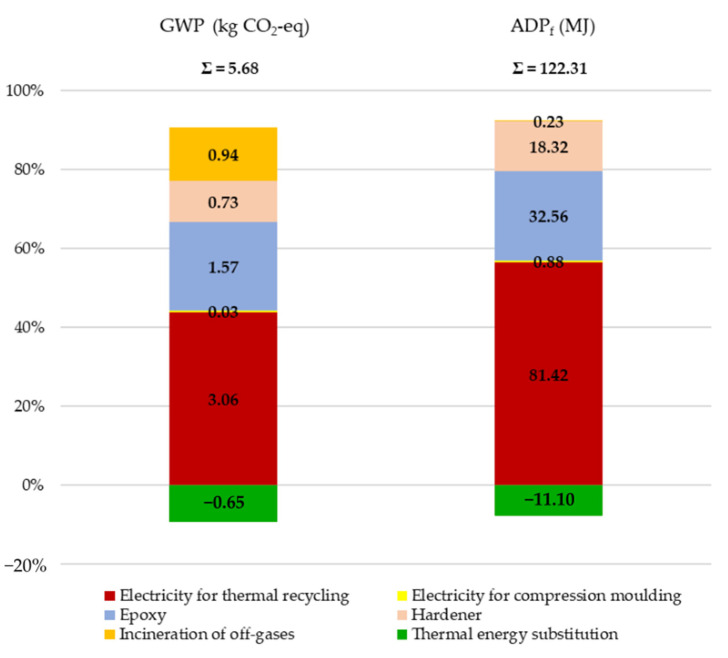
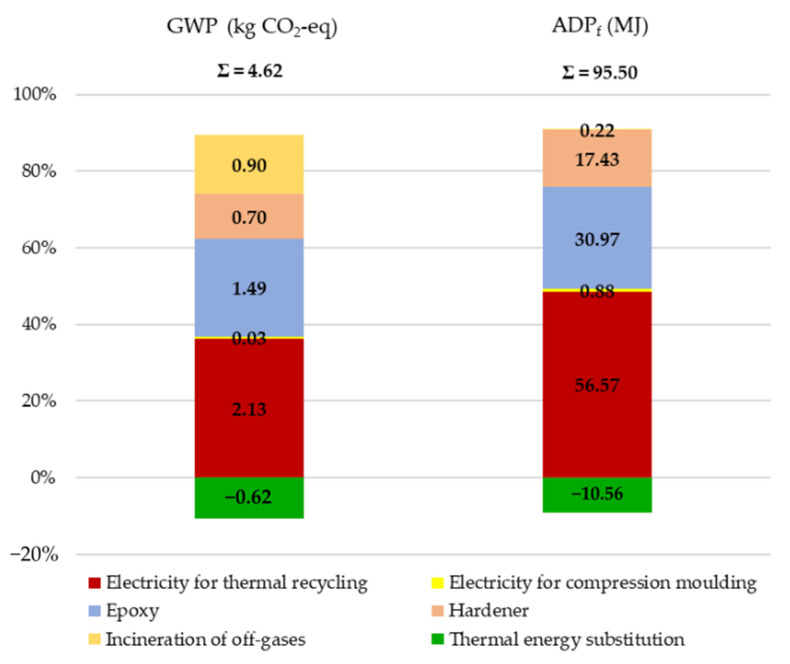
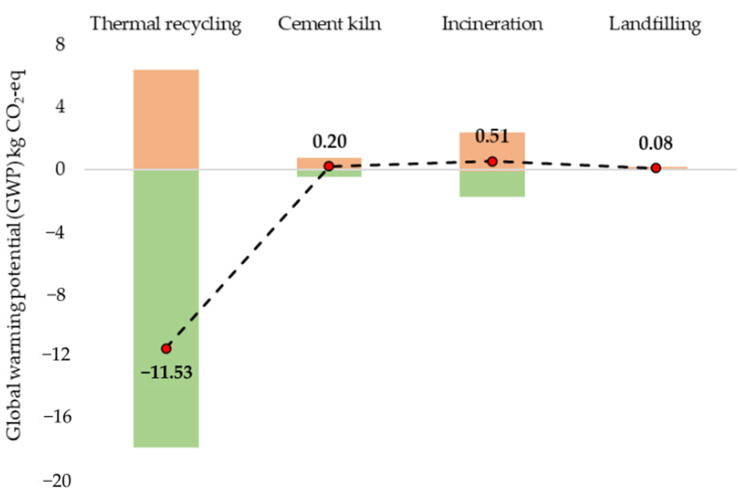
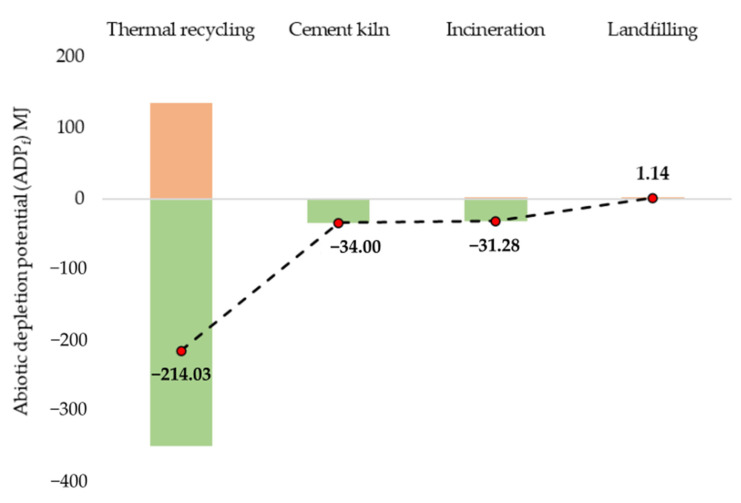
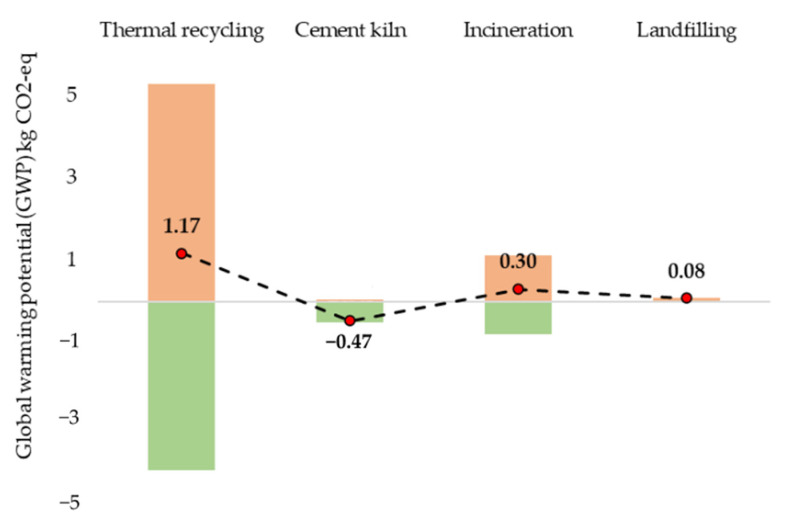
There are forecasts for the exponential increase in the generation of carbon fibre-reinforced polymer (CFRP) and glass fibre-reinforced polymer (GFRP) composite wastes containing valuable carbon and glass fibres. The recent adoption of these composites in wind turbines and aeroplanes has increased the amount of end-of-life waste from these applications. By adequately closing the life cycle loop, these enormous volumes of waste can partly satisfy the global demand for their virgin counterparts. Therefore, there is a need to properly dispose these composite wastes, with material recovery being the final target, thanks to the strict EU regulations for promoting recycling and reusing as the highest priorities in waste disposal options. In addition, the hefty taxation has almost brought about an end to landfills. These government regulations towards properly recycling these composite wastes have changed the industries' attitudes toward sustainable disposal approaches, and life cycle assessment (LCA) plays a vital role in this transition phase. This LCA study uses climate change results and fossil fuel consumptions to study the environmental impacts of a thermal recycling route to recycle and remanufacture CFRP and GFRP wastes into recycled rCFRP and rGFRP composites. Additionally, a comprehensive analysis was performed comparing with the traditional waste management options such as landfill, incineration with energy recovery and feedstock for cement kiln. Overall, the LCA results were favourable for CFRP wastes to be recycled using the thermal recycling route with lower environmental impacts. However, this contradicts GFRP wastes in which using them as feedstock in cement kiln production displayed more reduced environmental impacts than those thermally recycled to substitute virgin composite production.
据预测,含有宝贵碳纤维和玻璃纤维的碳纤维增强聚合物(CFRP)及玻璃纤维增强聚合物(GFRP)复合材料废弃物的产生量将呈指数级增长。这些复合材料近期在风力涡轮机和飞机中的应用增加了这些应用领域报废废弃物的数量。通过充分闭合生命周期循环,这些大量的废弃物能够部分满足全球对其原生材料的需求。因此,由于欧盟严格规定将促进回收利用作为废弃物处理选项中的最高优先事项,有必要妥善处置这些复合材料废弃物,最终目标是实现材料回收。此外,高额税收几乎已使填埋场终结。政府对妥善回收这些复合材料废弃物的这些规定改变了行业对可持续处置方法的态度,而生命周期评估(LCA)在这一过渡阶段发挥着至关重要的作用。这项LCA研究利用气候变化结果和化石燃料消耗情况,来研究将CFRP和GFRP废弃物进行热回收并再制造为再生rCFRP和rGFRP复合材料的热回收路线对环境的影响。此外,还进行了一项综合分析,与传统的废弃物管理选项(如填埋、能源回收焚烧和水泥窑原料)进行比较。总体而言,LCA结果表明,采用热回收路线回收CFRP废弃物对环境的影响较小。然而,这与GFRP废弃物的情况相矛盾,在GFRP废弃物中,将其用作水泥窑生产的原料对环境的影响比将其进行热回收以替代原生复合材料生产的影响更小。