Benaroya Research Institute at Virginia Mason, Seattle, Washington, United States of America.
Virginia Mason Franciscan Health, Seattle, Washington, United States of America.
PLoS Pathog. 2021 Dec 29;17(12):e1010203. doi: 10.1371/journal.ppat.1010203. eCollection 2021 Dec.
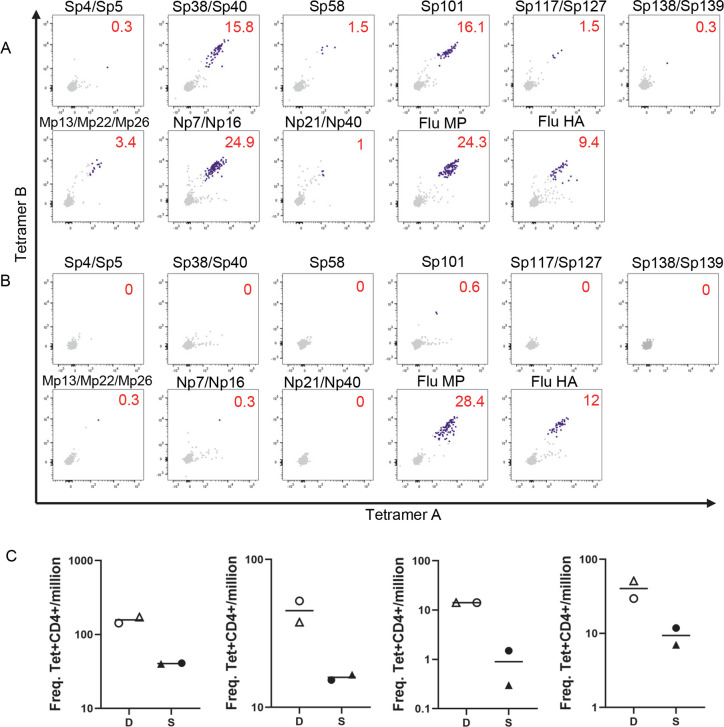
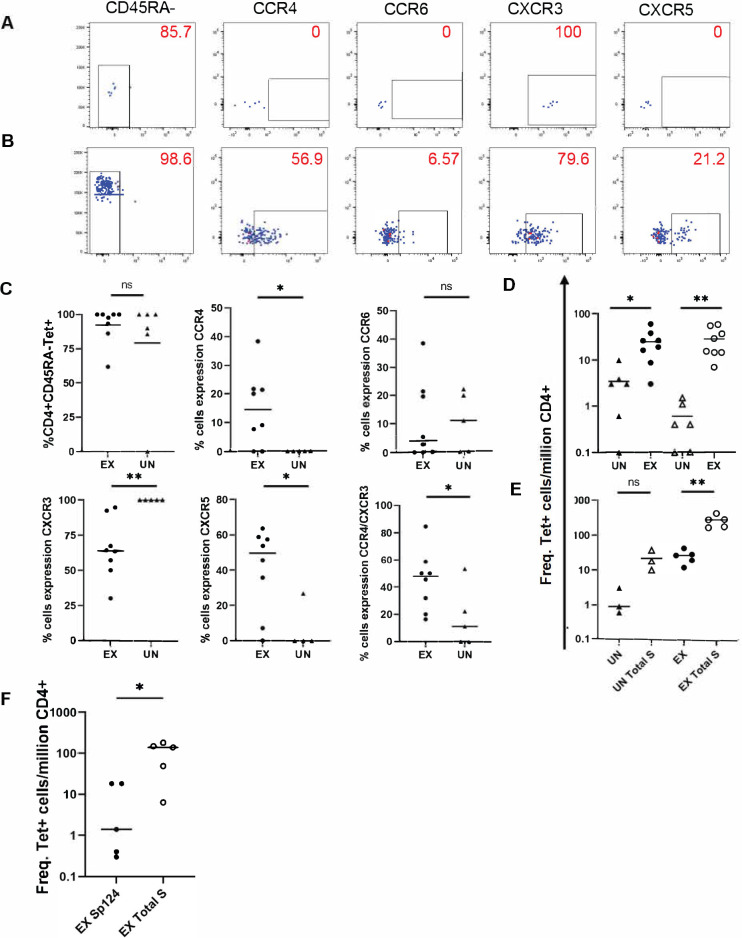
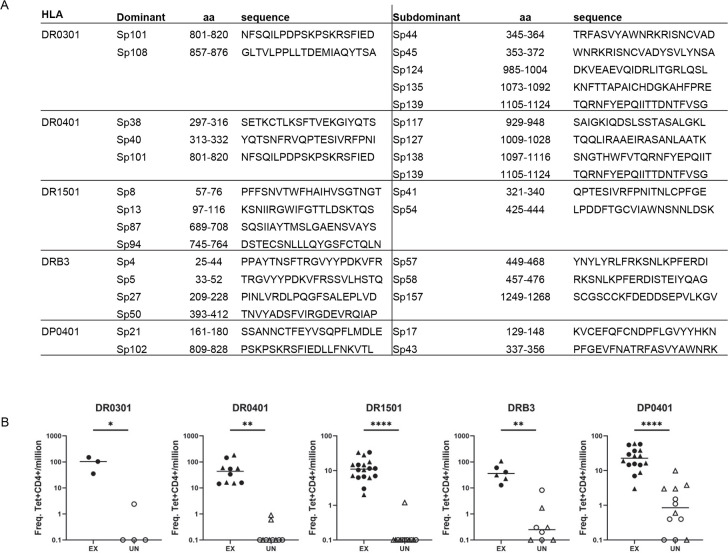
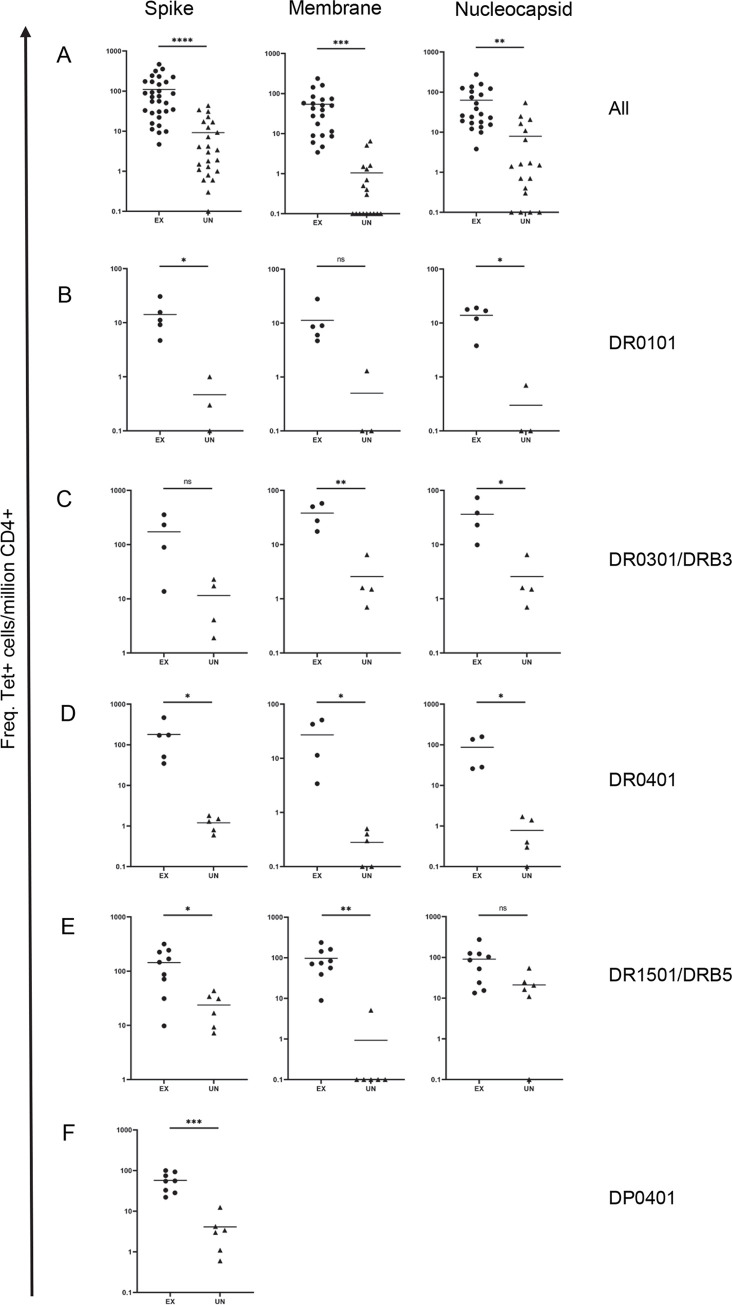
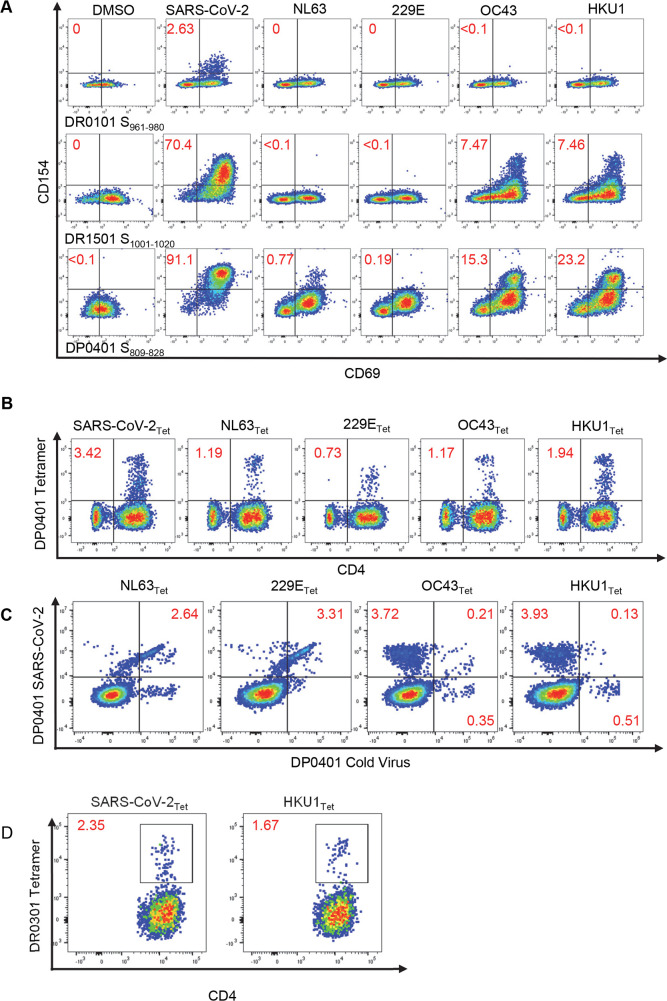
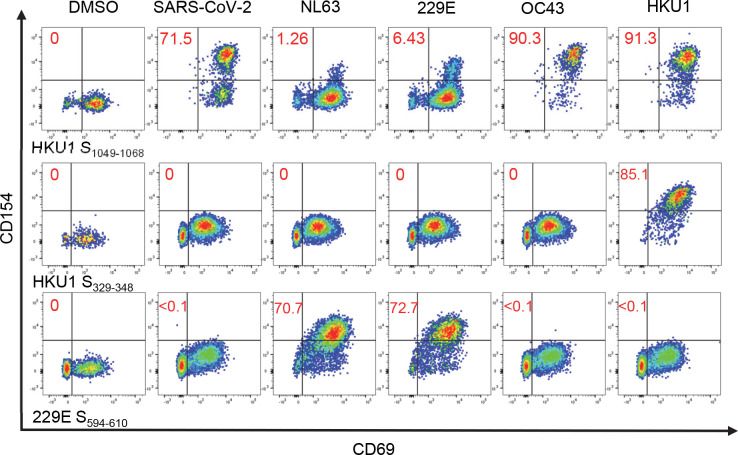
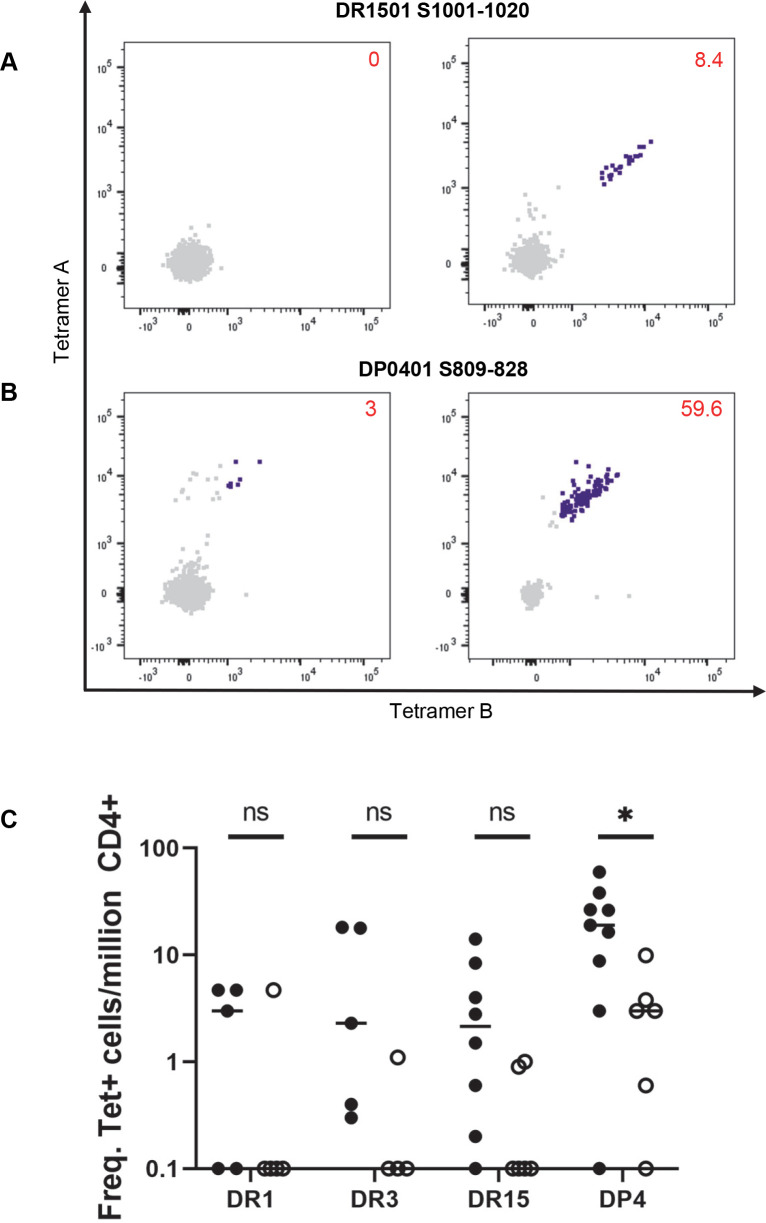
Class II tetramer reagents for eleven common DR alleles and a DP allele prevalent in the world population were used to identify SARS-CoV-2 CD4+ T cell epitopes. A total of 112, 28 and 42 epitopes specific for Spike, Membrane and Nucleocapsid, respectively, with defined HLA-restriction were identified. Direct ex vivo staining of PBMC with tetramer reagents was used to define immunodominant and subdominant T cell epitopes and estimate the frequencies of these T cells in SARS-CoV-2 exposed and naïve individuals. Majority of SARS-CoV-2 epitopes identified have <67% amino acid sequence identity with endemic coronaviruses and are unlikely to elicit high avidity cross-reactive T cell responses. Four SARS-CoV-2 Spike reactive epitopes, including a DPB104:01 restricted epitope, with ≥67% amino acid sequence identity to endemic coronavirus were identified. SARS-CoV-2 T cell lines for three of these epitopes elicited cross-reactive T cell responses to endemic cold viruses. An endemic coronavirus Spike T cell line showed cross-reactivity to the fourth SARS-CoV-2 epitope. Three of the Spike cross-reactive epitopes were subdominant epitopes, while the DPB104:01 restricted epitope was a dominant epitope. Frequency analyses showed Spike cross-reactive T cells as detected by tetramers were present at relatively low frequency in unexposed people and only contributed a small proportion of the overall Spike-specific CD4+ T cells in COVID-19 convalescent individuals. In total, these results suggested a very limited number of SARS-CoV-2 T cells as detected by tetramers are capable of recognizing ccCoV with relative high avidity and vice versa. The potentially supportive role of these high avidity cross-reactive T cells in protective immunity against SARS-CoV-2 needs further studies.
使用针对世界人群中常见的 11 种 DR 等位基因和一种 DP 等位基因的 II 类四聚体试剂来鉴定 SARS-CoV-2 CD4+ T 细胞表位。分别鉴定出针对 Spike、Membrane 和 Nucleocapsid 的 112、28 和 42 个具有明确 HLA 限制的特异性表位。使用四聚体试剂直接对 PBMC 进行体外染色,以鉴定免疫优势和亚优势 T 细胞表位,并估计这些 T 细胞在 SARS-CoV-2 暴露和未暴露个体中的频率。鉴定出的大多数 SARS-CoV-2 表位与地方性冠状病毒的氨基酸序列同一性<67%,不太可能引起高亲和力的交叉反应性 T 细胞反应。鉴定出 4 个 SARS-CoV-2 Spike 反应性表位,包括一个与地方性冠状病毒具有≥67%氨基酸序列同一性的 DPB104:01 限制性表位。这三个表位中的三个 SARS-CoV-2 表位为亚优势表位,而 DPB104:01 限制性表位为优势表位。频率分析表明,通过四聚体检测到的 Spike 交叉反应性 T 细胞在未暴露人群中的频率相对较低,仅在 COVID-19 恢复期个体的总 Spike 特异性 CD4+ T 细胞中占很小比例。总的来说,这些结果表明,通过四聚体检测到的 SARS-CoV-2 T 细胞数量非常有限,能够以相对高的亲和力识别 ccCoV,反之亦然。这些高亲和力交叉反应性 T 细胞在 SARS-CoV-2 保护性免疫中的潜在支持作用需要进一步研究。