Department of Immunology and Infectious Diseases, Harvard T.H. Chan School of Public Health, Boston, MA 02115, USA.
Wadsworth Center, New York State Department of Health, Albany, NY 12208, USA.
Cell Rep. 2021 Dec 28;37(13):110154. doi: 10.1016/j.celrep.2021.110154.
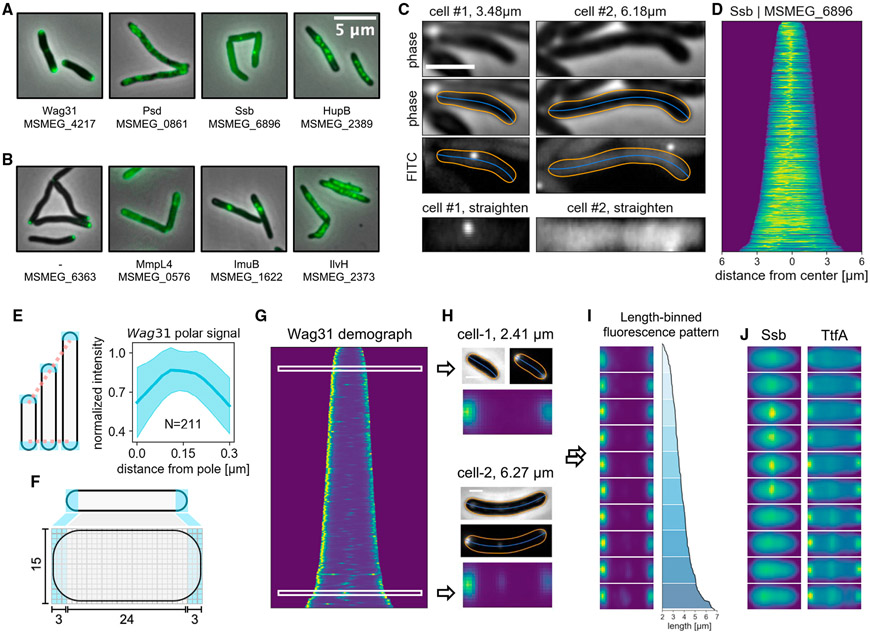
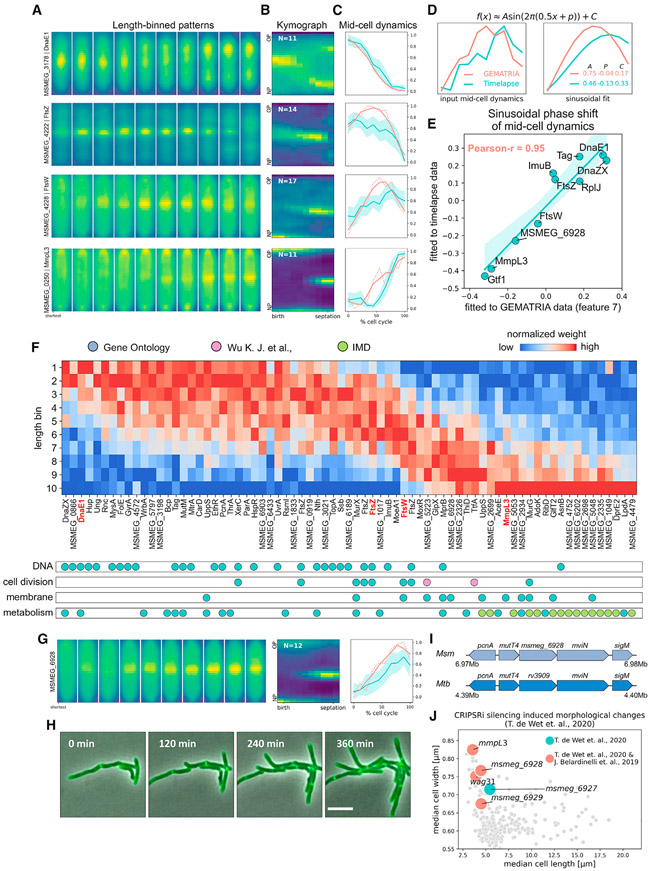
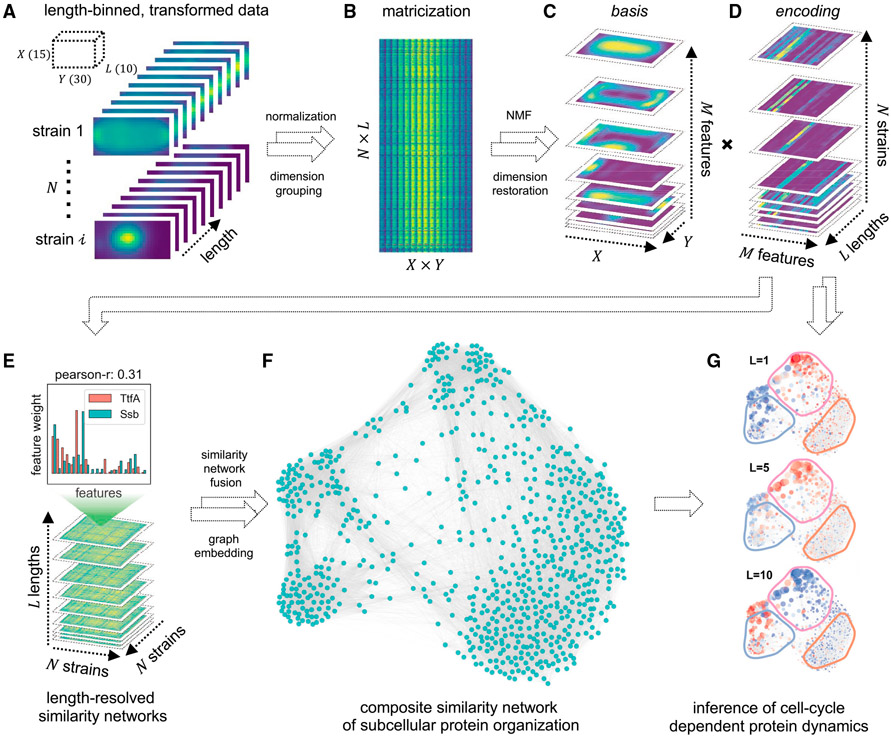
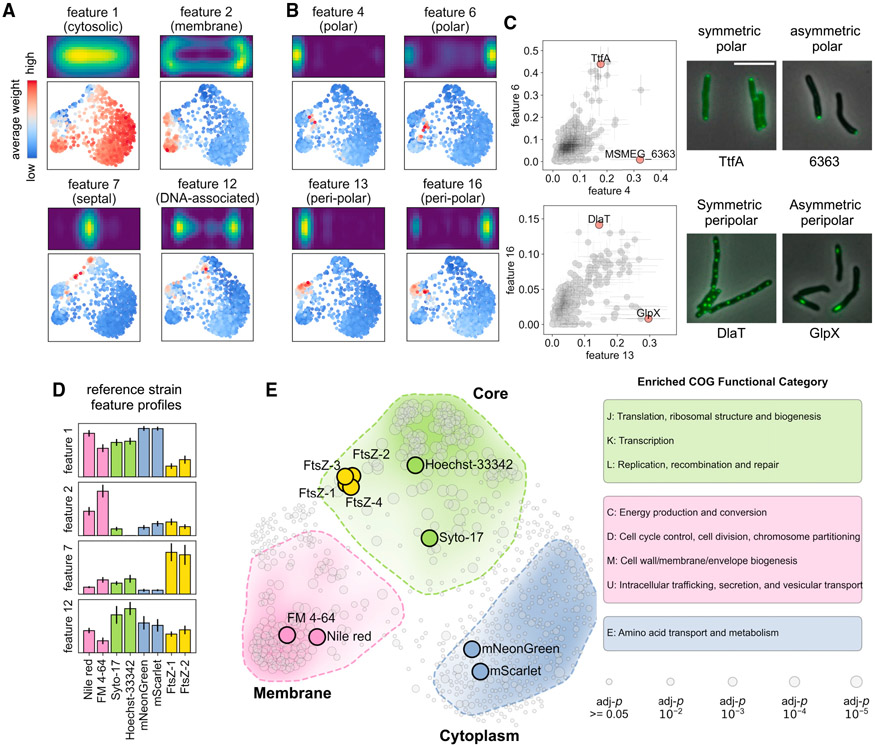
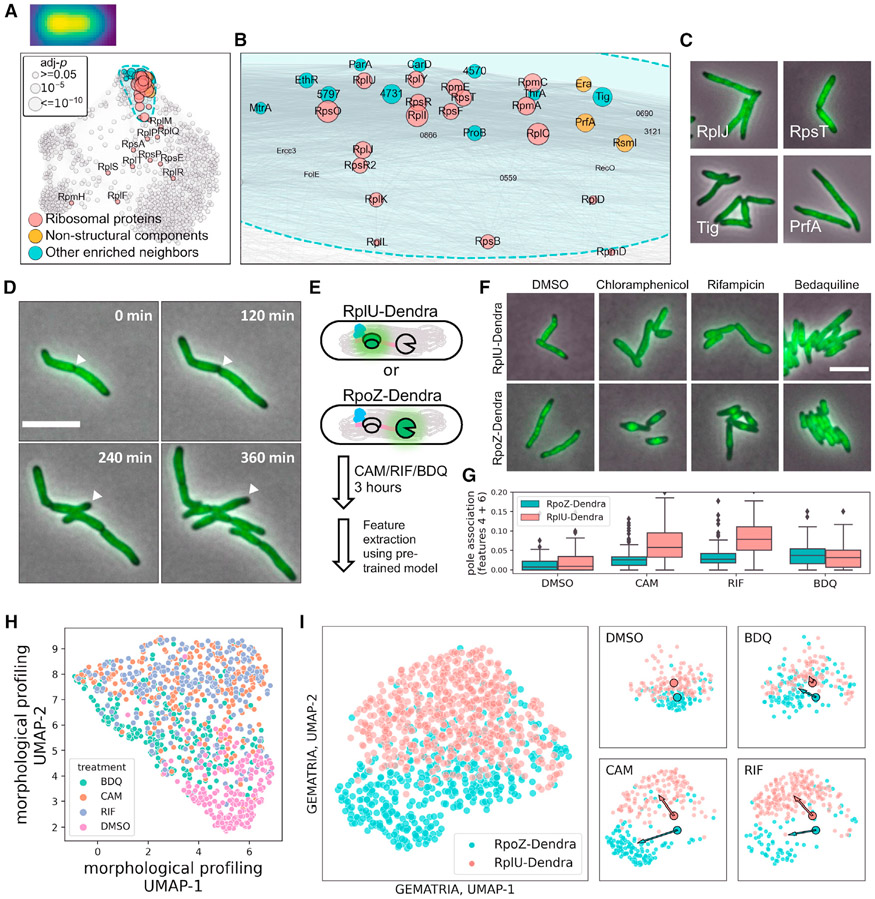
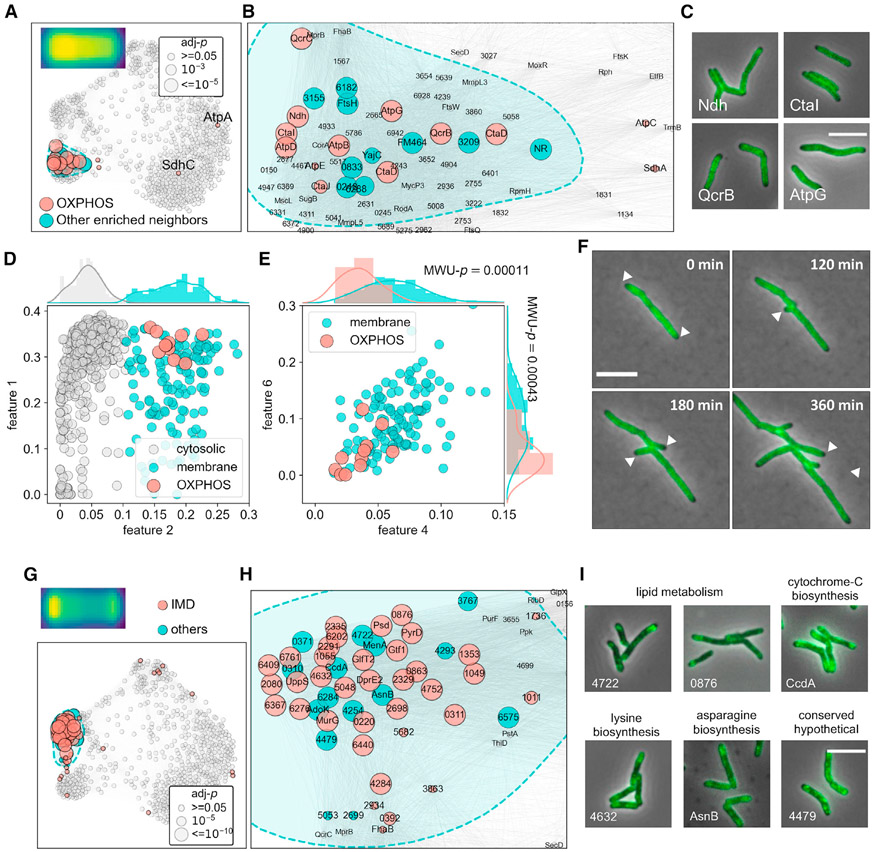
Although prokaryotic organisms lack traditional organelles, they must still organize cellular structures in space and time, challenges that different species solve differently. To systematically define the subcellular architecture of mycobacteria, we perform high-throughput imaging of a library of fluorescently tagged proteins expressed in Mycobacterium smegmatis and develop a customized computational pipeline, MOMIA and GEMATRIA, to analyze these data. Our results establish a spatial organization network of over 700 conserved mycobacterial proteins and reveal a coherent localization pattern for many proteins of known function, including those in translation, energy metabolism, cell growth and division, as well as proteins of unknown function. Furthermore, our pipeline exploits morphologic proxies to enable a pseudo-temporal approximation of protein localization and identifies previously uncharacterized cell-cycle-dependent dynamics of essential mycobacterial proteins. Collectively, these data provide a systems perspective on the subcellular organization of mycobacteria and provide tools for the analysis of bacteria with non-standard growth characteristics.
尽管原核生物缺乏传统的细胞器,但它们仍必须在空间和时间上组织细胞结构,不同物种以不同的方式解决这些挑战。为了系统地定义分枝杆菌的亚细胞结构,我们对在耻垢分枝杆菌中表达的荧光标记蛋白文库进行了高通量成像,并开发了一个定制的计算管道 MOMIA 和 GEMATRIA 来分析这些数据。我们的结果建立了超过 700 种保守分枝杆菌蛋白的空间组织网络,并揭示了许多已知功能蛋白的一致定位模式,包括翻译、能量代谢、细胞生长和分裂以及未知功能蛋白的定位模式。此外,我们的管道利用形态学代理来实现蛋白质定位的伪时间近似,并确定了以前未表征的必需分枝杆菌蛋白的细胞周期依赖性动力学。总的来说,这些数据为分枝杆菌的亚细胞组织提供了一个系统的视角,并为分析具有非标准生长特性的细菌提供了工具。