Crescendo Biologics Ltd., Meditrina Building, Babraham Research Campus, Cambridge, CB22 3AT, UK.
Oncoimmunology Group, Navarrabiomed, Instituto de Investigaciones Sanitarias de Navarra (IdISNA) UPNA, Irunlarrea street, 3, 31008, Pamplona, Spain.
Br J Cancer. 2022 May;126(8):1168-1177. doi: 10.1038/s41416-021-01684-4. Epub 2021 Dec 30.
Improving cancer immunotherapy long-term clinical benefit is a major priority. It has become apparent that multiple axes of immune suppression restrain the capacity of T cells to provide anti-tumour activity including signalling through PD1/PD-L1 and LAG3/MHC-II.
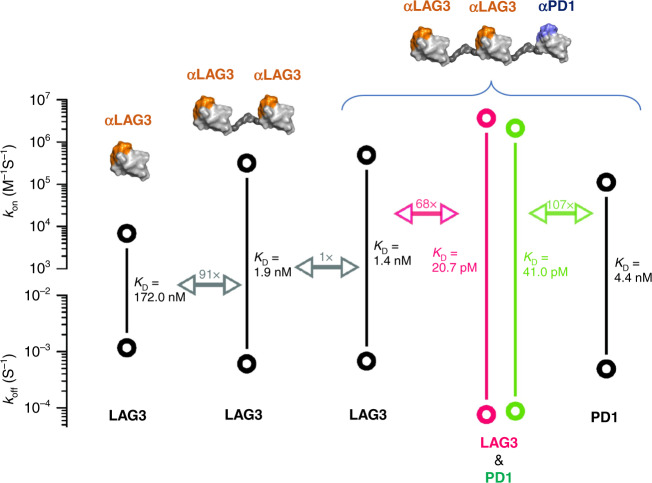
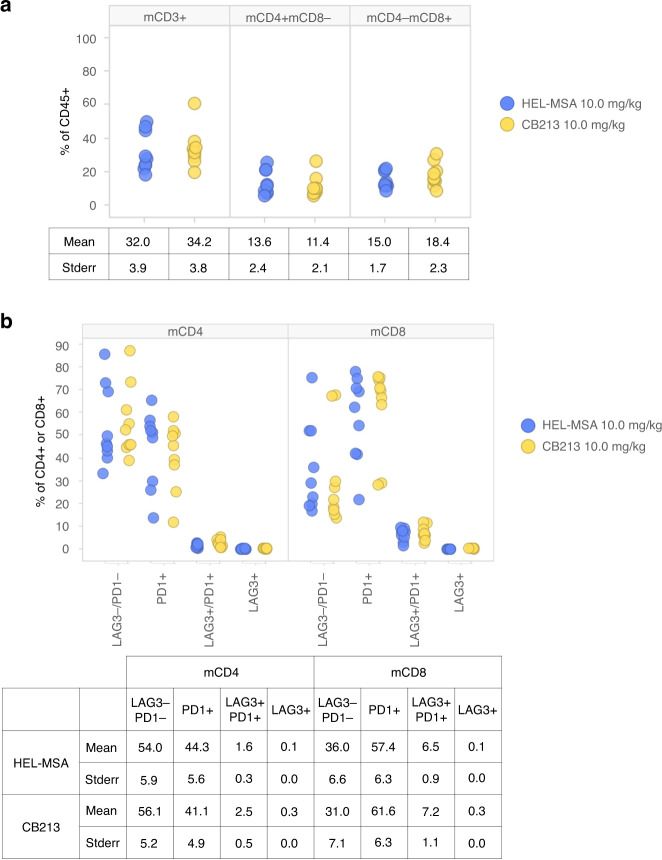
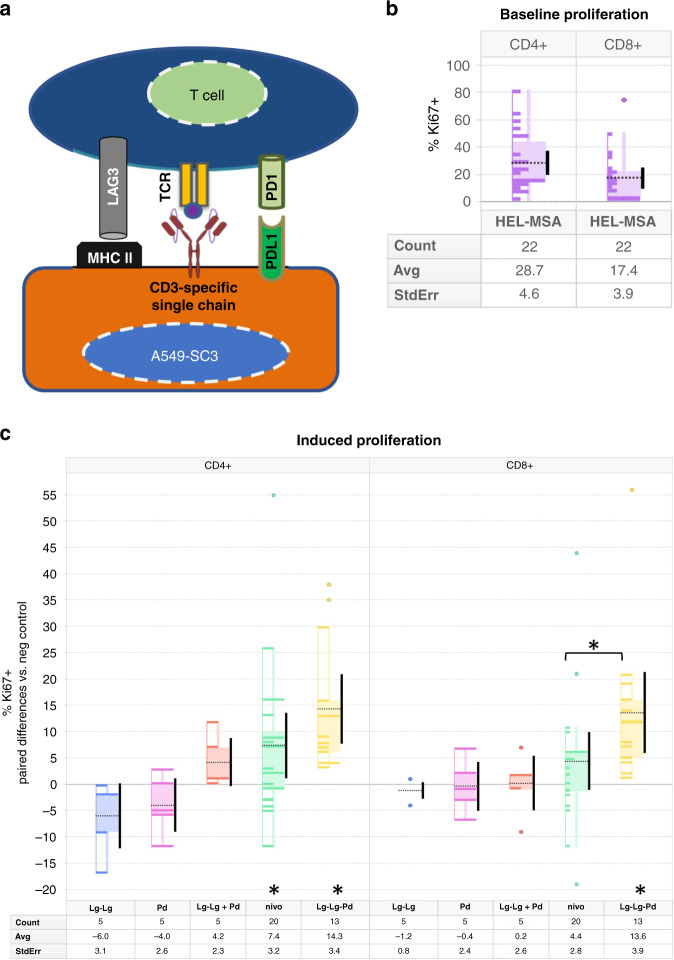
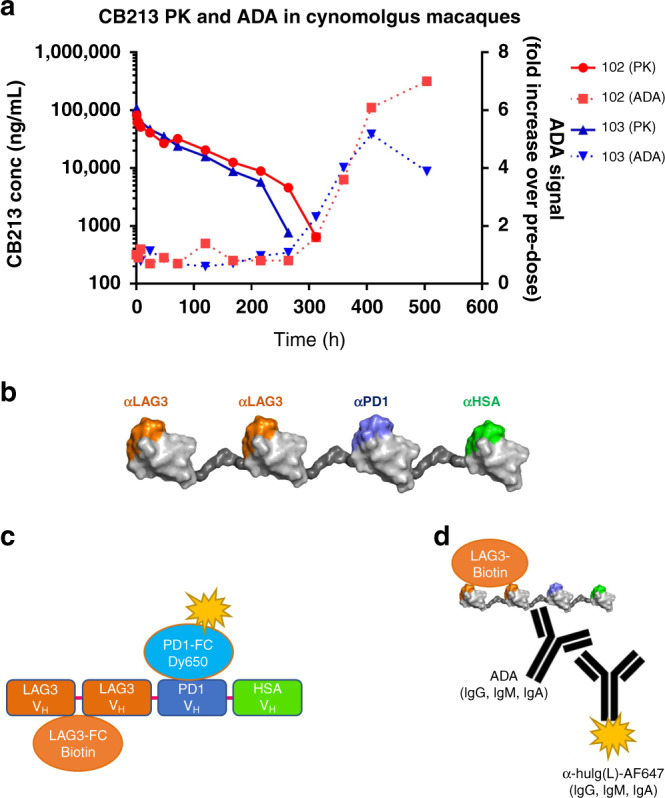
CB213 has been developed as a fully human PD1/LAG3 co-targeting multi-specific Humabody composed of linked V domains that avidly bind and block PD1 and LAG3 on dual-positive T cells. We present the preclinical primary pharmacology of CB213: biochemistry, cell-based function vs. immune-suppressive targets, induction of T cell proliferation ex vivo using blood obtained from NSCLC patients, and syngeneic mouse model anti-tumour activity. CB213 pharmacokinetics was assessed in cynomolgus macaques.
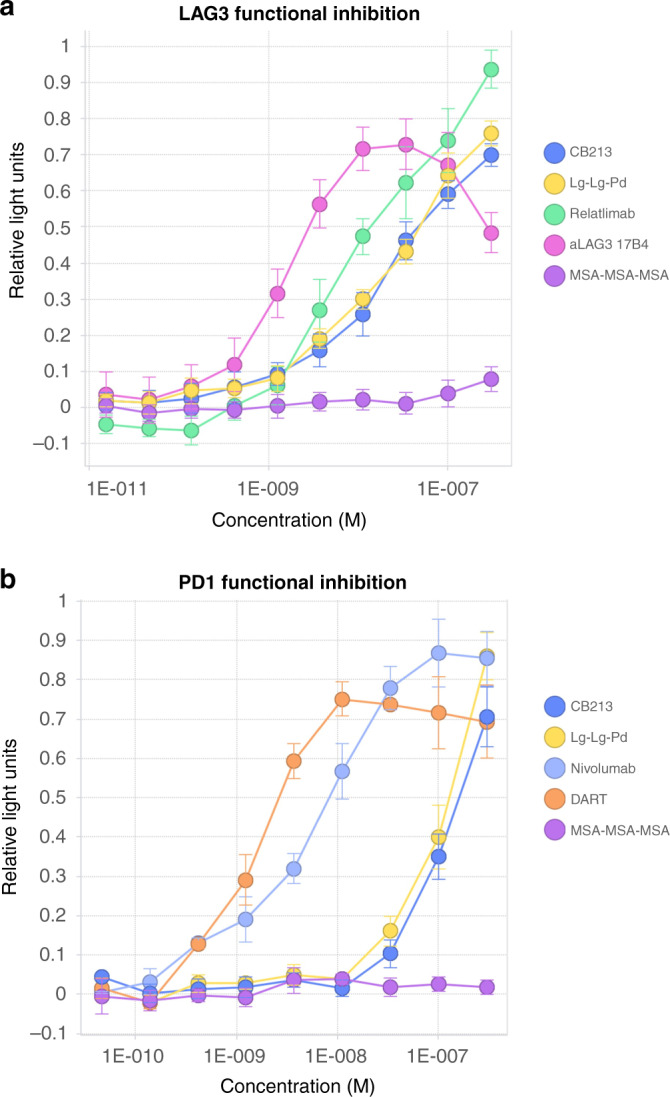
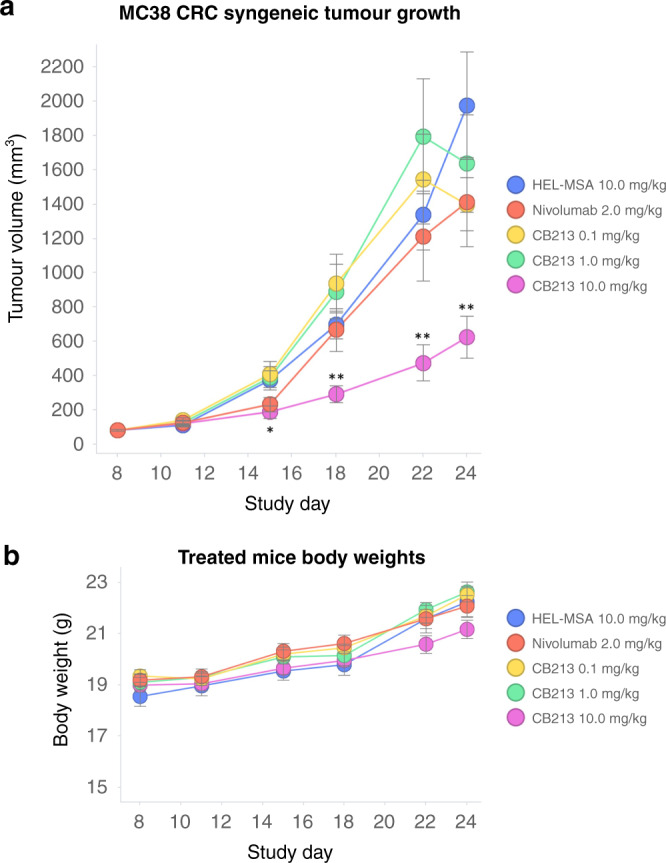
CB213 shows picomolar avidity when simultaneously engaging PD1 and LAG3. Assessing LAG3/MHC-II or PD1/PD-L1 suppression individually, CB213 preferentially counters the LAG3 axis. CB213 showed superior activity vs. αPD1 antibody to induce ex vivo NSCLC patient T cell proliferation and to suppress tumour growth in a syngeneic mouse tumour model, for which both experimental systems possess PD1 and LAG3 suppressive components. Non-human primate PK of CB213 suggests weekly clinical administration.
CB213 is poised to enter clinical development and, through intercepting both PD1 and LAG3 resistance mechanisms, may benefit patients with tumours escaping front-line immunological control.
提高癌症免疫疗法的长期临床获益是当务之急。显然,多种免疫抑制轴抑制了 T 细胞提供抗肿瘤活性的能力,包括 PD1/PD-L1 和 LAG3/MHC-II 的信号传导。
CB213 已被开发为一种完全人源化的 PD1/LAG3 共靶向多特异性 Humabody,由链接的 V 结构域组成,这些结构域能够强烈结合并阻断双重阳性 T 细胞上的 PD1 和 LAG3。我们展示了 CB213 的临床前主要药理学:生物化学、基于细胞的功能与免疫抑制靶标、使用来自 NSCLC 患者的血液体外诱导 T 细胞增殖,以及同种小鼠模型的抗肿瘤活性。在食蟹猴中评估了 CB213 的药代动力学。
CB213 同时结合 PD1 和 LAG3 时表现出皮摩尔亲和力。单独评估 LAG3/MHC-II 或 PD1/PD-L1 抑制时,CB213 优先拮抗 LAG3 轴。CB213 显示出优于 αPD1 抗体的活性,可诱导体外 NSCLC 患者 T 细胞增殖,并抑制同种小鼠肿瘤模型中的肿瘤生长,这两个实验系统都具有 PD1 和 LAG3 抑制成分。食蟹猴的 CB213 药代动力学提示每周临床给药。
CB213 有望进入临床开发,并且通过拦截 PD1 和 LAG3 的耐药机制,可能使逃避一线免疫控制的肿瘤患者受益。