Song Zongmian, Li Yusheng, Shang Chunfeng, Shang Guowei, Kou Hongwei, Li Jinfeng, Chen Songfeng, Liu Hongjian
Department of Orthopedics, The First Affiliated Hospital of Zhengzhou University, Zhengzhou, China.
Department of Orthopedics, Xiangya Hospital, Central South University, Changsha, China.
Front Cell Dev Biol. 2021 Dec 14;9:786546. doi: 10.3389/fcell.2021.786546. eCollection 2021.
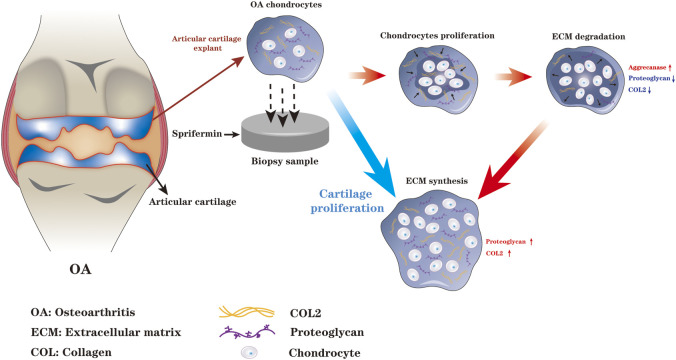
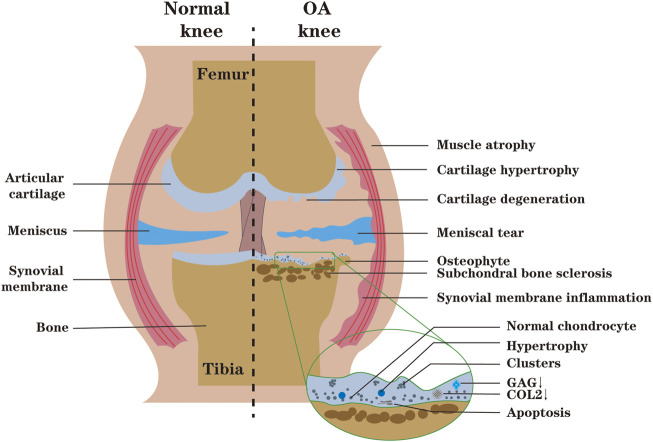
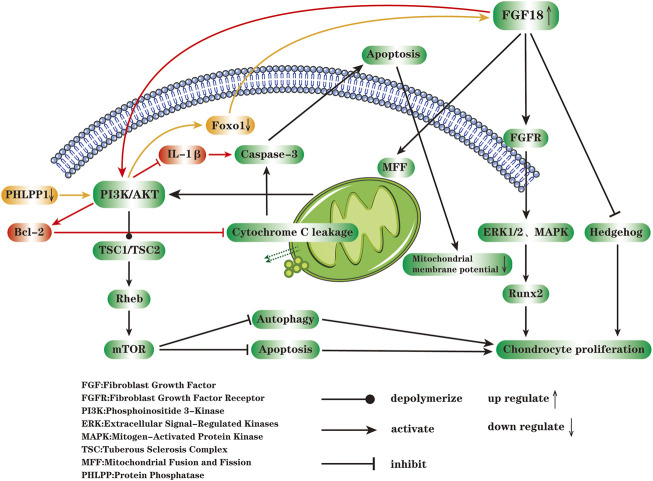
When suffering from osteoarthritis (OA), articular cartilage homeostasis is out of balance and the living quality declines. The treatment of knee OA has always been an unsolved problem in the world. At present, symptomatic treatment is mainly adopted for OA. Drug therapy is mainly used to relieve pain symptoms, but often accompanied with adverse reactions; surgical treatment involves the problem of poor integration between the repaired or transplanted tissues and the natural cartilage, leading to the failure of repair. Biotherapy which aims to promote cartilage regeneration and to restore endochondral homeostasis is expected to be an effective method for the prevention and treatment of OA. Disease-modifying osteoarthritis drugs (DMOADs) are intended for targeted treatment of OA. The DMOADs prevent excessive destruction of articular cartilage through anti-catabolism and stimulate tissue regeneration via excitoanabolic effects. Sprifermin (recombinant human FGF18, rhFGF18) is an effective DMOAD, which can not only promote the proliferation of articular chondrocyte and the synthesis of extracellular matrix, increase the thickness of cartilage in a dose-dependent manner, but also inhibit the activity of proteolytic enzymes and remarkedly slow down the degeneration of cartilage. This paper reviews the unique advantages of Sprifermin in repairing cartilage injury and improving cartilage homeostasis, aiming to provide an important strategy for the effective prevention and treatment of cartilage injury-related diseases.
患骨关节炎(OA)时,关节软骨稳态失衡,生活质量下降。膝关节OA的治疗一直是世界上尚未解决的问题。目前,OA主要采用对症治疗。药物治疗主要用于缓解疼痛症状,但常伴有不良反应;手术治疗存在修复或移植组织与天然软骨整合不良的问题,导致修复失败。旨在促进软骨再生和恢复软骨内稳态的生物疗法有望成为预防和治疗OA的有效方法。改善病情的骨关节炎药物(DMOADs)旨在对OA进行靶向治疗。DMOADs通过抗分解代谢防止关节软骨过度破坏,并通过兴奋合成代谢作用刺激组织再生。司普明(重组人FGF18,rhFGF18)是一种有效的DMOAD,它不仅可以促进关节软骨细胞的增殖和细胞外基质的合成,以剂量依赖的方式增加软骨厚度,还可以抑制蛋白水解酶的活性,并显著减缓软骨退变。本文综述了司普明在修复软骨损伤和改善软骨稳态方面的独特优势,旨在为有效防治软骨损伤相关疾病提供重要策略。