Li Chen-Yu, Wu Po-Jui, Chang Chi-Jen, Lee Chien-Ho, Chung Wen-Jung, Chen Tien-Yu, Tseng Chien-Hao, Wu Chia-Chen, Cheng Cheng-I
Department of Finance, National Taichung University of Science and Technology, Taichung, Taiwan.
Division of Cardiology, Department of Internal Medicine, Kaohsiung Chang Gung Memorial Hospital, Kaohsiung, Taiwan.
Front Cardiovasc Med. 2021 Dec 14;8:725419. doi: 10.3389/fcvm.2021.725419. eCollection 2021.
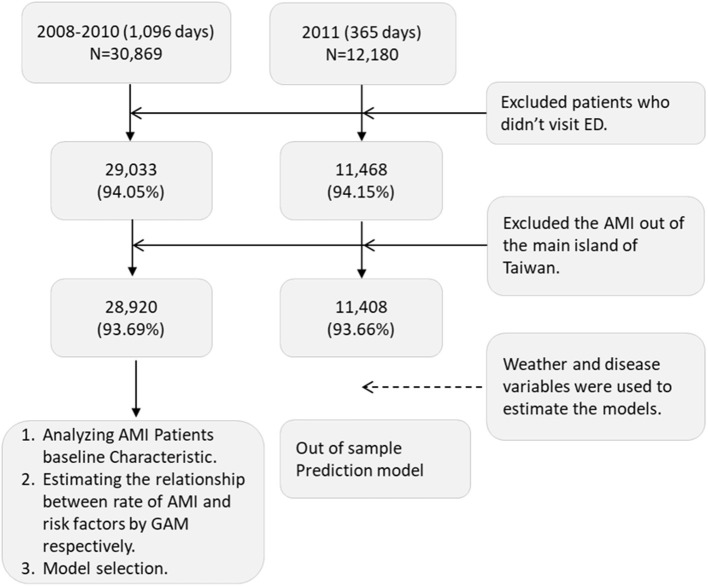
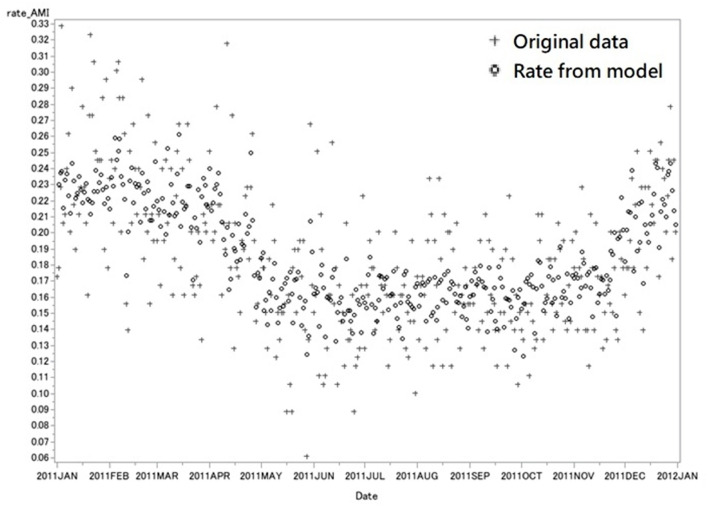
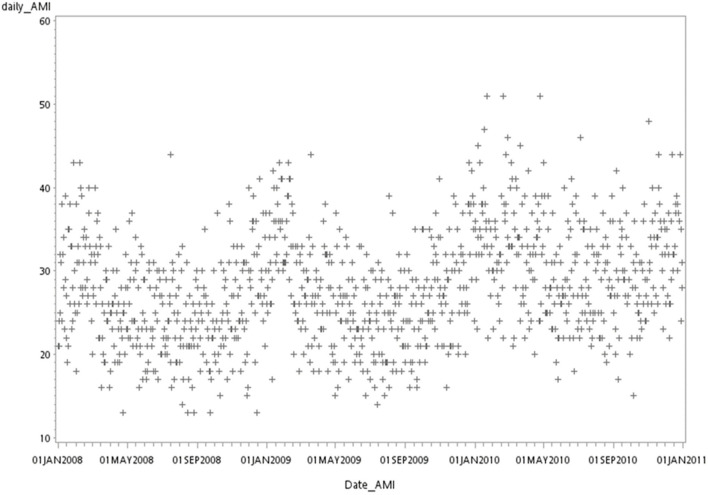
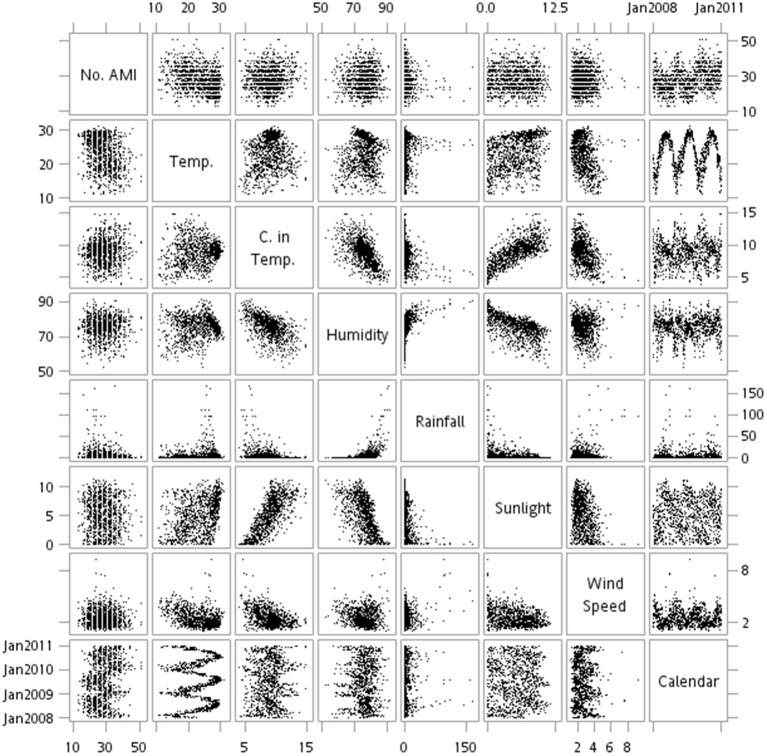
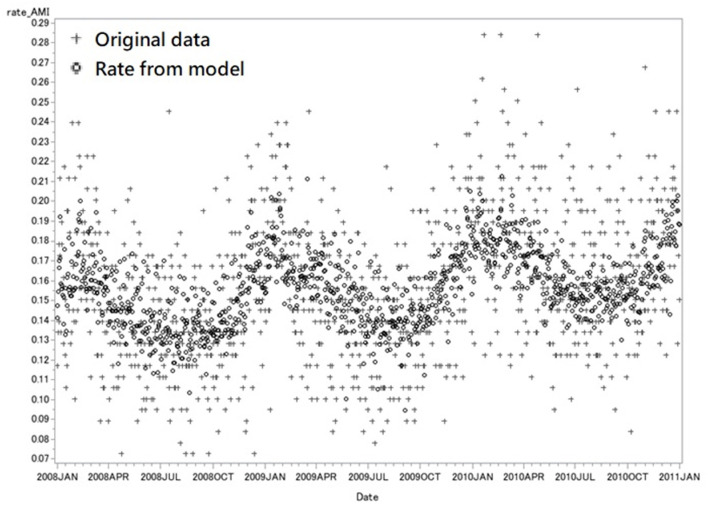
Cardiovascular disease is one of the leading causes of mortality worldwide. Acute myocardial infarction (AMI) is associated with weather change. The study aimed to investigate if weather change was among the risk factors of coronary artery disease to influence AMI occurrence in Taiwan and to generate a model to predict the probabilities of AMI in specific weather and clinical conditions. This observational study utilized the National Health Insurance Research Database and daily weather reports from Taiwan Central Weather Bureau to evaluate the discharge records of patients diagnosed with AMI from various hospitals in Taiwan between January 1, 2008 and December 31, 2011. Generalized additive models (GAMs) were used to estimate the effective parameters on the trend of the AMI incidence rate with respect to the weather and health factors in the time-series data and to build a model for predicting AMI probabilities. A total of 40,328 discharges were listed. The minimum temperature, maximum wind speed, and antiplatelet therapy were negatively related to the daily AMI incidence; however, a drop of 1° when the air temperature was below 15°C was associated with an increase of 1.6% of AMI incidence. By using the meaningful parameters including medical and weather factors, an estimated GAM was built. The model showed an adequate correlation in both internal and external validation. An increase in AMI occurrence in colder weather has been evidenced in the study, but the influence of wind speed remains uncertain. Our analysis demonstrated that the novel GAM model can predict daily onset rates of AMI in specific weather conditions.
心血管疾病是全球主要死因之一。急性心肌梗死(AMI)与气候变化有关。该研究旨在调查气候变化是否为冠状动脉疾病的风险因素之一,从而影响台湾地区AMI的发生,并建立一个模型来预测特定天气和临床条件下AMI的发生概率。这项观察性研究利用了国民健康保险研究数据库以及台湾中央气象局的每日天气报告,以评估2008年1月1日至2011年12月31日期间台湾各医院诊断为AMI的患者的出院记录。广义相加模型(GAMs)用于估计时间序列数据中AMI发病率趋势相对于天气和健康因素的有效参数,并建立一个预测AMI概率的模型。总共列出了40328份出院记录。最低温度、最大风速和抗血小板治疗与每日AMI发病率呈负相关;然而,当气温低于15°C时,气温每下降1°,AMI发病率就会增加1.6%。通过使用包括医疗和天气因素在内的有意义参数,建立了一个估计的GAM。该模型在内部和外部验证中均显示出充分的相关性。研究证明,在较寒冷的天气中AMI的发生率会增加,但风速的影响仍不确定。我们的分析表明,新的GAM模型可以预测特定天气条件下AMI的每日发病几率。