Laurenzana Ilaria, Trino Stefania, Lamorte Daniela, De Stradis Angelo, Santodirocco Michele, Sgambato Alessandro, De Luca Luciana, Caivano Antonella
Laboratory of Preclinical and Translational Research, Centro di Riferimento Oncologico della Basilicata (IRCCS-CROB), Rionero in Vulture, Italy.
Institute for Sustainable Plant Protection, National Research Council (CNR), Bari, Italy.
Front Med (Lausanne). 2021 Dec 16;8:793040. doi: 10.3389/fmed.2021.793040. eCollection 2021.
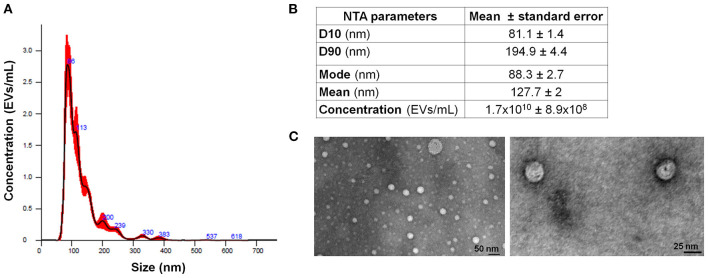
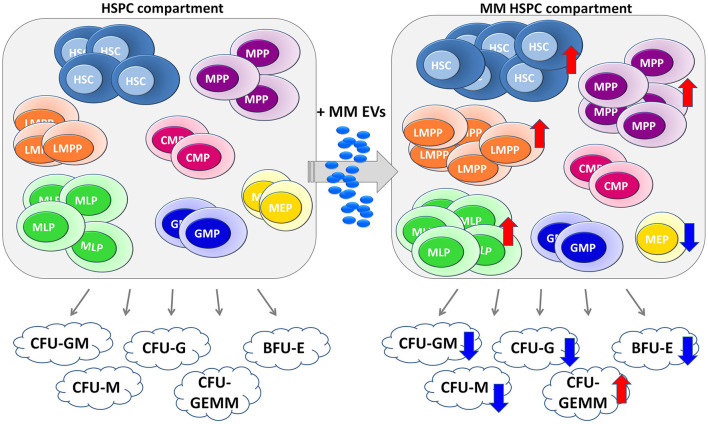
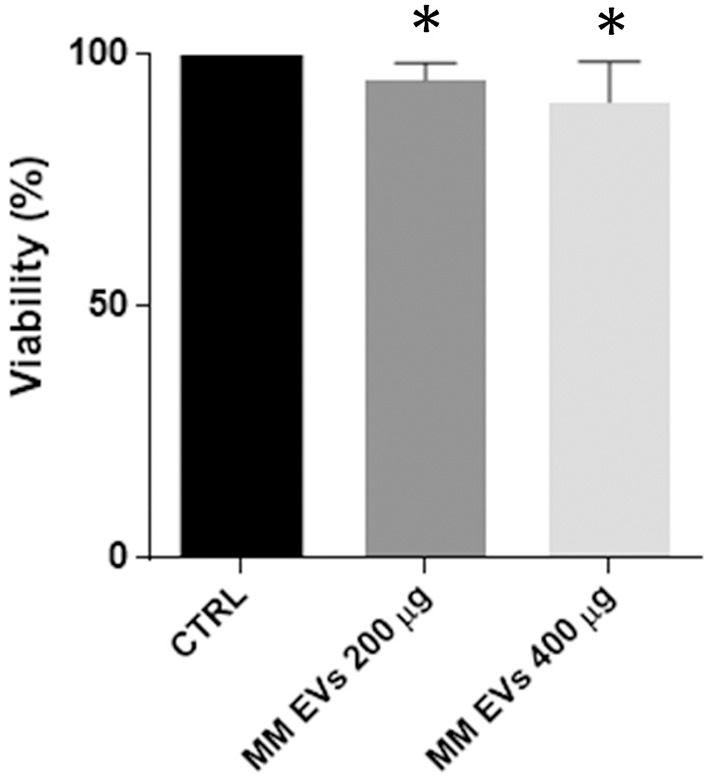
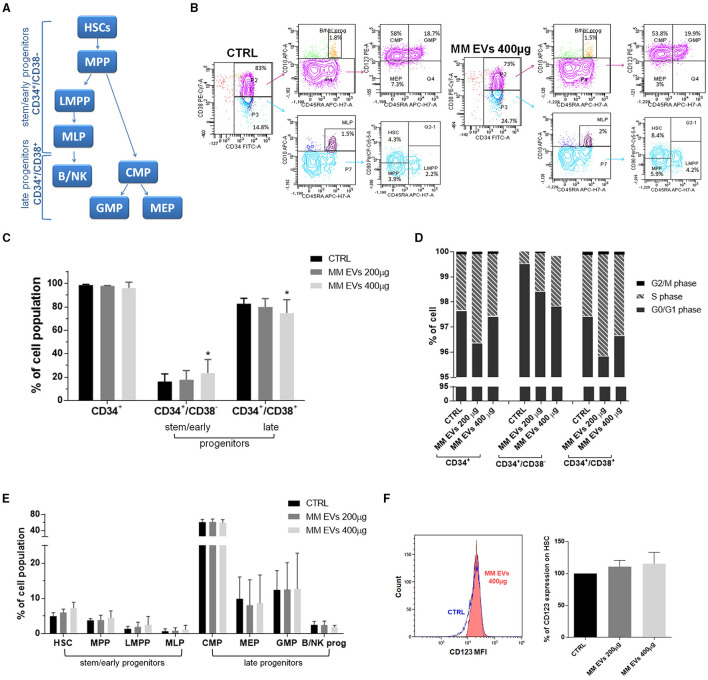
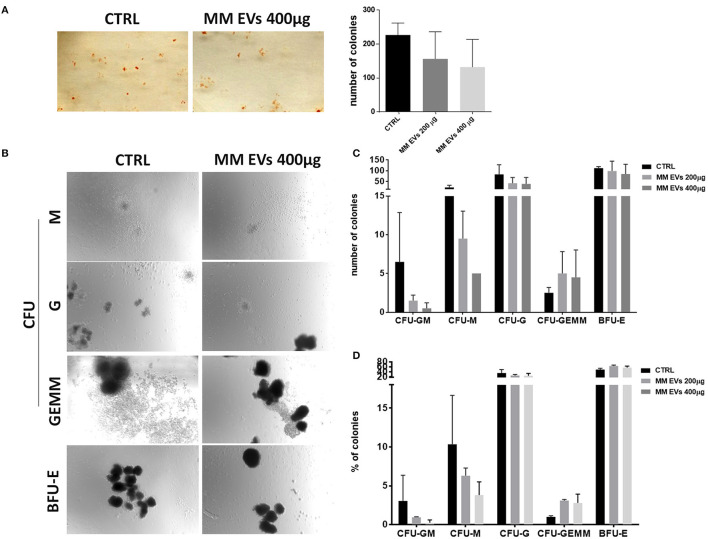
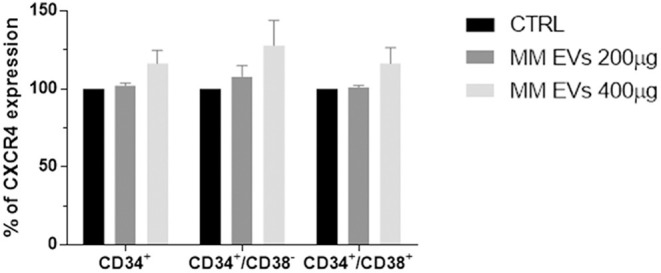
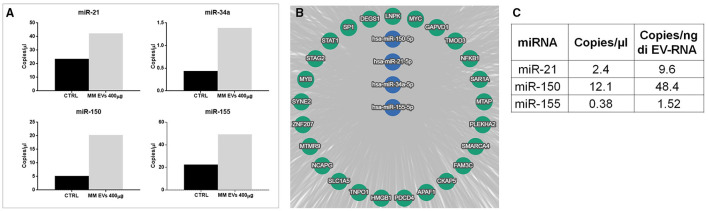
Multiple myeloma (MM) is characterized by the abnormal proliferation of clonal plasma cells (PCs) in bone marrow (BM). MM-PCs progressively occupy and likely alter BM niches where reside hematopoietic stem and progenitor cells (HSPCs) whose viability, self-renewal, proliferation, commitment, and differentiation are essential for normal hematopoiesis. Extracellular vesicles (EVs) are particles released by normal and neoplastic cells, such as MM cells. They are important cell-to-cell communicators able to modify the phenotype, genotype, and the fate of the recipient cells. Investigation of mechanisms and mediators underlying HSPC-MM-PC crosstalk is warranted to better understand the MM hematopoietic impairment and for the identification of novel therapeutic strategies against this incurable malignancy. This study is aimed to evaluate whether EVs released by MM-PCs interact with HSPCs, what effects they exert, and the underlying mechanisms involved. Therefore, we investigated the viability, cell cycle, phenotype, clonogenicity, and microRNA profile of HSPCs exposed to MM cell line-released EVs (MM-EVs). Our data showed that: (i) MM cells released a heterogeneous population of EVs; (ii) MM-EVs caused a dose-dependent reduction of HSPCs viability; (iii) MM-EVs caused a redistribution of the HSPC pool characterized by a significant increase in the frequency of stem and early precursors accompanied by a reduction of late precursor cells, such as common myeloid progenitors (CMPs), megakaryocyte erythroid progenitors (MEPs), B and NK progenitors, and a slight increase of granulocyte macrophage progenitors (GMPs); (iv) MM-EVs caused an increase of stem and early precursors in S phase with a decreased number of cells in G/G phase in a dose-dependent manner; (v) MM-EVs reduced the HSPC colony formation; and (vi) MM-EVs caused an increased expression level of C-X-C motif chemokine receptor type 4 (CXCR4) and activation of miRNAs. In conclusion, MM cells through the release of EVs, by acting directly on normal HSPCs, negatively dysregulate normal hematopoiesis, and this could have important therapeutic implications.
多发性骨髓瘤(MM)的特征是骨髓(BM)中克隆性浆细胞(PCs)异常增殖。MM-PCs逐渐占据并可能改变骨髓微环境,造血干细胞和祖细胞(HSPCs)存在于该微环境中,其生存能力、自我更新、增殖、定向分化和分化对于正常造血至关重要。细胞外囊泡(EVs)是由正常细胞和肿瘤细胞(如MM细胞)释放的颗粒。它们是重要的细胞间通讯介质,能够改变受体细胞的表型、基因型和命运。有必要研究HSPC-MM-PC相互作用的机制和介质,以更好地理解MM的造血功能损害,并确定针对这种无法治愈的恶性肿瘤的新治疗策略。本研究旨在评估MM-PCs释放的EVs是否与HSPCs相互作用、它们产生何种影响以及其中涉及的潜在机制。因此,我们研究了暴露于MM细胞系释放的EVs(MM-EVs)的HSPCs的生存能力、细胞周期、表型、克隆形成能力和微小RNA谱。我们的数据表明:(i)MM细胞释放了异质性的EVs群体;(ii)MM-EVs导致HSPCs生存能力呈剂量依赖性降低;(iii)MM-EVs导致HSPC池重新分布,其特征是干细胞和早期祖细胞频率显著增加,同时晚期祖细胞减少,如常见髓系祖细胞(CMPs)、巨核细胞红系祖细胞(MEPs)、B和NK祖细胞,以及粒细胞巨噬细胞祖细胞(GMPs)略有增加;(iv)MM-EVs导致S期干细胞和早期祖细胞增加,G/G期细胞数量呈剂量依赖性减少;(v)MM-EVs降低了HSPC集落形成;(vi)MM-EVs导致C-X-C基序趋化因子受体4(CXCR4)表达水平增加和微小RNA激活。总之,MM细胞通过释放EVs,直接作用于正常HSPCs,对正常造血产生负向调节作用,这可能具有重要的治疗意义。