Cappelli Julia, Khacho Pamela, Wang Boyang, Sokolovski Alexandra, Bakkar Wafae, Raymond Sophie, Ahlskog Nina, Pitney Julian, Wu Junzheng, Chudalayandi Prakash, Wong Adrian Y C, Bergeron Richard
Cellular and Molecular Medicine Department, University of Ottawa, 451 Smyth Road, Roger Guindon Building, Room 3501N, Ottawa, ON K1H 8M5, Canada.
Ottawa Hospital Research Institute, 451 Smyth Road, Roger Guindon Building, Room 3501N, Ottawa, ON K1H 8M5, Canada.
iScience. 2021 Dec 3;25(1):103539. doi: 10.1016/j.isci.2021.103539. eCollection 2022 Jan 21.
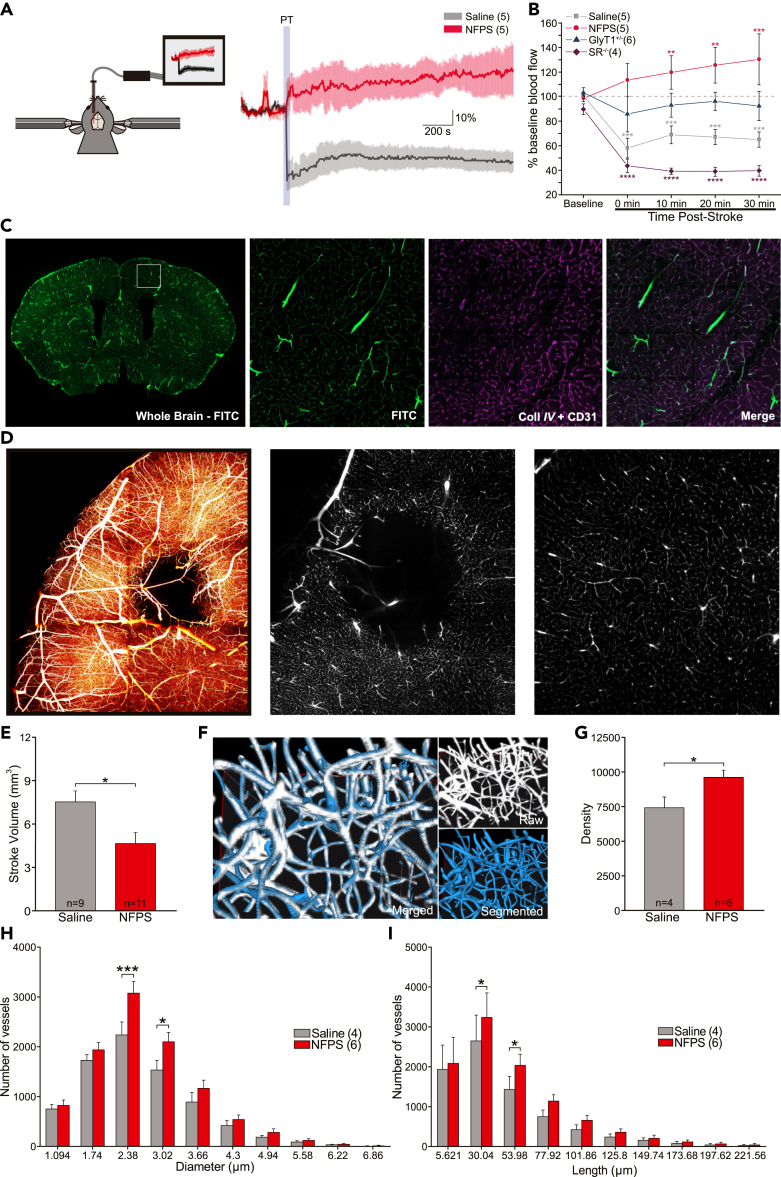
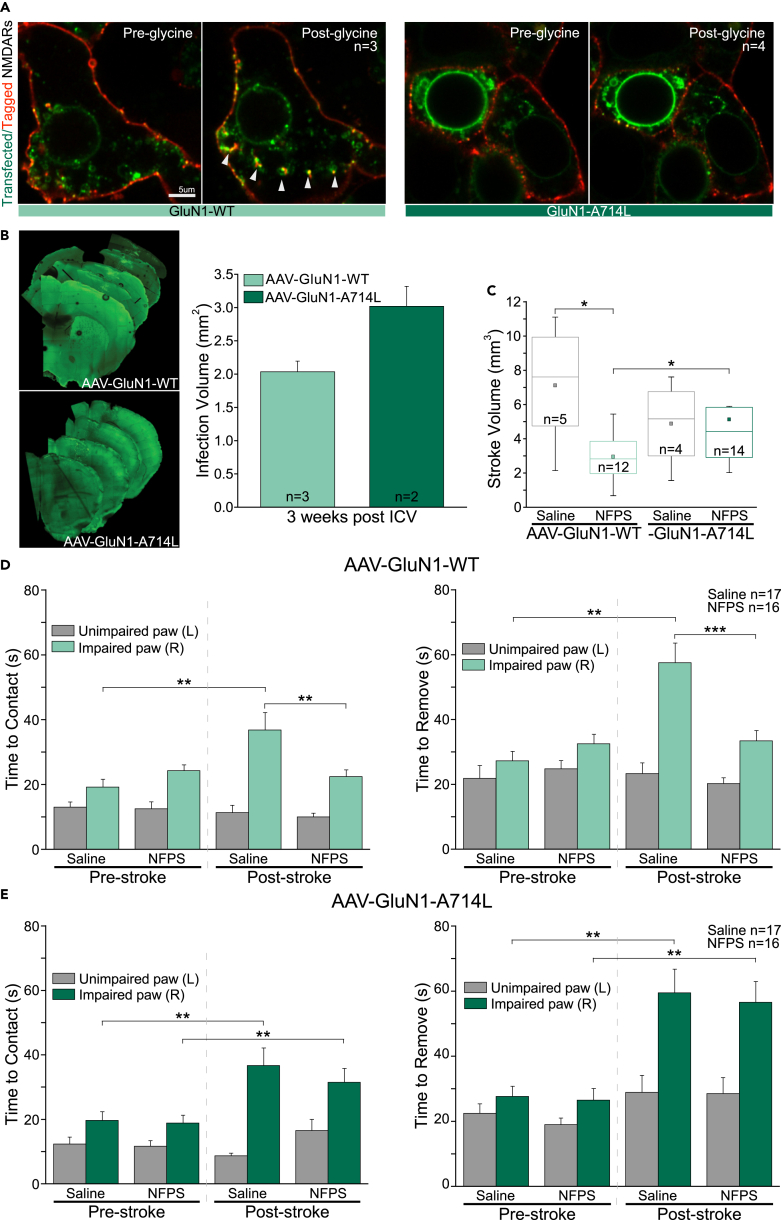
Ischemic stroke is the second leading cause of death worldwide. Following an ischemic event, neuronal death is triggered by uncontrolled glutamate release leading to overactivation of glutamate sensitive -methyl-d-aspartate receptor (NMDAR). For gating, NMDARs require not only the binding of glutamate, but also of glycine or a glycine-like compound as a co-agonist. Low glycine doses enhance NMDAR function, whereas high doses trigger glycine-induced NMDAR internalization (GINI) . Here, we report that following an ischemic event, , GINI also occurs and provides neuroprotection in the presence of a GlyT1 antagonist (GlyT1-A). Mice pretreated with a GlyT1-A, which increases synaptic glycine levels, exhibited smaller stroke volume, reduced cell death, and minimized behavioral deficits following stroke induction by either photothrombosis or endothelin-1. Moreover, we show evidence that in ischemic conditions, GlyT1-As preserve the vasculature in the peri-infarct area. Therefore, GlyT1 could be a new target for the treatment of ischemic stroke.
缺血性中风是全球第二大致死原因。缺血事件发生后,谷氨酸不受控制地释放会引发神经元死亡,导致谷氨酸敏感的N-甲基-D-天冬氨酸受体(NMDAR)过度激活。为实现门控,NMDAR不仅需要谷氨酸结合,还需要甘氨酸或类甘氨酸化合物作为共激动剂。低剂量甘氨酸可增强NMDAR功能,而高剂量则会引发甘氨酸诱导的NMDAR内化(GINI)。在此,我们报告,缺血事件发生后,GINI也会出现,并且在存在甘氨酸转运体1拮抗剂(GlyT1-A)的情况下提供神经保护作用。用GlyT1-A预处理的小鼠,其突触甘氨酸水平升高,在通过光血栓形成或内皮素-1诱导中风后,梗死体积更小,细胞死亡减少,行为缺陷最小化。此外,我们有证据表明,在缺血条件下,GlyT1-A可保护梗死周边区域的血管。因此,GlyT1可能成为治疗缺血性中风的新靶点。