Department of Clinical Laboratory Sciences, College of Applied Medical Sciences, King Saud bin Abdulaziz University for Health Sciences, Riyadh, Saudi Arabia.
King Abdullah International Medical Research Center, Riyadh, Saudi Arabia.
BMC Med Educ. 2022 Jan 3;22(1):13. doi: 10.1186/s12909-021-03073-0.
Although most systematic reviews of interprofessional education (IPE) evaluated the impact of IPE on the students' acquisition of knowledge in relation to other professions, the development of teamwork skills, and the changes in collaborative behaviour, the processes involved in IPE (i.e., approaches to teaching and learning) are under-researched. The purpose of the study was to conduct a systematic review to establish how IPE has been implemented in university-based undergraduate curricula, focusing on the teaching and learning approaches.
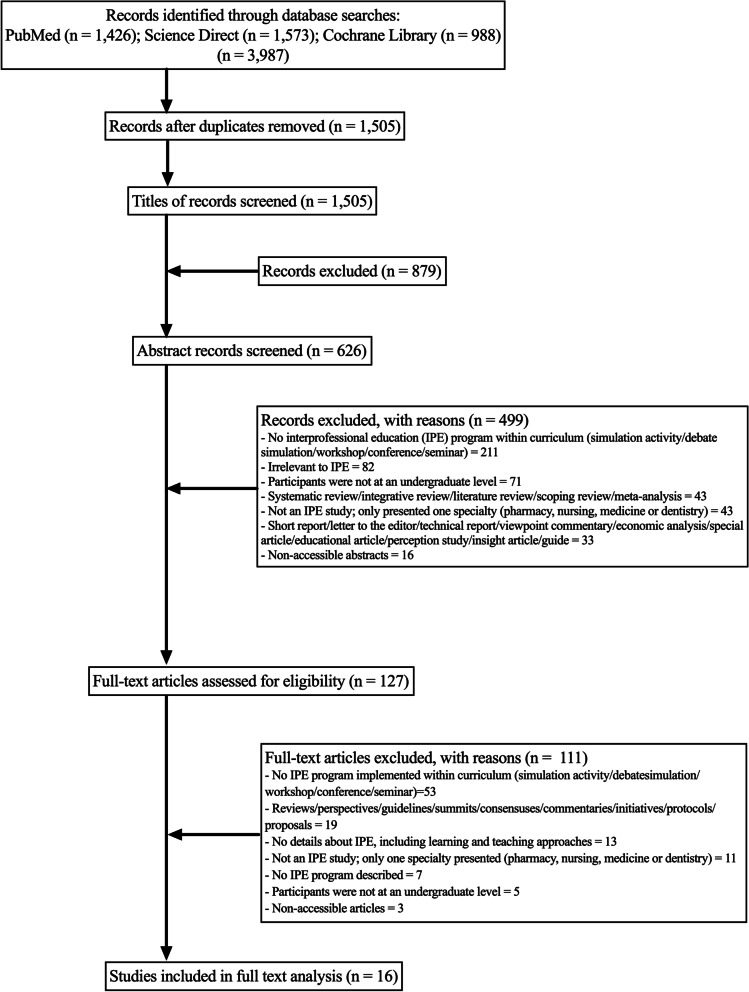
The systematic review was performed in 2020 with three databases: PubMed, Science Direct, and the Cochrane Library. Titles and abstracts were included based on pre-identified eligibility criteria. We used the article entitled 'Systematic reviews in medical education: a practical approach: AMEE guide 94' as the basis to establish the aim and methods of the current systematic review from 2010 to 2019.
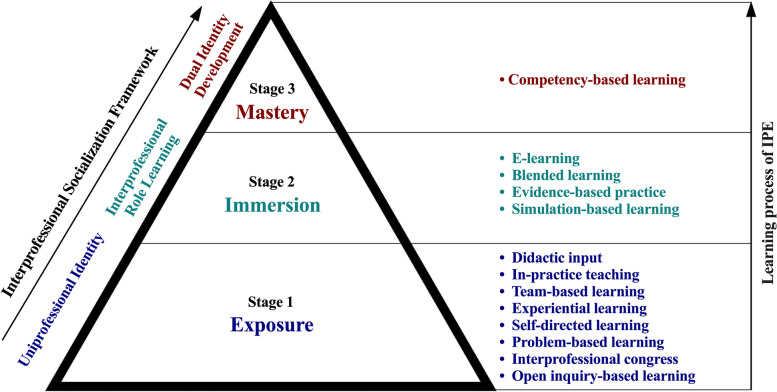
We found 16 articles that met the inclusion criteria and reported the implementation process of IPE in universities from Western, Asian, and African countries. A combination of at least two teaching and learning approaches was used to deliver IPE. The findings indicated that of all the teaching and learning approaches, simulation-based education, e-learning, and problem-based learning were the most prevalent approaches used to deliver IPE. This systematic review also revealed a lack of IPE programmes in the Middle East region.
The evidence synthesised in the current systematic review could support IPE curriculum planners and educators when planning an IPE programme. More global IPE initiatives are required to meet the global health workforce needs. Further studies are required to identify the effectiveness of the different teaching and learning approaches in the development of IPE competencies.
尽管大多数关于跨专业教育(IPE)的系统评价都评估了 IPE 对学生获取与其他专业相关的知识、团队合作技能的发展以及协作行为的变化的影响,但 IPE 所涉及的过程(即教学方法)的研究还很不足。本研究的目的是进行系统评价,以确定 IPE 如何在基于大学的本科课程中实施,重点是教学方法。
2020 年,我们使用了三个数据库(PubMed、Science Direct 和 Cochrane Library)进行了系统评价。根据预先确定的入选标准,纳入了标题和摘要。我们使用了一篇题为“医学教育中的系统评价:一种实用方法:AMEE 指南 94”的文章作为基础,确定了 2010 年至 2019 年期间本次系统评价的目的和方法。
我们共找到了 16 篇符合纳入标准的文章,这些文章报道了来自西方、亚洲和非洲国家的大学中 IPE 的实施过程。至少使用了两种教学方法来实施 IPE。研究结果表明,在所有教学方法中,基于模拟的教育、电子学习和以问题为基础的学习是用于实施 IPE 的最常见方法。本次系统评价还揭示了中东地区缺乏 IPE 课程的情况。
当前系统评价中综合的证据可以为 IPE 课程规划者和教育者在规划 IPE 课程时提供支持。需要开展更多的全球 IPE 倡议,以满足全球卫生人力的需求。需要进一步研究以确定不同教学方法在发展 IPE 能力方面的有效性。