Gupta Rohan, Kumar Pravir
Molecular Neuroscience and Functional Genomics Laboratory, Department of Biotechnology, Delhi Technological University (Formerly DCE), Delhi 110042, India.
ACS Omega. 2021 Dec 16;6(51):35780-35798. doi: 10.1021/acsomega.1c05827. eCollection 2021 Dec 28.
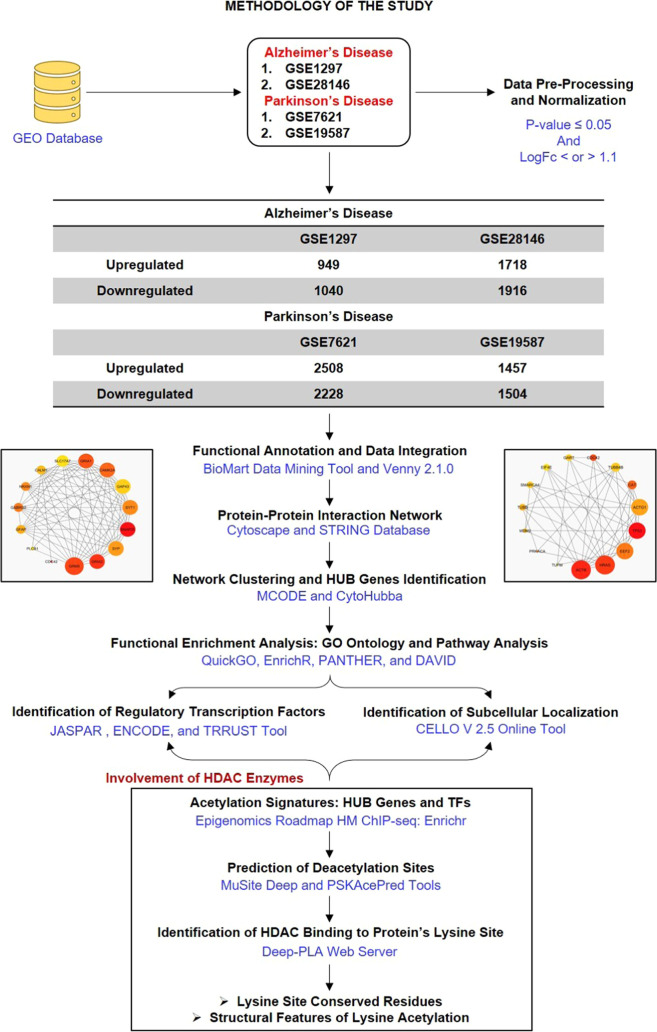
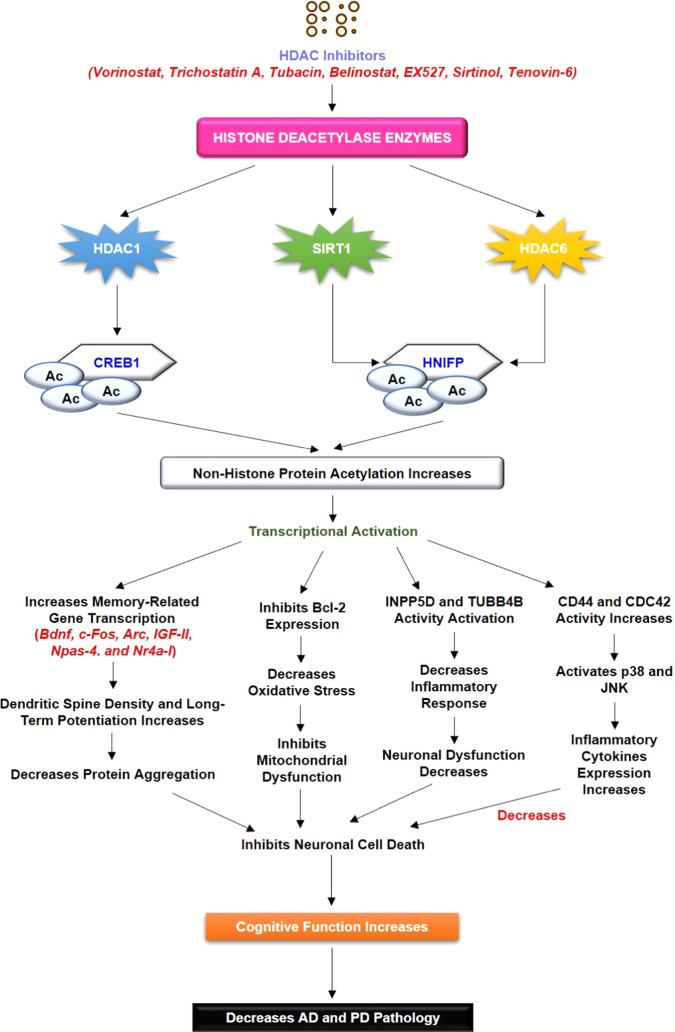
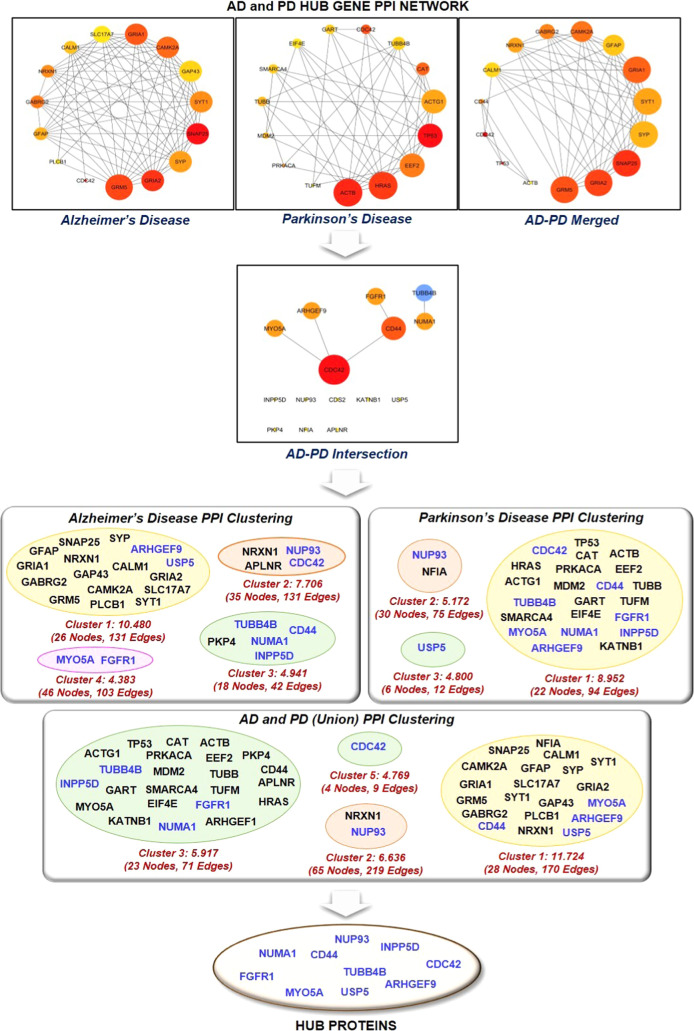
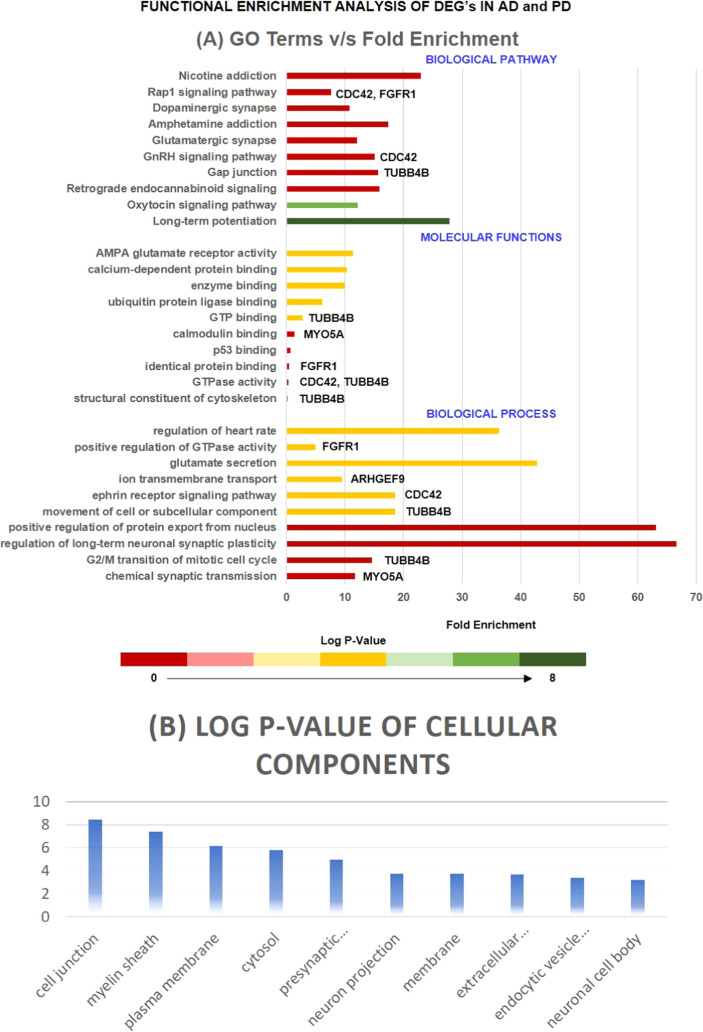
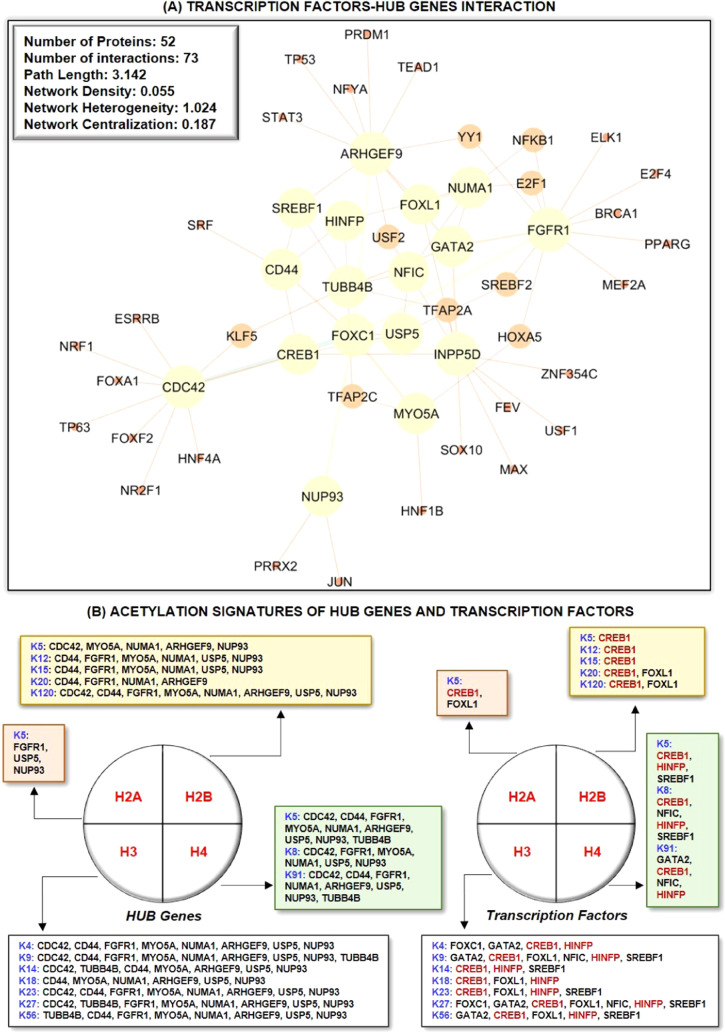
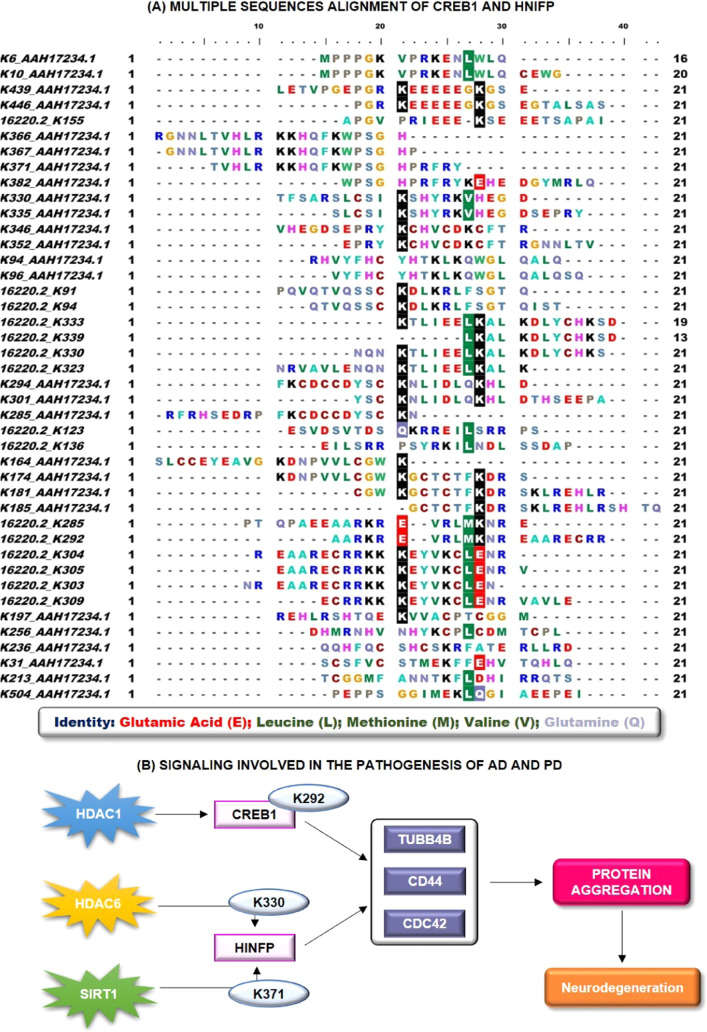
Integration of omics data and deciphering the mechanism of a biological regulatory network could be a promising approach to reveal the molecular mechanism involved in the progression of complex diseases, including Alzheimer's and Parkinson's. Despite having an overlapping mechanism in the etiology of Alzheimer's disease (AD) and Parkinson's disease (PD), the exact mechanism and signaling molecules behind them are still unknown. Further, the acetylation mechanism and histone deacetylase (HDAC) enzymes provide a positive direction toward studying the shared phenomenon between AD and PD pathogenesis. For instance, increased expression of HDACs causes a decrease in protein acetylation status, resulting in decreased cognitive and memory function. Herein, we employed an integrative approach to analyze the transcriptomics data that established a potential relationship between AD and PD. Data preprocessing and analysis of four publicly available microarray datasets revealed 10 HUB proteins, namely, CDC42, CD44, FGFR1, MYO5A, NUMA1, TUBB4B, ARHGEF9, USP5, INPP5D, and NUP93, that may be involved in the shared mechanism of AD and PD pathogenesis. Further, we identified the relationship between the HUB proteins and transcription factors that could be involved in the overlapping mechanism of AD and PD. CREB1 and HINFP were the crucial regulatory transcription factors that were involved in the AD and PD crosstalk. Further, lysine acetylation sites and HDAC enzyme prediction revealed the involvement of 15 and 27 potential lysine residues of CREB1 and HINFP, respectively. Our results highlighted the importance of HDAC1(K292) and HDAC6(K330) association with CREB1 and HINFP, respectively, in the AD and PD crosstalk. However, different datasets with a large number of samples and wet lab experimentation are required to validate and pinpoint the exact role of CREB1 and HINFP in the AD and PD crosstalk. It is also possible that the different datasets may or may not affect the results due to analysis parameters. In conclusion, our study potentially highlighted the crucial proteins, transcription factors, biological pathways, lysine residues, and HDAC enzymes shared between AD and PD at the molecular level. The findings can be used to study molecular studies to identify the possible relationship in the AD-PD crosstalk.
整合组学数据并解读生物调控网络的机制,可能是揭示包括阿尔茨海默病和帕金森病在内的复杂疾病进展所涉及分子机制的一种有前景的方法。尽管阿尔茨海默病(AD)和帕金森病(PD)在病因学上有重叠机制,但其背后的确切机制和信号分子仍不清楚。此外,乙酰化机制和组蛋白去乙酰化酶(HDAC)为研究AD和PD发病机制之间的共同现象提供了一个积极的方向。例如,HDACs表达增加会导致蛋白质乙酰化状态降低,从而导致认知和记忆功能下降。在此,我们采用综合方法分析转录组学数据,以建立AD和PD之间的潜在关系。对四个公开可用的微阵列数据集进行数据预处理和分析,发现了10个枢纽蛋白,即CDC42、CD44、FGFR1、MYO5A、NUMA1、TUBB4B、ARHGEF9、USP5、INPP5D和NUP93,它们可能参与AD和PD发病机制的共同机制。此外,我们确定了枢纽蛋白与可能参与AD和PD重叠机制的转录因子之间的关系。CREB1和HINFP是参与AD和PD相互作用的关键调控转录因子。此外,赖氨酸乙酰化位点和HDAC酶预测分别揭示了CREB1和HINFP的15个和27个潜在赖氨酸残基的参与情况。我们的结果突出了HDAC1(K292)和HDAC6(K330)分别与CREB1和HINFP在AD和PD相互作用中的关联的重要性。然而,需要不同的具有大量样本的数据集和湿实验室实验来验证并精确确定CREB1和HINFP在AD和PD相互作用中的确切作用。由于分析参数的原因,不同的数据集也可能会或不会影响结果。总之,我们的研究潜在地突出了AD和PD在分子水平上共享的关键蛋白质、转录因子、生物途径、赖氨酸残基和HDAC酶。这些发现可用于分子研究,以确定AD - PD相互作用中的可能关系。