Center for Integrative Genomics, Faculty of Biology and Medicine, University of Lausanne, Lausanne, Switzerland.
J Diabetes Investig. 2022 Apr;13(4):599-607. doi: 10.1111/jdi.13745. Epub 2022 Jan 28.
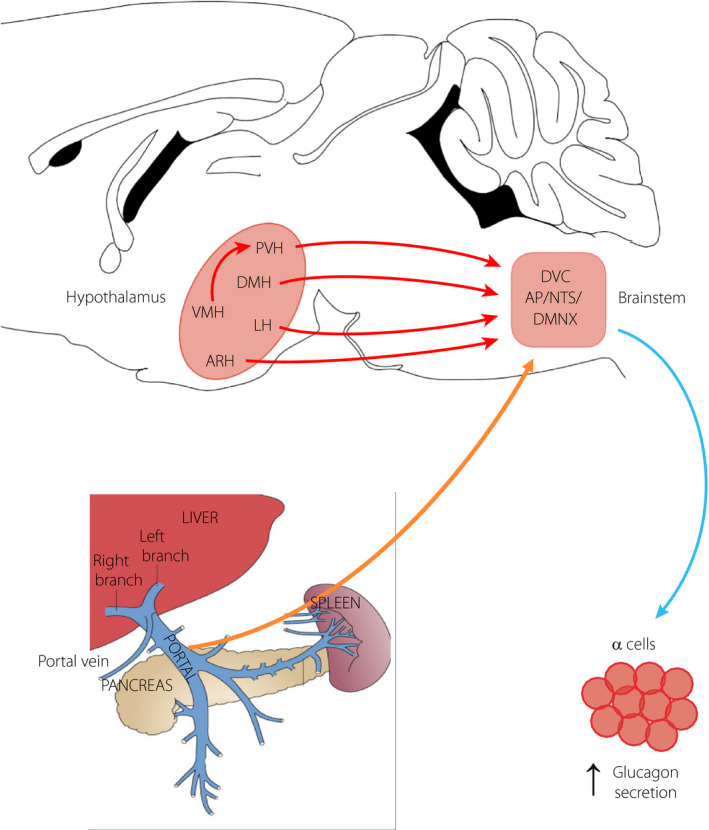
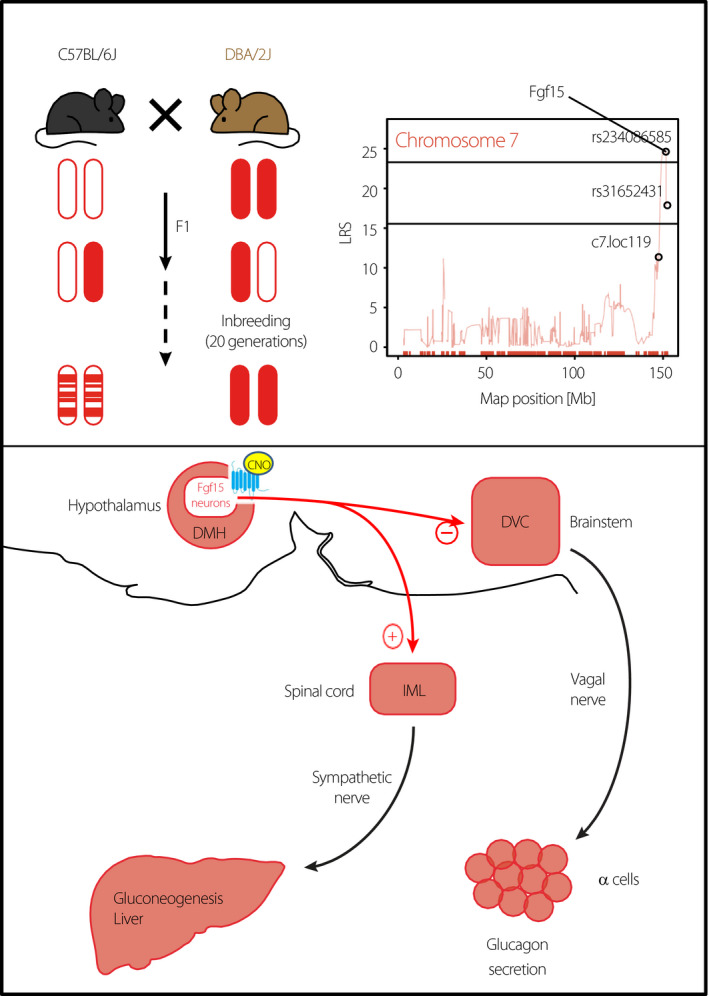
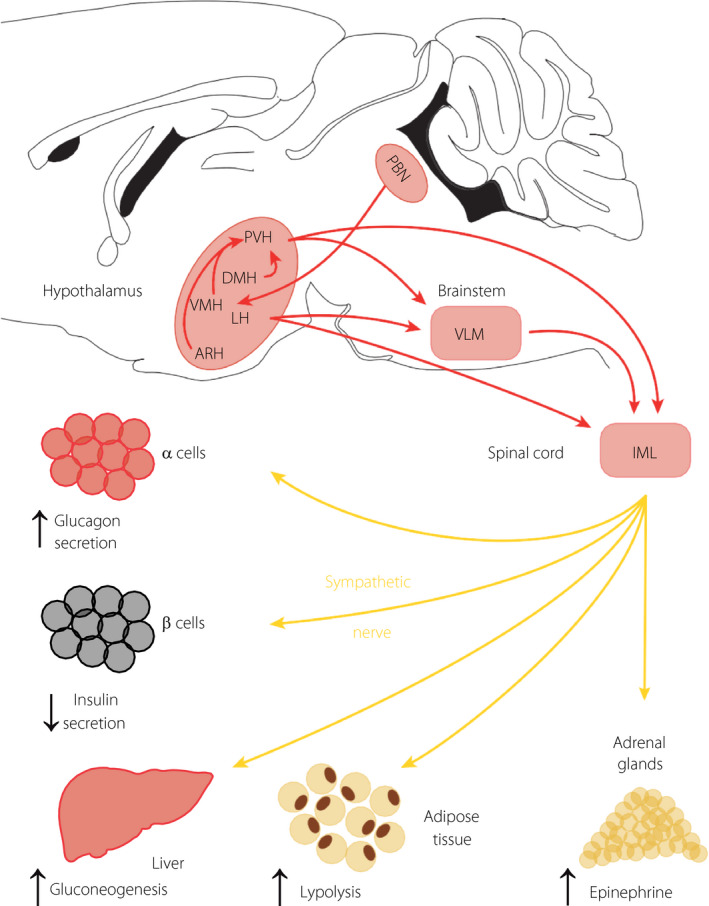
Hypoglycemia almost never develops in healthy individuals, because multiple hypoglycemia sensing systems, located in the periphery and in the central nervous system, trigger a coordinated counterregulatory hormonal response to restore normoglycemia. This involves not only the secretion of glucagon, but also of epinephrine, norepinephrine, cortisol and growth hormone. Increased hepatic glucose production is also stimulated by direct autonomous nervous connections to the liver that stimulate glycogenolysis and gluconeogenesis. This counterregulatory response, however, becomes deregulated in a significant fraction of diabetes patients that receive insulin therapy. This leads to the risk of developing hypoglycemic episodes, of increasing severity, which negatively impact the quality of life of the patients. How hypoglycemia is detected by the central nervous system is being actively investigated. Recent studies using novel molecular biological, optogenetic and chemogenetic techniques allow the characterization of glucose-sensing neurons, the mechanisms of hypoglycemia detection, the neuronal circuits in which they are integrated and the physiological responses they control. This review discusses recent studies aimed at identifying central hypoglycemia sensing neuronal circuits, how neurons are activated by hypoglycemia and how they restore normoglycemia.
低血糖症在健康个体中几乎从未发生,因为位于外周和中枢神经系统中的多个低血糖感知系统会触发协调的代偿性激素反应,以恢复正常血糖水平。这不仅涉及胰高血糖素的分泌,还涉及肾上腺素、去甲肾上腺素、皮质醇和生长激素的分泌。通过直接作用于肝脏的自主神经连接也会刺激肝糖原分解和糖异生,从而刺激肝葡萄糖生成。然而,在接受胰岛素治疗的糖尿病患者中,这种代偿反应在很大一部分患者中会失调。这会导致低血糖发作的风险增加,严重程度增加,从而对患者的生活质量产生负面影响。中枢神经系统如何检测低血糖症正在积极研究中。使用新型分子生物学、光遗传学和化学生物学技术的最新研究允许对葡萄糖感应神经元、低血糖检测机制、它们整合的神经元回路以及它们控制的生理反应进行特征描述。这篇综述讨论了旨在识别中枢低血糖感知神经元回路的最新研究,神经元如何被低血糖激活以及它们如何恢复正常血糖水平。