Min Jaeyoung, Jo Hagyeong, Chung Youn-Jee, Song Jae Yen, Kim Min Jeong, Kim Mee-Ran
Department of Obstetrics and Gynecology, College of Medicine, The Catholic University of Korea, Seoul, Korea.
J Menopausal Med. 2021 Dec;27(3):109-114. doi: 10.6118/jmm.21011.
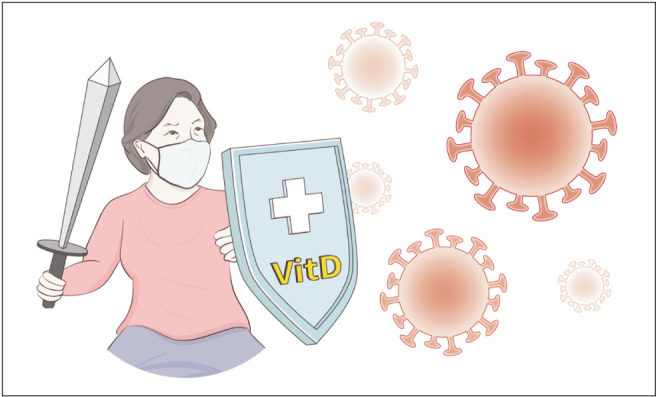
Menopause is a normal phenomenon in a woman's life cycle involving multiple health-related issues that contribute to physical instability. Changes in the immune system in postmenopausal women are caused by estrogen deprivation along with age. Increased proinflammatory serum marker levels, cytokine responses in body cells, decreased CD4 T and B lymphocyte levels, and natural killer cell cytotoxic activity are also observed during postmenopause. Moreover, vitamin D, in addition to its classical effects on calcium homeostasis and bone density, plays an important role. Current evidence indicates that vitamin D regulates innate and adaptive immune responses; however, vitamin D deficiency is linked to increased autoimmune activity and infection susceptibility. This review provides an overview of the consequences of immune alterations as an outcome of aging in postmenopausal women and the benefit of vitamin D supplementation.
绝经是女性生命周期中的一种正常现象,涉及多种与健康相关的问题,这些问题会导致身体不稳定。绝经后女性免疫系统的变化是由雌激素缺乏和年龄增长共同引起的。绝经期间还观察到促炎血清标志物水平升高、身体细胞中的细胞因子反应、CD4 T和B淋巴细胞水平降低以及自然杀伤细胞的细胞毒性活性降低。此外,维生素D除了对钙稳态和骨密度具有经典作用外,还发挥着重要作用。目前的证据表明,维生素D调节先天性和适应性免疫反应;然而,维生素D缺乏与自身免疫活性增加和感染易感性有关。本综述概述了绝经后女性衰老导致的免疫改变的后果以及补充维生素D的益处。