Division of Oncology, Department of Internal Medicine, University Hospital Basel, Basel, Switzerland; University of Basel, Basel, Switzerland.
Division of Oncology, Department of Internal Medicine, University Hospital Basel, Basel, Switzerland.
ESMO Open. 2022 Feb;7(1):100365. doi: 10.1016/j.esmoop.2021.100365. Epub 2022 Jan 5.
We assessed the capacity of epidermal growth factor receptor (EGFR)-targeted immunoliposomes to deliver cargo to brain tumor tissue in patients with relapsed glioblastoma harboring an EGFR amplification. We aimed to assess the tolerability and effectiveness of anti-EGFR immunoliposomes loaded with doxorubicin (anti-EGFR ILs-dox) in glioblastoma multiforme patients.
Patients with EGFR-amplified, relapsed glioblastoma were included in this phase I pharmacokinetic trial. Patients received up to four cycles of anti-EGFR ILs-dox. Twenty-four hours later, plasma and cerebrospinal fluid (CSF) samples were obtained. In addition, we also treated three patients with anti-EGFR ILs-dox before resection of their relapsed glioblastoma. Doxorubicin concentrations were measured in plasma, CSF, and tumor tissue. Safety and efficacy parameters were also obtained.
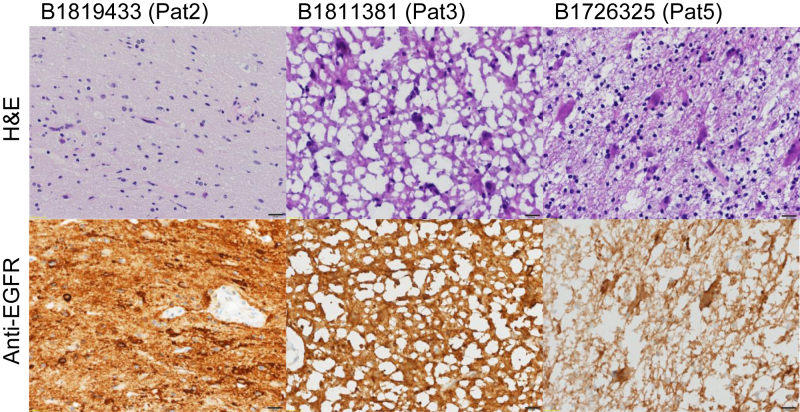
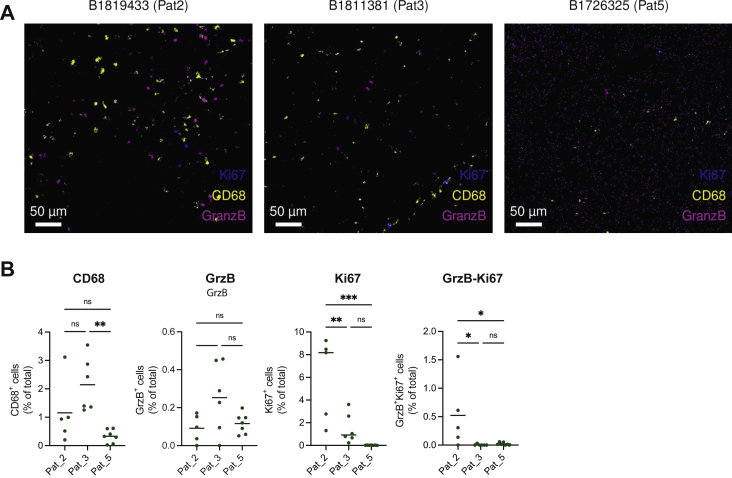
There were no or negligible levels of doxorubicin found in the CSF demonstrating that anti-EGFR ILs-dox are not able to cross the blood-brain barrier (BBB). However, significant levels were detected in glioblastoma tissue 24 h after the application, indicating that the disruption of BBB integrity present in high-grade gliomas might enable liposome delivery into tumor tissue. No new safety issues were observed. The median progression-free survival was 1.5 months and the median overall survival was 8 months. One patient undergoing surgery had a very long remission suggesting that neoadjuvant administration may have a positive effect on outcome.
We clearly demonstrate that anti-EGFR-immunoliposomes can be targeted to EGFR-amplified glioblastoma and cargo-in this case doxorubicin-can be delivered, although these immunoliposomes do not cross the intact BBB. (The GBM-LIPO trial was registered as NCT03603379).
我们评估了表皮生长因子受体(EGFR)靶向免疫脂质体将载药递送至携带 EGFR 扩增的复发性胶质母细胞瘤脑肿瘤组织的能力。我们旨在评估载多柔比星的抗 EGFR 免疫脂质体(抗 EGFR ILs-dox)在多形性胶质母细胞瘤患者中的耐受性和有效性。
本项 I 期药代动力学试验纳入了 EGFR 扩增、复发性胶质母细胞瘤患者。患者接受了多达四个周期的抗 EGFR ILs-dox 治疗。24 小时后,采集血浆和脑脊液(CSF)样本。此外,我们还在三名复发性胶质母细胞瘤患者手术前用抗 EGFR ILs-dox 进行了治疗。测量了血浆、CSF 和肿瘤组织中的多柔比星浓度。还获得了安全性和疗效参数。
CSF 中几乎未检测到多柔比星,表明抗 EGFR ILs-dox 不能穿过血脑屏障(BBB)。然而,在应用后 24 小时,在胶质母细胞瘤组织中检测到显著水平,表明高级别神经胶质瘤中 BBB 完整性的破坏可能使脂质体能够递送至肿瘤组织。未观察到新的安全问题。中位无进展生存期为 1.5 个月,中位总生存期为 8 个月。一名接受手术的患者有很长的缓解期,这表明新辅助给药可能对结果有积极影响。
我们清楚地表明,抗 EGFR-免疫脂质体可以靶向 EGFR 扩增的胶质母细胞瘤,并且在此情况下(多柔比星)可以递送至载药,尽管这些免疫脂质体不能穿过完整的 BBB。(GBM-LIPO 试验已在 NCT03603379 注册)。