Ghasan Abood Al-Ashoor Sabah, Ramachandran Vasudevan, Inche Mat Liyana Najwa, Mohamad Nur Afiqah, Mohamed Mohd Hazmi, Wan Sulaiman Wan Aliaa
Department of Medicine, Faculty of Medicine and Health Sciences, Universiti Putra Malaysia, Serdang 43400, Selangor DE, Malaysia.
Centre for Materials Engineering and Regenerative Medicine, Bharath Institute of Higher Education and Research, 173, Agaram Main Rd, Selaiyur, Chennai, Tamil Nadu 600073, India.
Saudi J Biol Sci. 2022 Jan;29(1):453-459. doi: 10.1016/j.sjbs.2021.09.008. Epub 2021 Sep 14.
Type 2 Diabetes mellitus (T2DM) is a chronic metabolic disorder. It is a major non-communicable disease affecting 463 million people globally in 2019 and is expected to be double to about 700 million by 2045. The majority are Asians with Indian ethnicity in Malaysia reported as the highest prevalence of T2DM. Cardiovascular disease, renal failure, blindness and neuropathy, as well as premature death are the known morbidity and mortality resulted from T2DM. T2DM is characterized by the dysfunctional insulin physiology that causes reduction of glucose transport into the cells which lead to hyperglycaemia. Hence, one of the important treatments is an oral antidiabetic drug that lowers the serum glucose level in patients with T2DM. This drug will be transported across cell membranes by organic cation transporters (OCT). Therefore, it is important to identify the OCT candidate gene polymorphisms related to T2DM especially among the Indian ethnicity in Malaysia.
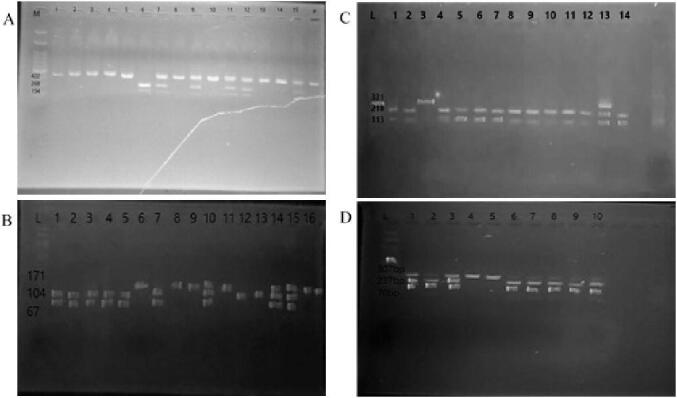
Blood samples were collected from 132 T2DM patients and 133 controls. Genotyping of OCT1 (rs628031), OCT2 (rs145450955), OCT3 (rs3088442 and rs2292334) was performed using (PCR-RFLP).
No association was observed for genotypic and allelic distributions in all the gene polymorphisms of OCT genes ( > 0.05). However, a logistic regression analysis stratified by gender in a dominant model showed a significant difference for OCT3 among males with T2DM ( = 0.006). Significant association was also observed for OCT3 when stratified to subjects aged > 45 years old ( 0.009).
Based on these findings, the association of OCT3 (rs2292334) could be considered as a possible genetic risk factor for the development of T2DM among Indian males alone.
2型糖尿病(T2DM)是一种慢性代谢紊乱疾病。它是一种主要的非传染性疾病,2019年全球有4.63亿人受其影响,预计到2045年将翻倍至约7亿人。在马来西亚,大多数T2DM患者为印度裔亚洲人,据报道该国T2DM患病率最高。心血管疾病、肾衰竭、失明和神经病变以及过早死亡是T2DM已知的发病和死亡原因。T2DM的特征是胰岛素生理功能失调,导致葡萄糖转运进入细胞减少,进而引起高血糖。因此,重要的治疗方法之一是使用口服抗糖尿病药物降低T2DM患者的血糖水平。这种药物将通过有机阳离子转运体(OCT)跨细胞膜转运。因此,识别与T2DM相关的OCT候选基因多态性很重要,尤其是在马来西亚的印度裔人群中。
收集了132例T2DM患者和133例对照的血样。使用聚合酶链反应-限制性片段长度多态性(PCR-RFLP)对OCT1(rs628031)、OCT2(rs145450955)、OCT3(rs3088442和rs2292334)进行基因分型。
在OCT基因的所有基因多态性中,未观察到基因型和等位基因分布的关联(P>0.05)。然而,在显性模型中按性别分层的逻辑回归分析显示,T2DM男性中OCT3存在显著差异(P=0.006)。在按年龄>45岁分层的受试者中,OCT3也观察到显著关联(P=0.009)。
基于这些发现,OCT3(rs2292334)的关联可能仅被视为印度男性发生T2DM的一种可能遗传危险因素。