Yun Richy, Bogaard Andrew R, Richardson Andrew G, Zanos Stavros, Perlmutter Steve I, Fetz Eberhard E
Department of Bioengineering, University of Washington, Seattle, WA, United States.
Washington National Primate Research Center, University of Washington, Seattle, WA, United States.
Front Neurosci. 2021 Dec 24;15:782188. doi: 10.3389/fnins.2021.782188. eCollection 2021.
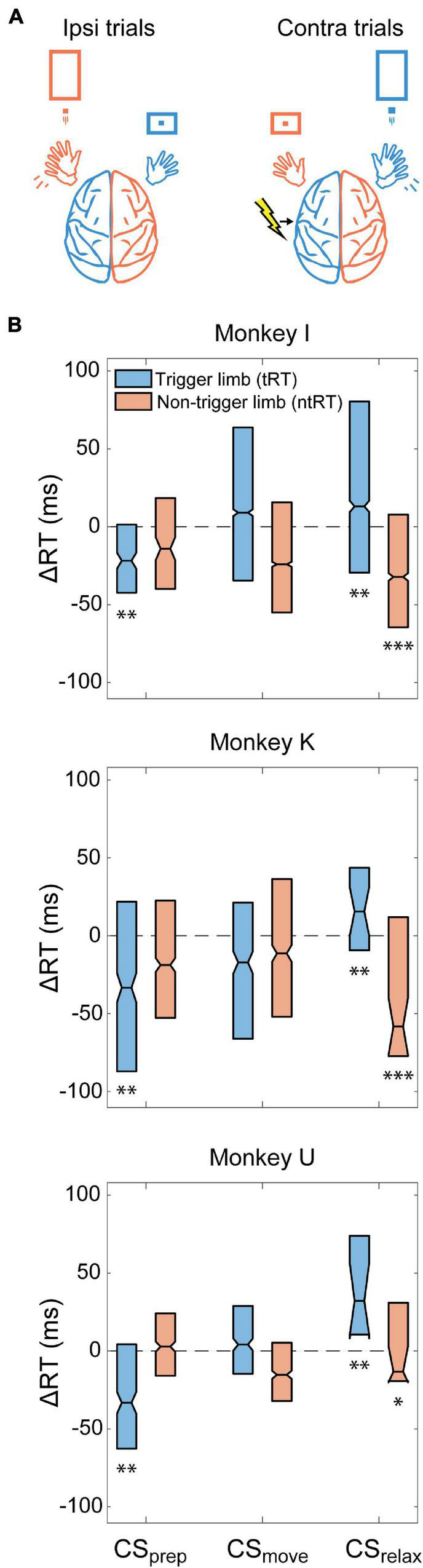
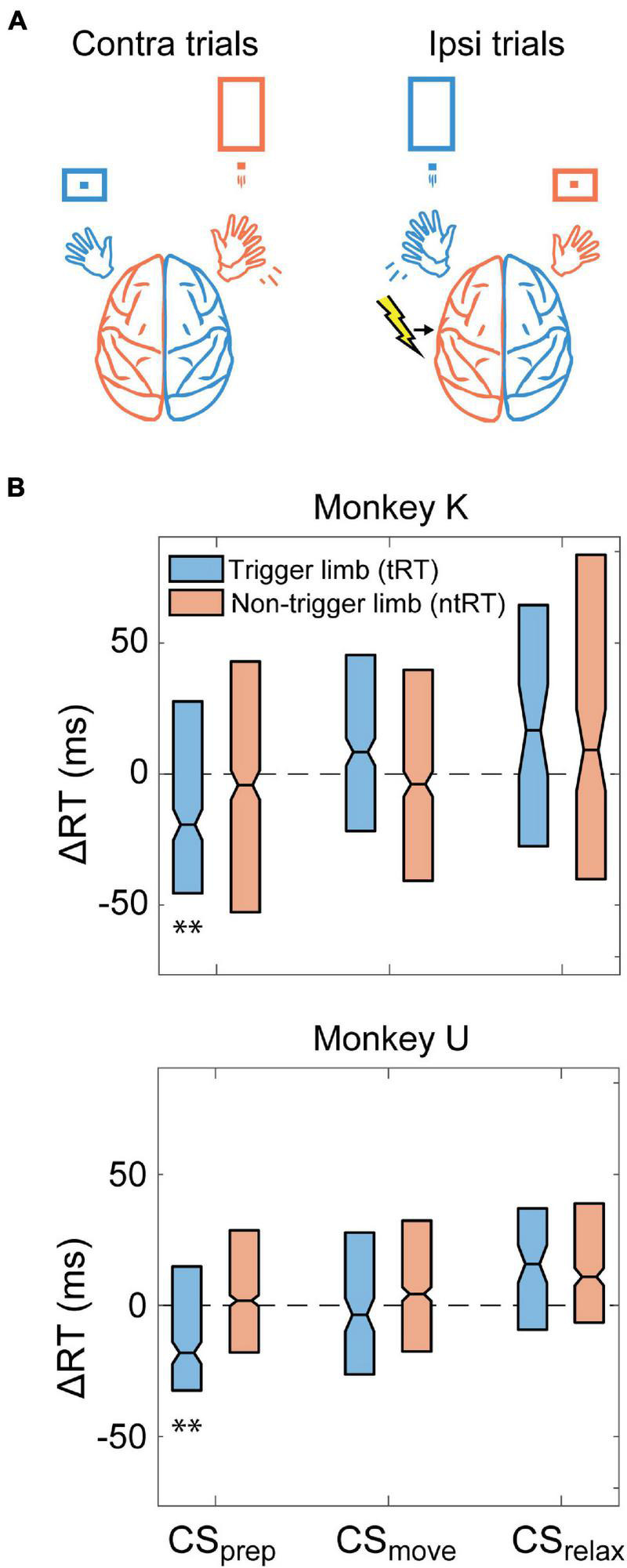
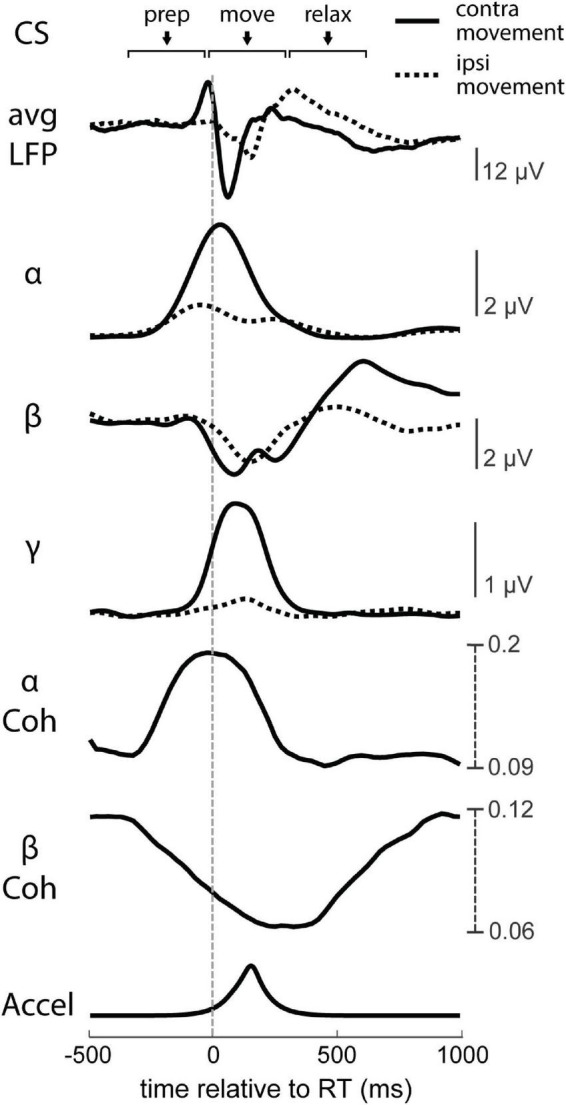
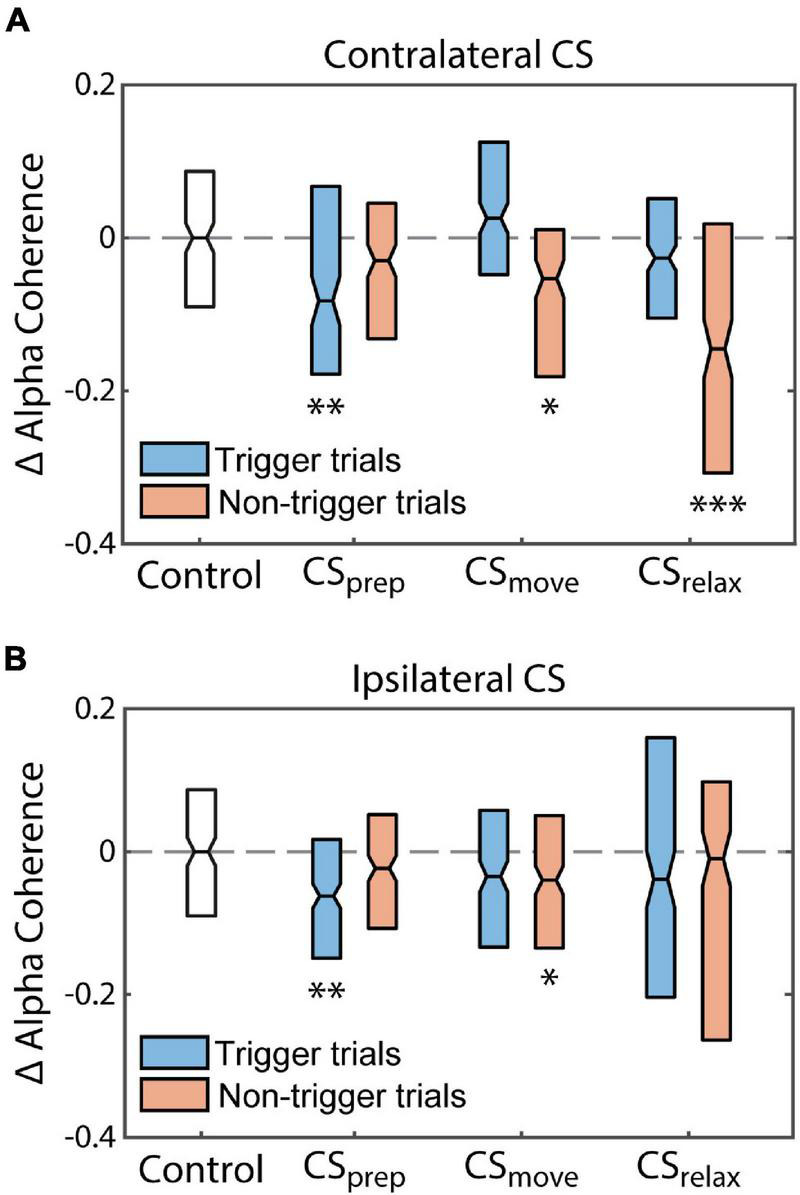
Cortical stimulation (CS) of the motor cortex can cause excitability changes in both hemispheres, showing potential to be a technique for clinical rehabilitation of motor function. However, previous studies that have investigated the effects of delivering CS during movement typically focus on a single hemisphere. On the other hand, studies exploring interhemispheric interactions typically deliver CS at rest. We sought to bridge these two approaches by documenting the consequences of delivering CS to a single motor cortex during different phases of contralateral and ipsilateral limb movement, and simultaneously assessing changes in interactions within and between the hemispheres local field potential (LFP) recordings. Three macaques were trained in a unimanual reaction time (RT) task and implanted with epidural or intracortical electrodes over bilateral motor cortices. During a given session CS was delivered to one hemisphere with respect to movements of either the contralateral or ipsilateral limb. Stimulation delivered before contralateral limb movement onset shortened the contralateral limb RT. In contrast, stimulation delivered after the end of contralateral movement increased contralateral RT but decreased ipsilateral RT. Stimulation delivered before ipsilateral limb movement decreased ipsilateral RT. All other stimulus conditions as well as random stimulation and periodic stimulation did not have consistently significant effects on either limb. Simultaneous LFP recordings from one animal revealed correlations between changes in interhemispheric alpha band coherence and changes in RT, suggesting that alpha activity may be indicative of interhemispheric communication. These results show that changes caused by CS to the functional coupling within and between precentral cortices is contingent on the timing of CS relative to movement.
刺激运动皮层可引起双侧半球的兴奋性变化,显示出其作为运动功能临床康复技术的潜力。然而,以往研究运动过程中给予皮层刺激(CS)的影响时,通常只关注单个半球。另一方面,探索半球间相互作用的研究通常在静息状态下给予CS。我们试图通过记录在对侧和同侧肢体运动的不同阶段向单个运动皮层给予CS的后果,并同时评估半球内和半球间局部场电位(LFP)记录中相互作用的变化,来弥合这两种方法。三只猕猴接受了单手反应时间(RT)任务训练,并在双侧运动皮层上植入了硬膜外或皮层内电极。在给定的实验中,相对于对侧或同侧肢体的运动,将CS施加到一个半球。在对侧肢体运动开始前给予刺激可缩短对侧肢体的RT。相反,在对侧运动结束后给予刺激会增加对侧RT,但会降低同侧RT。在同侧肢体运动前给予刺激会降低同侧RT。所有其他刺激条件以及随机刺激和周期性刺激对任一肢体均未产生一致的显著影响。对一只动物同时进行的LFP记录显示,半球间α波段相干性的变化与RT的变化之间存在相关性,这表明α活动可能指示半球间的通信。这些结果表明,CS引起的中央前回皮层内和皮层间功能耦合的变化取决于CS相对于运动的时间。