Bareli Tzofnat, Ahdoot Hadas Levi, Ben Moshe Hilla, Barnea Royi, Warhaftig Gal, Gispan Iris, Maayan Rachel, Rosca Paola, Weizman Abraham, Yadid Gal
Faculty of Life Sciences, Leslie and Gonda (Goldschmied) Multidisciplinary Brain Research Center, Bar Ilan University, Ramat Gan, Israel.
The Laboratory of Molecular Psychiatry, Felsenstein Medical Research Center, Petah Tikva, Israel.
Front Behav Neurosci. 2021 Dec 23;15:788708. doi: 10.3389/fnbeh.2021.788708. eCollection 2021.
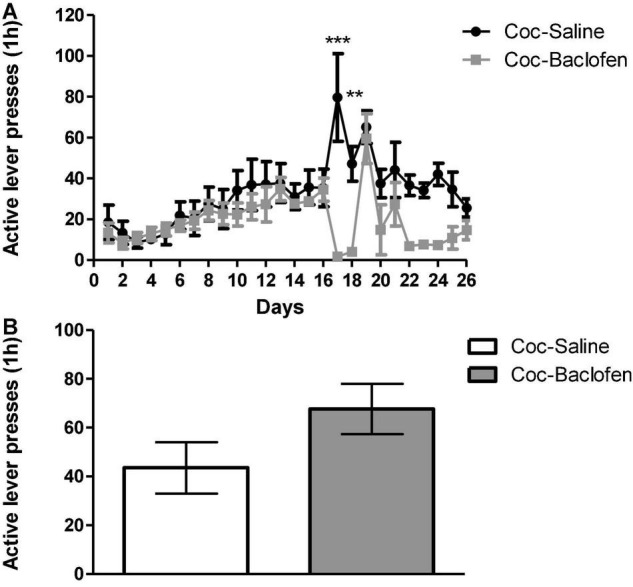
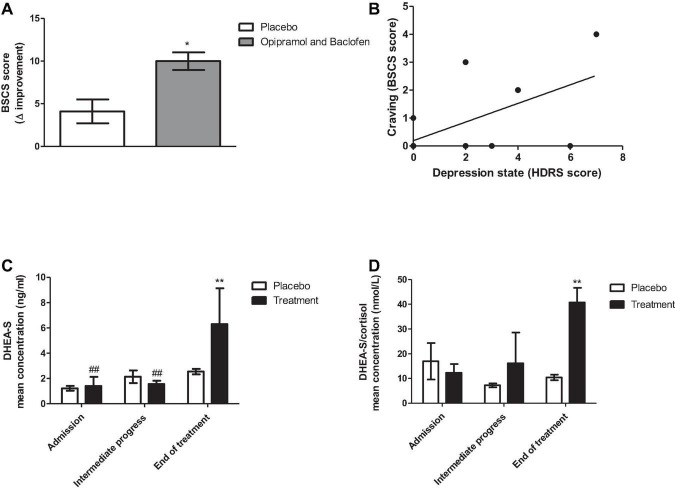
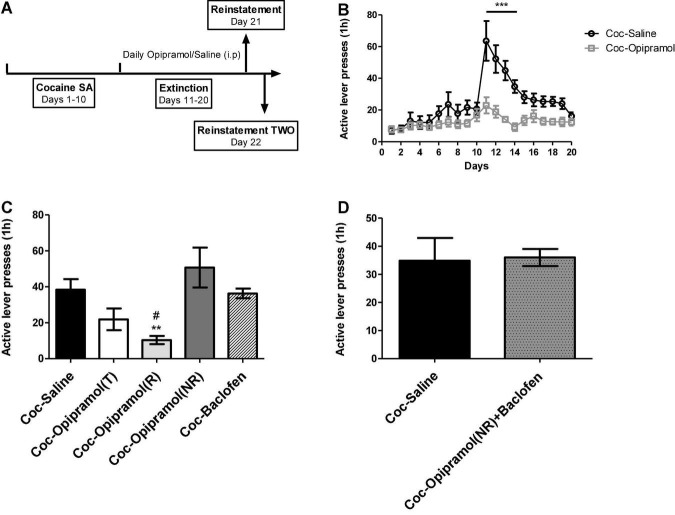
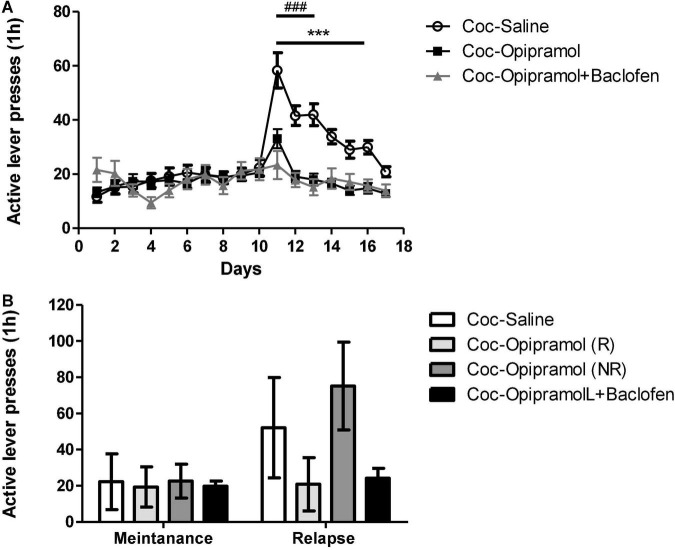
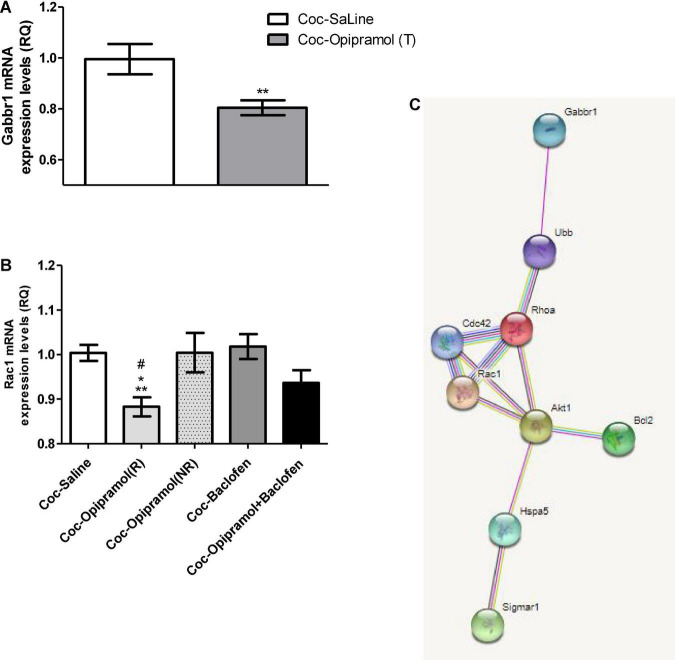
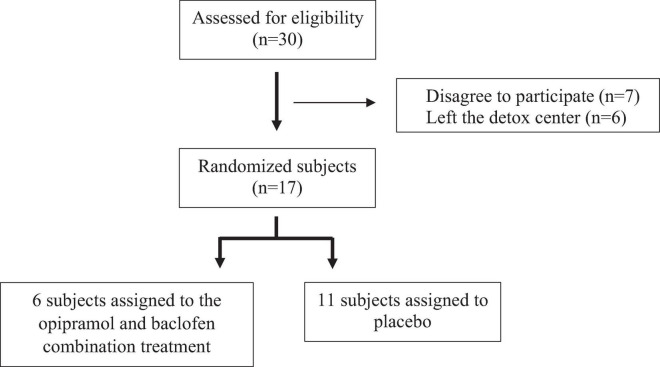
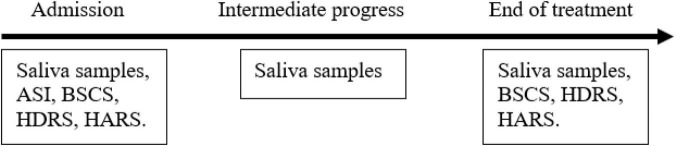
Substance use disorders (SUDs) are associated with depression and anxiety, with the latter being one of the major factors in substance-seeking and relapse. Due to dose-dependent sedative side effects there is limited efficacy of baclofen treatment for SUDs. Here we suggest the use of a novel combination of opipramol and baclofen (O/B) which is known to attenuate anxiety and depression, for the facilitation of recovery from SUDs. Since both opipramol and baclofen have a common downstream signal transduction, their individual doses could be reduced while still maintaining the benefits of the combination. We tested the O/B combination in both animals and patients. Rats treated with O/B showed significant attenuation in craving behavior and in relapse rate during withdrawal from cocaine. In a double-blind, placebo-controlled pilot study, conducted in a residential detoxification center, 14 males and 3 females, aged 28-60 years were assigned to a study ( = 6) and a placebo ( = 11) group (placebo group: 40 ± 10.5 years; O/B group 40 ± 10.8 years). The participants completed scales measuring depression, anxiety and craving symptoms and provided saliva samples for stress hormone examination [cortisol and dehydroepiandrosterone-sulfate (DHEA-S)]. Participants with polysubstance use disorder (PsUD) treated with O/B showed a reduction in cravings and depression and an increase in DHEA-S and in the DHEA-S/cortisol ratio. Our findings indicate a beneficial effect of O/B treatment. This study suggests a novel candidate for pharmacological treatment of patients with SUD and comorbid mood/anxiety disorders that may facilitate their rehabilitation.
物质使用障碍(SUDs)与抑郁和焦虑相关,后者是寻求物质和复发的主要因素之一。由于巴氯芬治疗SUDs存在剂量依赖性镇静副作用,其疗效有限。在此,我们建议使用一种已知可减轻焦虑和抑郁的阿丙哌醇和巴氯芬(O/B)新组合,以促进从SUDs中恢复。由于阿丙哌醇和巴氯芬具有共同的下游信号转导,它们的个体剂量可以降低,同时仍能保持组合的益处。我们在动物和患者中测试了O/B组合。用O/B治疗的大鼠在可卡因戒断期间的渴望行为和复发率显著降低。在一家住院戒毒中心进行的一项双盲、安慰剂对照的试点研究中,将14名男性和3名女性(年龄在28 - 60岁之间)分为研究组( = 6)和安慰剂组( = 11)(安慰剂组:40 ± 10.5岁;O/B组40 ± 10.8岁)。参与者完成了测量抑郁、焦虑和渴望症状的量表,并提供唾液样本用于应激激素检查[皮质醇和硫酸脱氢表雄酮(DHEA - S)]。用O/B治疗的多物质使用障碍(PsUD)参与者的渴望和抑郁症状减轻,DHEA - S及DHEA - S/皮质醇比值增加。我们的研究结果表明O/B治疗具有有益效果。这项研究为患有SUD以及共病情绪/焦虑障碍的患者的药物治疗提出了一种新的候选药物,可能有助于他们的康复。