Ye Dien, Yang Xiaofei, Ren Liwei, Lu Hong S, Sun Yuan, Lin Hui, Tan Lunbo, Wang Na, Nguyen Genevieve, Bader Michael, Mullick Adam E, Danser A H Jan, Daugherty Alan, Jiang Yizhou, Sun Yidan, Li Furong, Lu Xifeng
Department of Pharmacology, College of Pharmacy, Shenzhen Technology University, Shenzhen, China.
Saha Cardiovascular Research Center and Department of Physiology, University of Kentucky, Lexington, KY, United States.
Front Cardiovasc Med. 2021 Dec 24;8:725203. doi: 10.3389/fcvm.2021.725203. eCollection 2021.
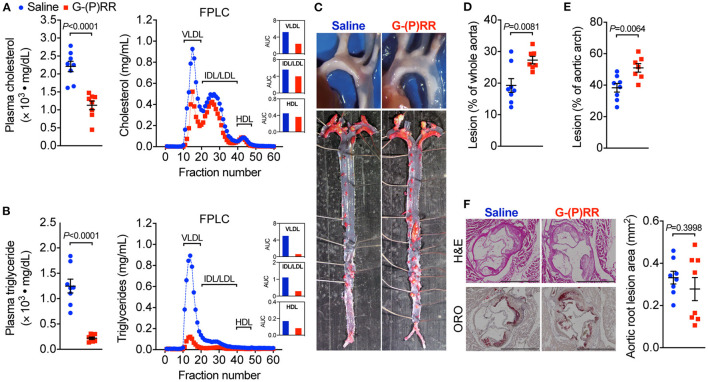
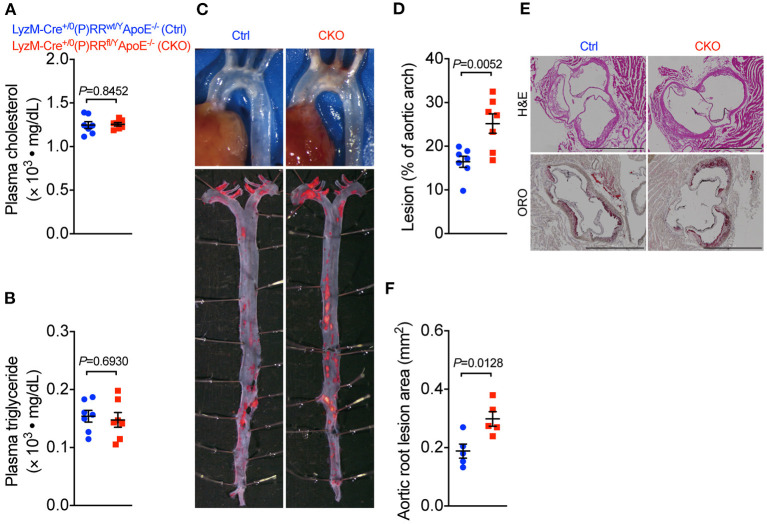
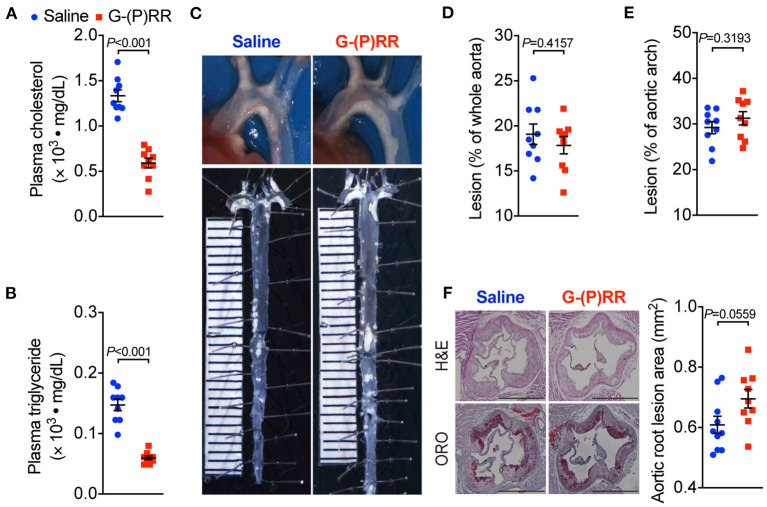
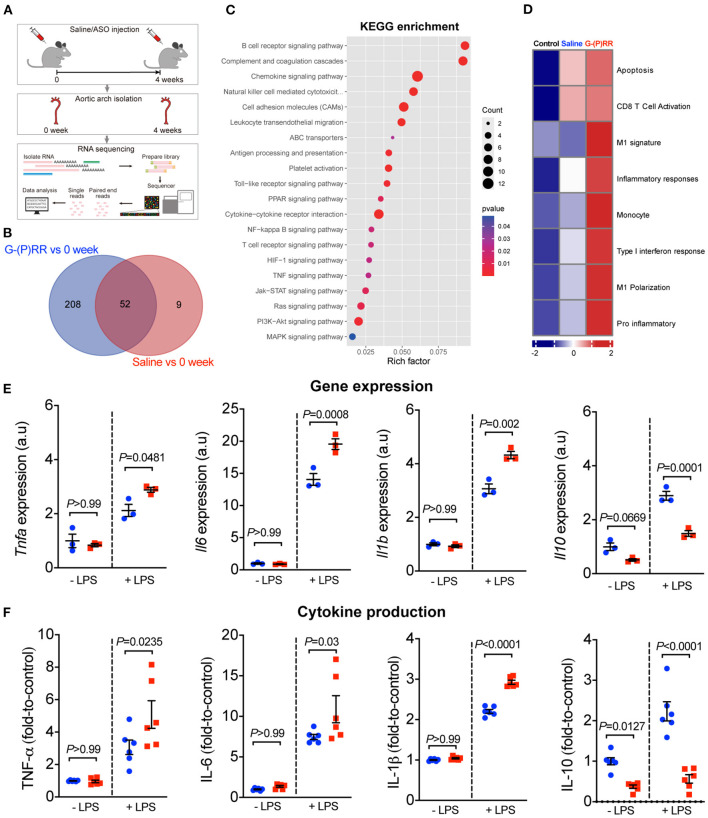
Elevated plasma cholesterol concentrations contributes to ischemic cardiovascular diseases. Recently, we showed that inhibiting hepatic (pro)renin receptor [(P)RR] attenuated diet-induced hypercholesterolemia and hypertriglyceridemia in low-density lipoprotein receptor (LDLR) deficient mice. The purpose of this study was to determine whether inhibiting hepatic (P)RR could attenuate atherosclerosis. Eight-week-old male LDLR mice were injected with either saline or N-acetylgalactosamine-modified antisense oligonucleotides (G-ASOs) primarily targeting hepatic (P)RR and were fed a western-type diet (WTD) for 16 weeks. (P)RR G-ASOs markedly reduced plasma cholesterol concentrations from 2,211 ± 146 to 1,128 ± 121 mg/dL. Fast protein liquid chromatography (FPLC) analyses revealed that cholesterol in very low-density lipoprotein (VLDL) and intermediate density lipoprotein (IDL)/LDL fraction were potently reduced by (P)RR G-ASOs. Moreover, (P)RR G-ASOs reduced plasma triglyceride concentrations by more than 80%. Strikingly, despite marked reduction in plasma lipid concentrations, atherosclerosis was not reduced but rather increased in these mice. Further testing in ApoE mice confirmed that (P)RR G-ASOs reduced plasma lipid concentrations but not atherosclerosis. Transcriptomic analysis of the aortas revealed that (P)RR G-ASOs induced the expression of the genes involved in immune responses and inflammation. Further investigation revealed that (P)RR G-ASOs also inhibited (P)RR in macrophages and in enhanced inflammatory responses to exogenous stimuli. Moreover, deleting the (P)RR in macrophages resulted in accelerated atherosclerosis in WTD fed ApoE mice. (P)RR G-ASOs reduced the plasma lipids in atherosclerotic mice due to hepatic (P)RR deficiency. However, augmented pro-inflammatory responses in macrophages due to (P)RR downregulation counteracted the beneficial effects of lowered plasma lipid concentrations on atherosclerosis. Our study demonstrated that hepatic (P)RR and macrophage (P)RR played a counteracting role in atherosclerosis.
血浆胆固醇浓度升高会导致缺血性心血管疾病。最近,我们发现抑制肝脏(前)肾素受体[(P)RR]可减轻低密度脂蛋白受体(LDLR)缺陷小鼠饮食诱导的高胆固醇血症和高甘油三酯血症。本研究的目的是确定抑制肝脏(P)RR是否能减轻动脉粥样硬化。将8周龄雄性LDLR小鼠注射生理盐水或主要靶向肝脏(P)RR的N - 乙酰半乳糖胺修饰的反义寡核苷酸(G - ASOs),并给予西式饮食(WTD)16周。(P)RR G - ASOs使血浆胆固醇浓度从2,211±146显著降低至1,128±121mg/dL。快速蛋白质液相色谱(FPLC)分析显示,(P)RR G - ASOs可有效降低极低密度脂蛋白(VLDL)和中间密度脂蛋白(IDL)/LDL组分中的胆固醇。此外,(P)RR G - ASOs使血浆甘油三酯浓度降低超过80%。令人惊讶的是,尽管血浆脂质浓度显著降低,但这些小鼠的动脉粥样硬化并未减轻反而加重。在ApoE小鼠中的进一步测试证实,(P)RR G - ASOs降低了血浆脂质浓度,但并未减轻动脉粥样硬化。对主动脉的转录组分析表明,(P)RR G - ASOs诱导了参与免疫反应和炎症的基因表达。进一步研究发现,(P)RR G - ASOs还抑制巨噬细胞中的(P)RR,并增强对外源刺激的炎症反应。此外,在巨噬细胞中删除(P)RR导致喂食WTD的ApoE小鼠动脉粥样硬化加速。由于肝脏(P)RR缺乏,(P)RR G - ASOs降低了动脉粥样硬化小鼠的血浆脂质。然而,由于(P)RR下调导致巨噬细胞中促炎反应增强,抵消了降低血浆脂质浓度对动脉粥样硬化的有益作用。我们的研究表明,肝脏(P)RR和巨噬细胞(P)RR在动脉粥样硬化中起相反作用。