Institute of Immunotherapy, College of Basic Medicine, The First Affiliated Hospital of Nanchang University, Jiangxi Academy of Medical Sciences, Nanchang 330046, China.
Department of Pathology and Laboratory Medicine, University of Western Ontario, London, ON N6A 5A5, Canada.
Int J Mol Sci. 2021 Dec 27;23(1):250. doi: 10.3390/ijms23010250.
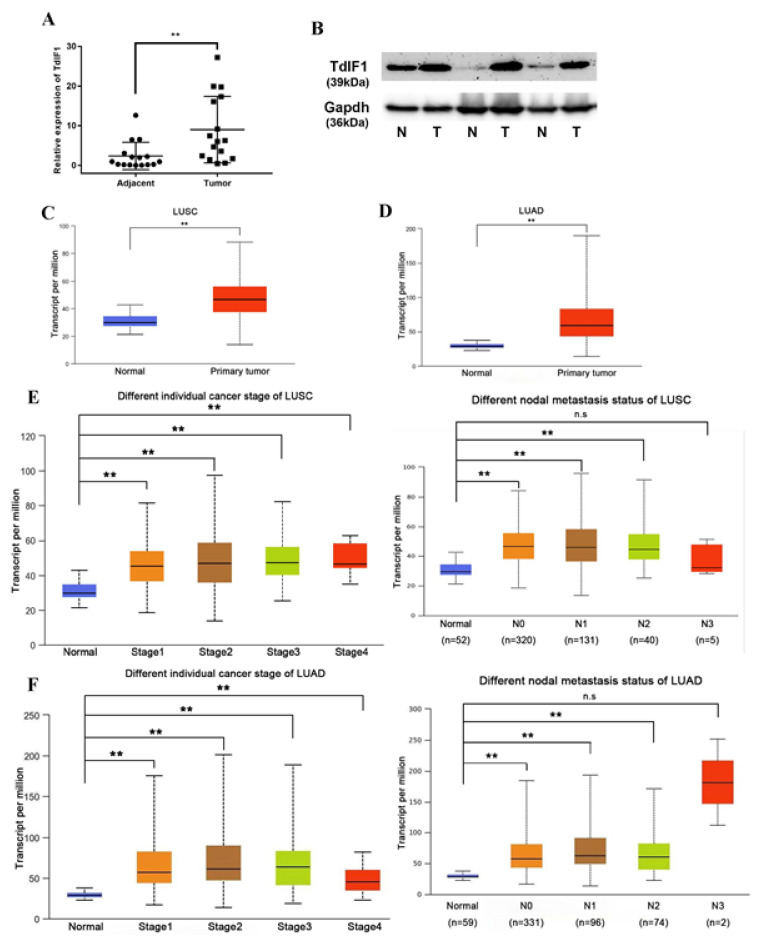
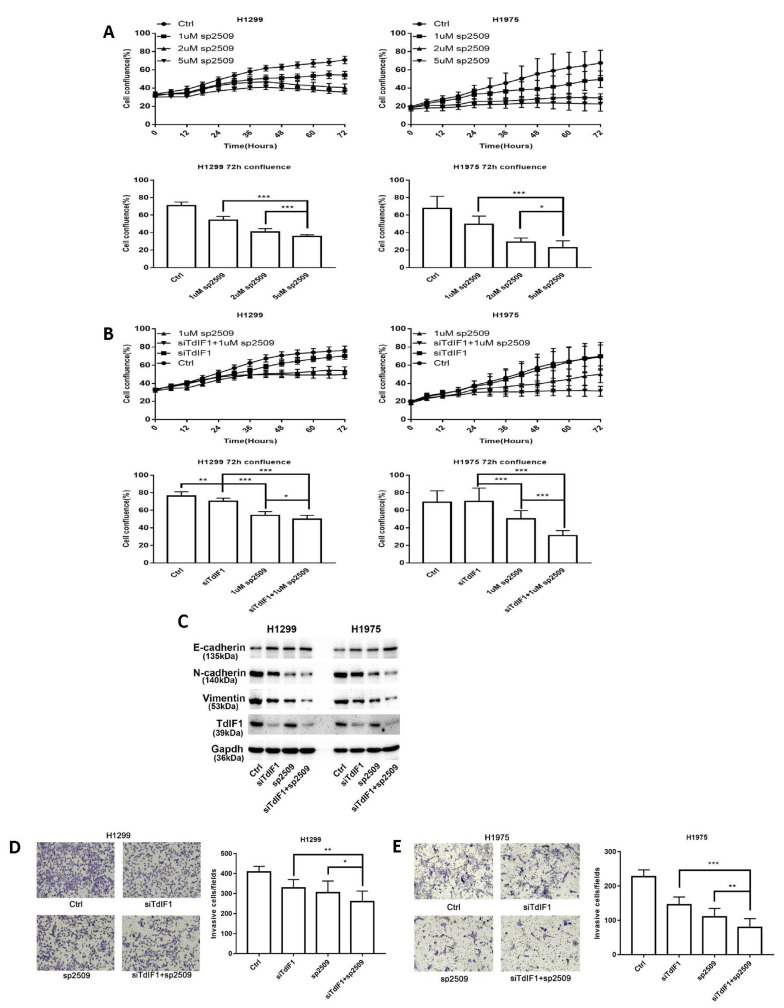
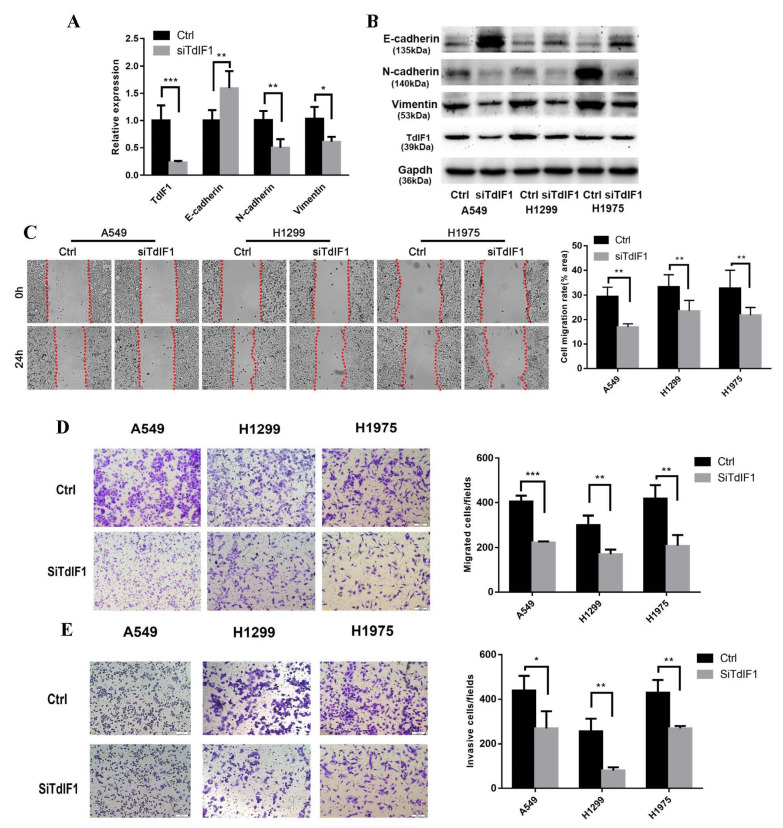
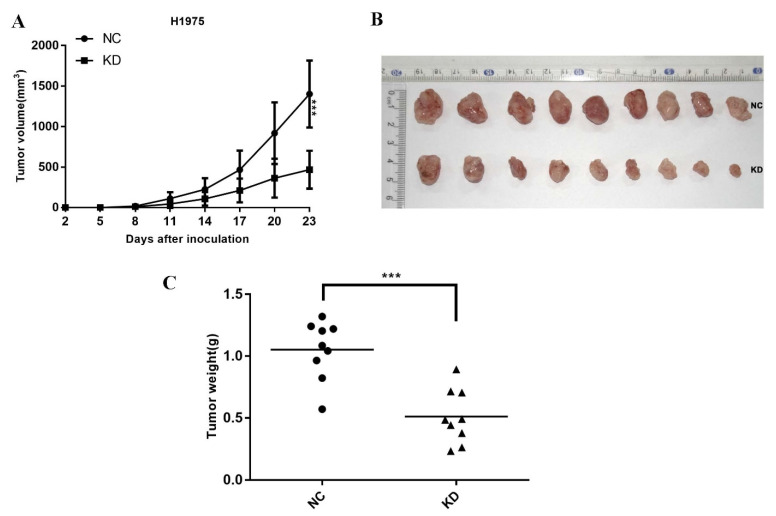
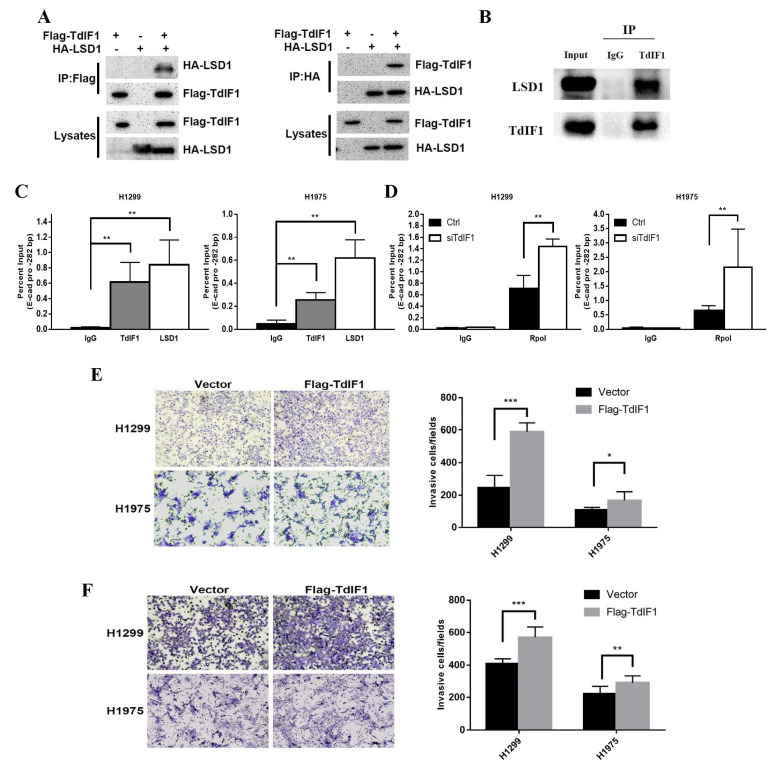
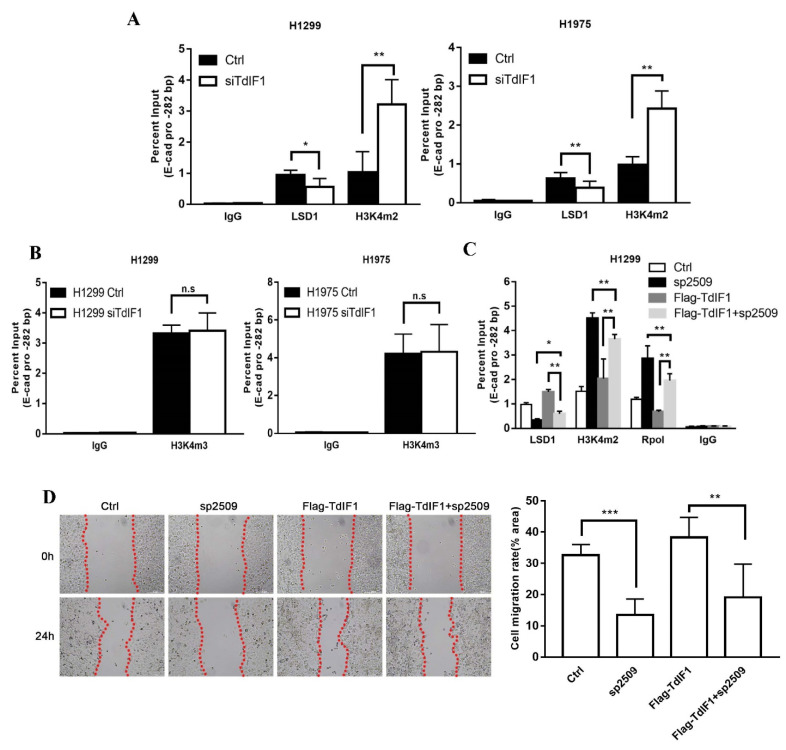
We have previously found that TdT-interacting factor 1 (TdIF1) is a potential oncogene expressed in non-small cell lung cancer (NSCLC) and is associated with poor prognosis. However, its exact mechanism is still unclear. The lysine-specific demethylase 1 (LSD1) is a crucial mediator of the epithelial-mesenchymal transition (EMT), an important process triggered during cancer metastasis. Here, we confirm that TdIF1 is highly expressed in NSCLC and related to lymph node metastasis through The Cancer Genome Atlas (TCGA) analysis of clinical samples. Silencing TdIF1 can regulate the expression of EMT-related factors and impair the migration and invasion ability of cancer cells in vitro. An analysis of tumor xenografts in nude mice confirmed that silencing TdIF1 inhibits tumor growth. Furthermore, we determined the interaction between TdIF1 and LSD1 using immunoprecipitation. Chromatin immunoprecipitation (ChIP) revealed that TdIF1 was enriched in the E-cadherin promoter region. The knockdown of TdIF1 repressed the enrichment of LSD1 at the E-cadherin promoter region, thereby regulating the level of promoter histone methylation and modulating E-cadherin transcription activity, ultimately leading to changes in EMT factors and cancer cell migration and invasion ability. The LSD1 inhibitor and TdIF1 knockdown combination showed a synergistic effect in inhibiting the growth, migration, and invasion of NSCLC cells. Taken together, this is the first demonstration that TdIF1 regulates E-cadherin transcription by recruiting LSD1 to the promoter region, thereby promoting EMT and tumor metastasis and highlighting the potential of TdIF1 as a therapeutic target for NSCLC.
我们之前发现,TdT 相互作用因子 1(TdIF1)是一种在非小细胞肺癌(NSCLC)中表达的潜在癌基因,与预后不良相关。然而,其确切机制尚不清楚。赖氨酸特异性去甲基酶 1(LSD1)是上皮间质转化(EMT)的关键介质,EMT 是癌症转移过程中触发的重要过程。在这里,我们通过对临床样本的癌症基因组图谱(TCGA)分析证实,TdIF1 在 NSCLC 中高度表达,并与淋巴结转移有关。沉默 TdIF1 可以调节 EMT 相关因子的表达,并损害癌细胞在体外的迁移和侵袭能力。裸鼠肿瘤异种移植分析证实,沉默 TdIF1 抑制肿瘤生长。此外,我们使用免疫沉淀法确定了 TdIF1 和 LSD1 之间的相互作用。染色质免疫沉淀(ChIP)显示 TdIF1 富集在 E-钙粘蛋白启动子区域。TdIF1 的敲低抑制了 LSD1 在 E-钙粘蛋白启动子区域的富集,从而调节启动子组蛋白甲基化水平,并调节 E-钙粘蛋白转录活性,最终导致 EMT 因子和癌细胞迁移和侵袭能力的变化。LSD1 抑制剂和 TdIF1 敲低联合抑制 NSCLC 细胞的生长、迁移和侵袭具有协同作用。综上所述,这是首次证明 TdIF1 通过募集 LSD1 到启动子区域来调节 E-钙粘蛋白转录,从而促进 EMT 和肿瘤转移,并强调 TdIF1 作为 NSCLC 治疗靶点的潜力。