Department of Oral Physiology, School of Dentistry, Kyungpook National University, 2177 Dalgubeol-daero, Chung-gu, Daegu 41940, Korea.
Int J Mol Sci. 2022 Jan 3;23(1):506. doi: 10.3390/ijms23010506.
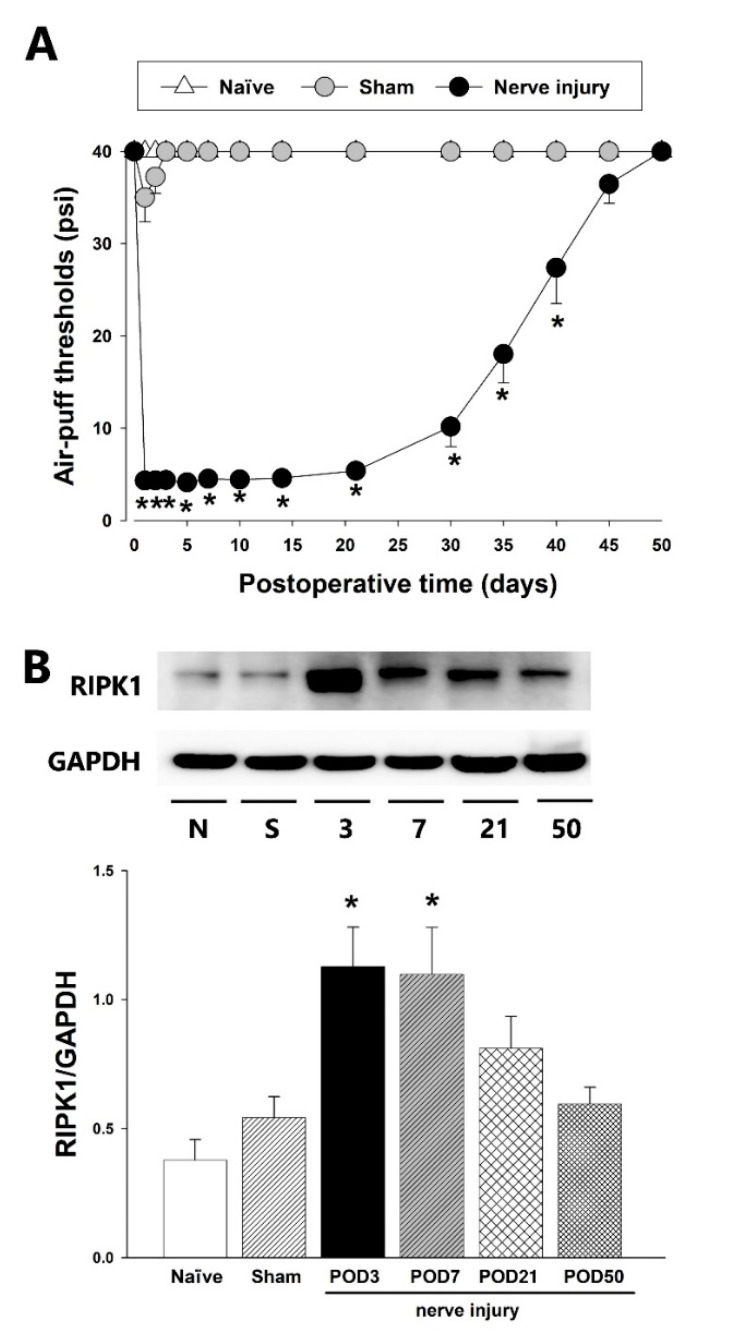
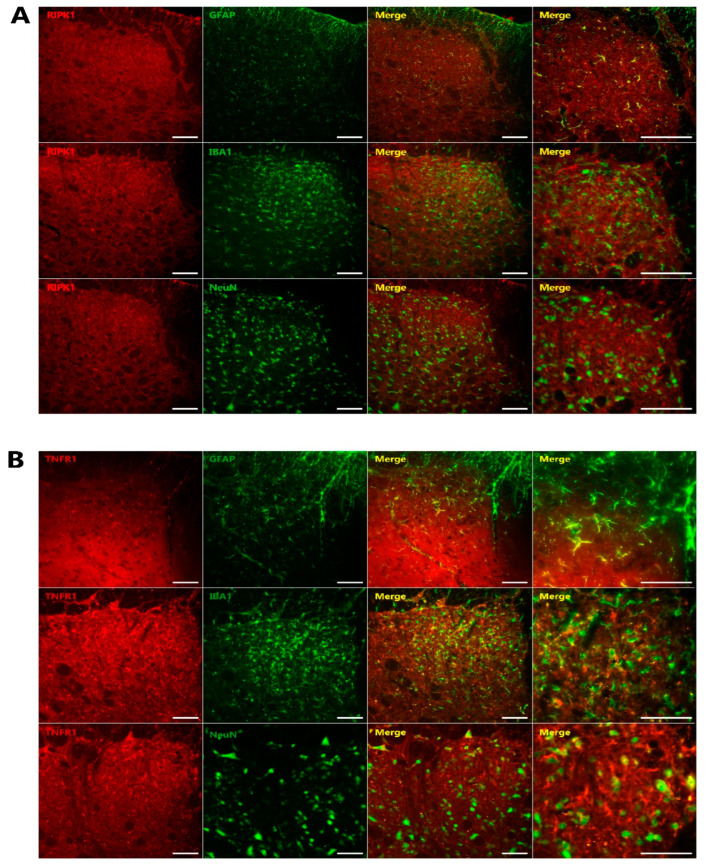
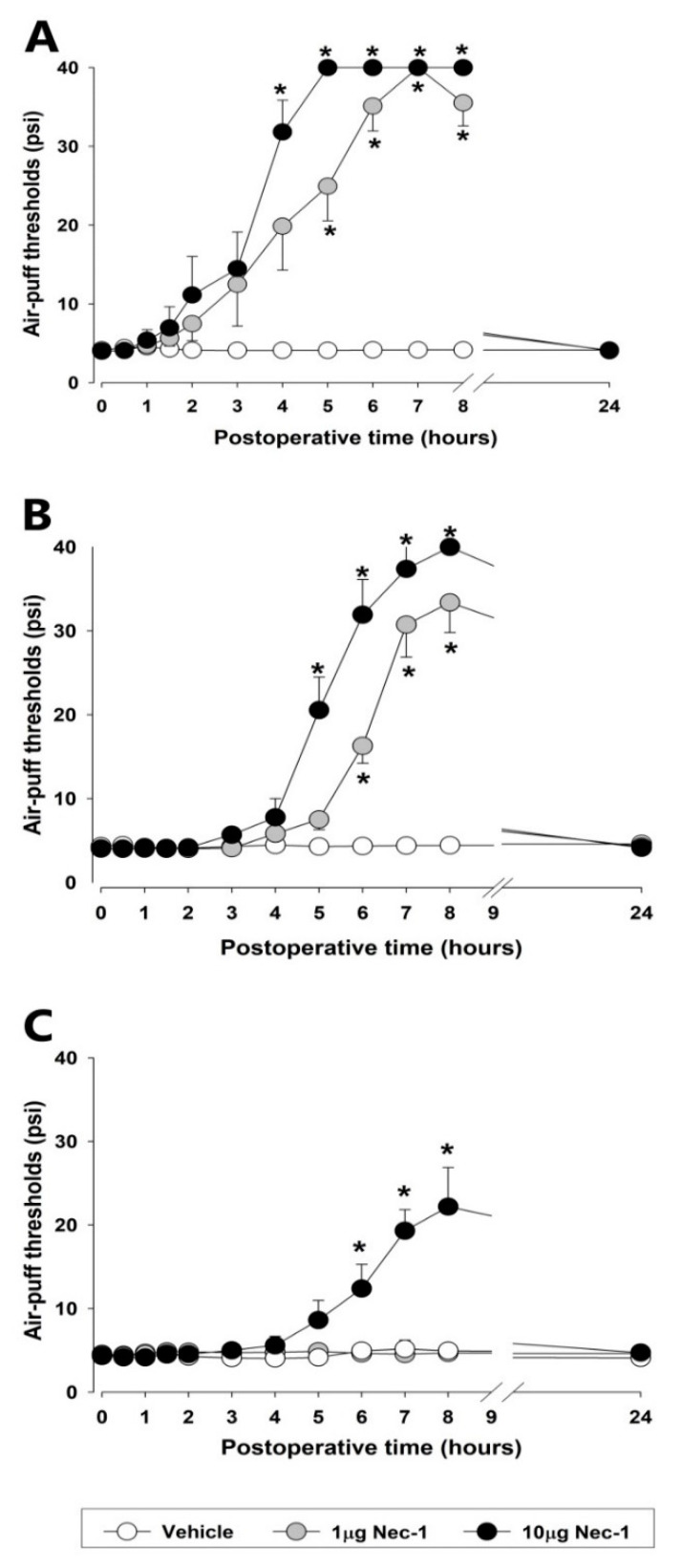
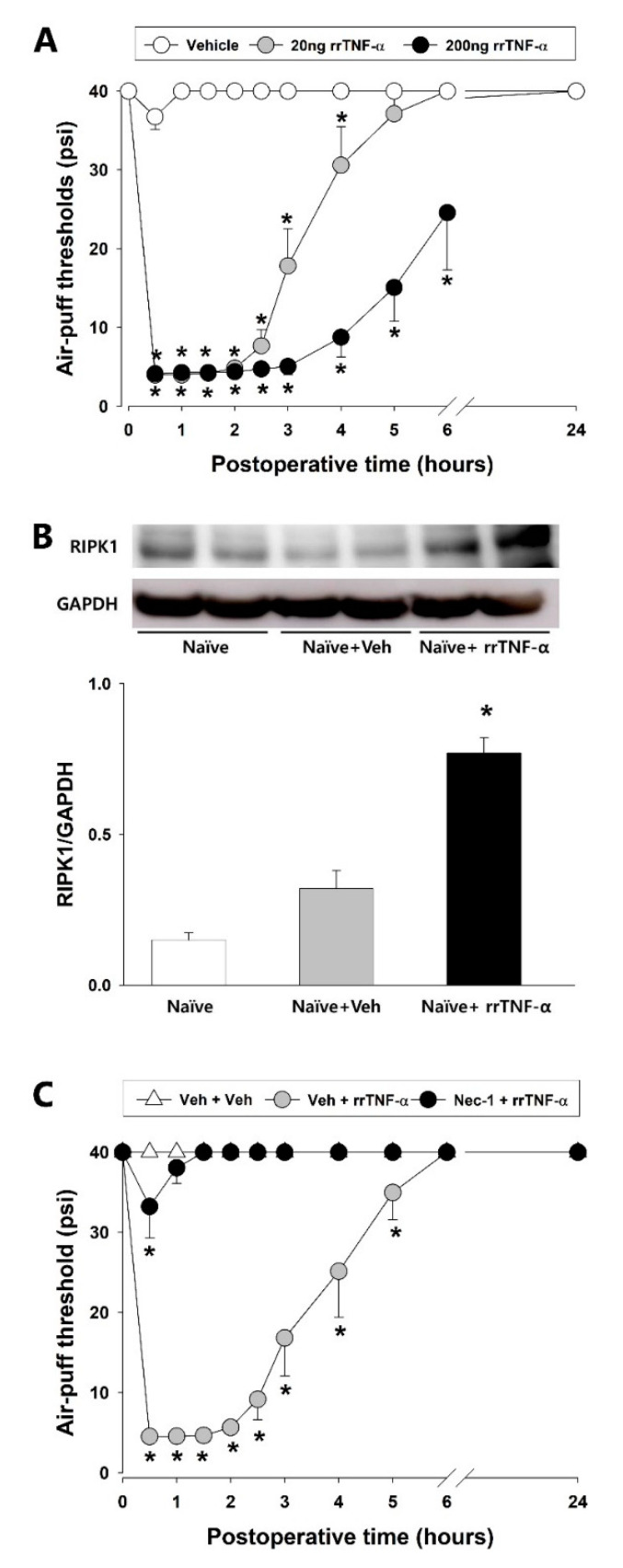
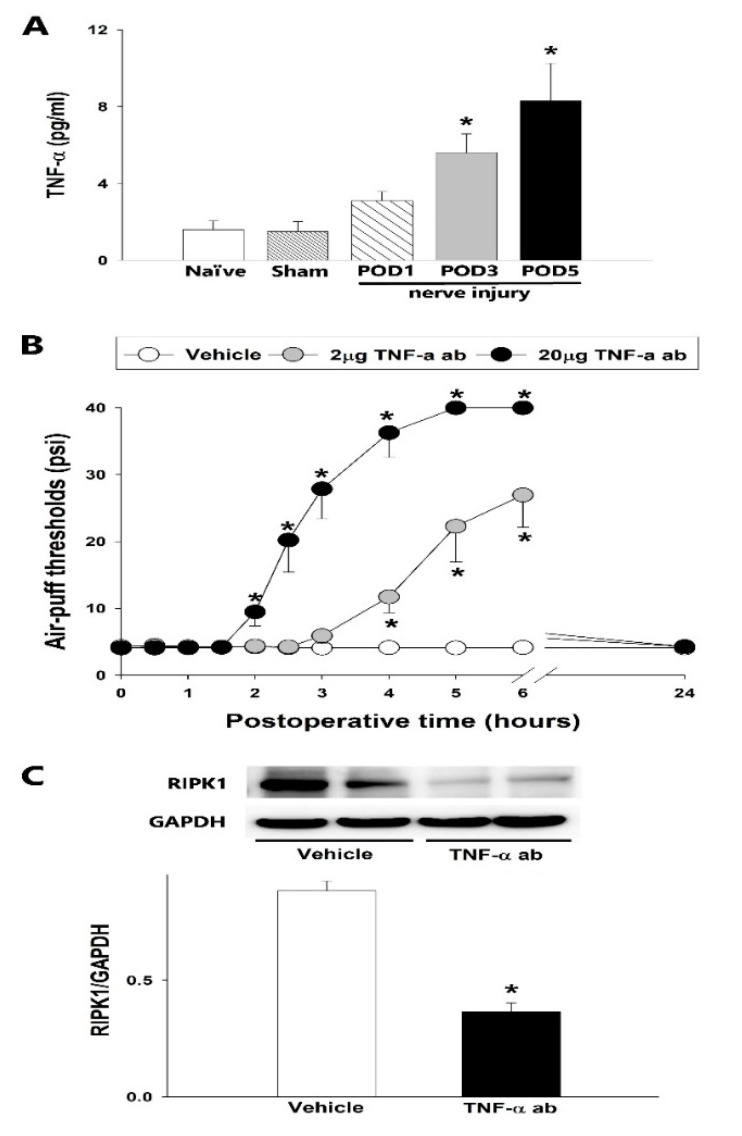
Receptor-interacting serine/threonine-protein kinase 1 (RIPK1) participates in the regulation of cellular stress and inflammatory responses, but its function in neuropathic pain remains poorly understood. This study evaluated the role of RIPK1 in neuropathic pain following inferior alveolar nerve injury. We developed a model using malpositioned dental implants in male Sprague Dawley rats. This model resulted in significant mechanical allodynia and upregulated RIPK1 expression in the trigeminal subnucleus caudalis (TSC). The intracisternal administration of Necrosatin-1 (Nec-1), an RIPK1 inhibitor, blocked the mechanical allodynia produced by inferior alveolar nerve injury The intracisternal administration of recombinant rat tumor necrosis factor-α (rrTNF-α) protein in naive rats produced mechanical allodynia and upregulated RIPK1 expression in the TSC. Moreover, an intracisternal pretreatment with Nec-1 inhibited the mechanical allodynia produced by rrTNF-α protein. Nerve injury caused elevated TNF-α concentration in the TSC and a TNF-α block had anti-allodynic effects, thereby attenuating RIPK1 expression in the TSC. Finally, double immunofluorescence analyses revealed the colocalization of TNF receptor and RIPK1 with astrocytes. Hence, we have identified that astroglial RIPK1, activated by the TNF-α pathway, is a central driver of neuropathic pain and that the TNF-α-mediated RIPK1 pathway is a potential therapeutic target for reducing neuropathic pain following nerve injury.
受体相互作用丝氨酸/苏氨酸蛋白激酶 1(RIPK1)参与细胞应激和炎症反应的调节,但它在神经病理性疼痛中的作用仍知之甚少。本研究评估了 RIPK1 在下颌神经损伤后神经病理性疼痛中的作用。我们在雄性 Sprague Dawley 大鼠中使用错位牙种植体开发了一种模型。该模型导致明显的机械性痛觉过敏,并在上三叉神经脊束核(TSC)上调 RIPK1 表达。鞘内给予 RIPK1 抑制剂 Necrosatin-1(Nec-1)阻断了下颌神经损伤引起的机械性痛觉过敏。在幼稚大鼠鞘内给予重组大鼠肿瘤坏死因子-α(rrTNF-α)蛋白可引起机械性痛觉过敏,并在上 TSC 上调 RIPK1 表达。此外,鞘内预先给予 Nec-1 可抑制 rrTNF-α 蛋白引起的机械性痛觉过敏。神经损伤导致 TSC 中 TNF-α 浓度升高,TNF-α 阻断具有抗痛觉过敏作用,从而减轻 TSC 中 RIPK1 的表达。最后,双重免疫荧光分析显示 TNF 受体和 RIPK1 与星形胶质细胞共定位。因此,我们已经确定,由 TNF-α 途径激活的星形胶质细胞 RIPK1 是神经病理性疼痛的中枢驱动因素,并且 TNF-α 介导的 RIPK1 途径是减少神经损伤后神经病理性疼痛的潜在治疗靶点。