Lin Chun-Ting, Chiu Ming-Chih, Kuo Mei-Hwa
Department of Entomology, National Chung Hsing University, Taichung 40227, Taiwan.
Polymers (Basel). 2022 Jan 4;14(1):198. doi: 10.3390/polym14010198.
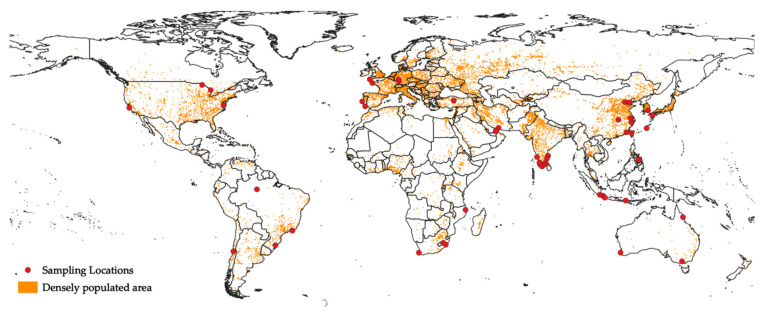
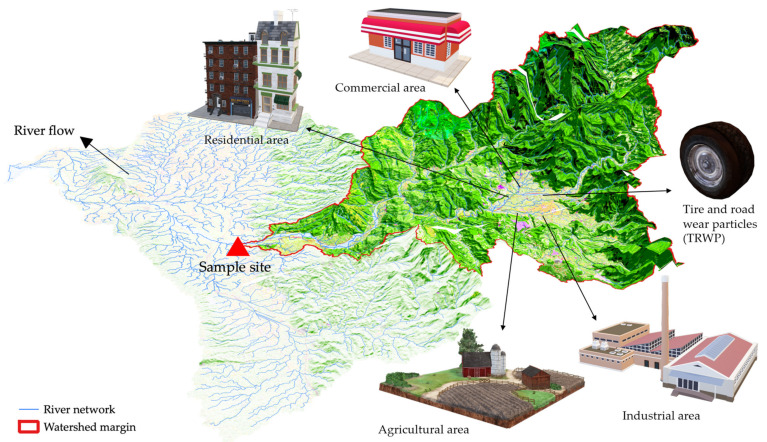
Microplastic pollution is no longer neglected worldwide, as recent studies have unveiled its potential harm to ecosystems and, even worse, to human health. Numerous studies have documented the ubiquity of microplastics, reflecting the necessity of formulating corresponding policies to mitigate the accumulation of microplastics in natural environments. Although anthropogenic activities are generally acknowledged as the primary source of microplastics, a robust approach to identify sources of microplastics is needed to provide scientific suggestions for practical policymaking. This review elucidates recent microplastic studies on various approaches for quantifying or reflecting the degree to which anthropogenic activities contribute to microplastic pollution. Population density (i.e., often used to quantify anthropogenic activities) was not always significantly correlated with microplastic abundance. Furthermore, this review argues that considering potential sources near sample sites as characteristics that may serve to predict the spatial distribution of microplastics in aquatic environments is equivocal. In this vein, a watershed-scale measure that uses land-cover datasets to calculate different percentages of land use in the watershed margins delineated by using Geographic Information System (GIS) software is discussed and suggested. Progress in strategies for quantifying anthropogenic activities is important for guiding future microplastic research and developing effective management policies to prevent microplastic contamination in aquatic ecosystems.
微塑料污染在全球范围内已不再被忽视,因为最近的研究揭示了其对生态系统的潜在危害,甚至更严重的是对人类健康的危害。众多研究记录了微塑料的无处不在,这反映了制定相应政策以减轻微塑料在自然环境中积累的必要性。尽管人为活动通常被认为是微塑料的主要来源,但需要一种可靠的方法来识别微塑料的来源,以便为实际政策制定提供科学建议。本综述阐述了近期关于量化或反映人为活动对微塑料污染贡献程度的各种方法的微塑料研究。人口密度(即常用于量化人为活动)并不总是与微塑料丰度显著相关。此外,本综述认为,将采样点附近的潜在来源视为可能用于预测水生环境中微塑料空间分布的特征是不明确的。在此背景下,讨论并提出了一种流域尺度的测量方法,该方法使用土地覆盖数据集来计算通过地理信息系统(GIS)软件划定的流域边缘不同土地利用百分比。量化人为活动策略的进展对于指导未来的微塑料研究和制定有效的管理政策以防止水生生态系统中的微塑料污染至关重要。