Department of Veterinary Medicine, College of Animal Sciences, Zhejiang Universitygrid.13402.34, Hangzhou, Zhejiang, China.
MOA Key Laboratory of Animal Virology, Center for Veterinary Sciences, Zhejiang Universitygrid.13402.34, Hangzhou, Zhejiang, China.
mBio. 2022 Feb 22;13(1):e0273921. doi: 10.1128/mbio.02739-21. Epub 2022 Jan 11.
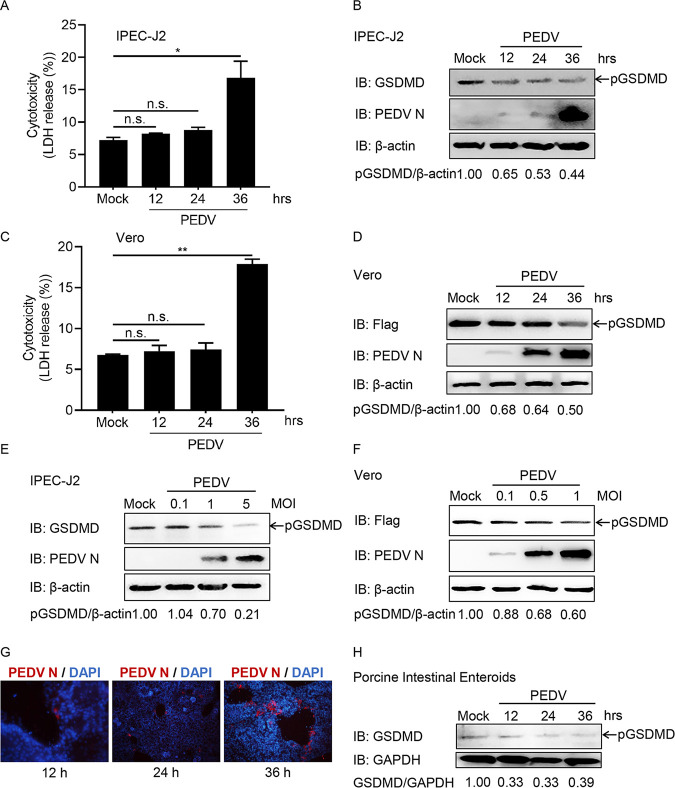
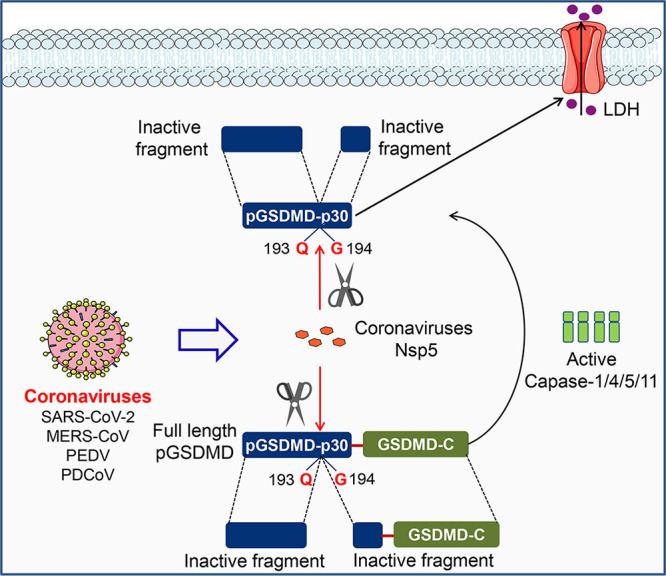
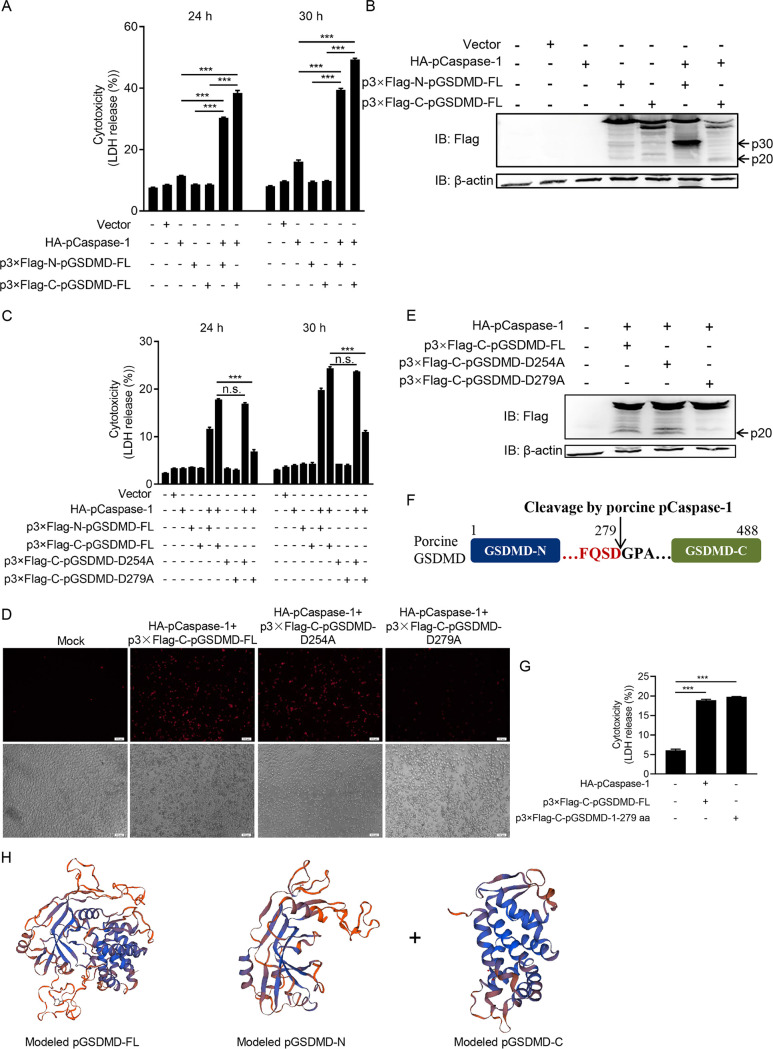
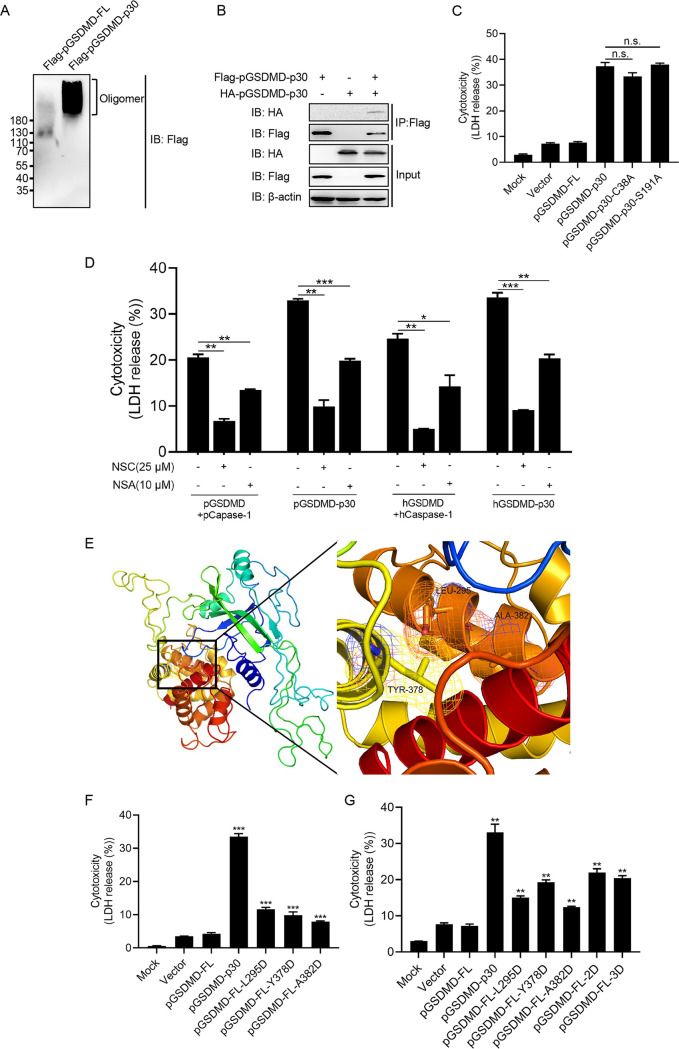
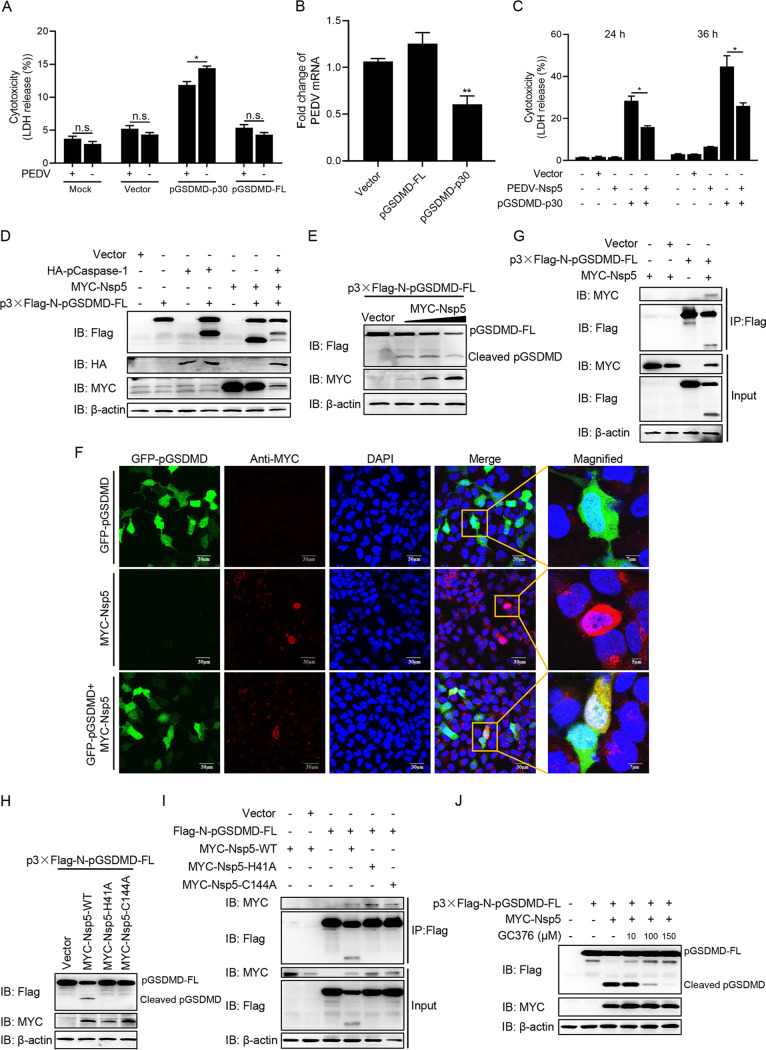
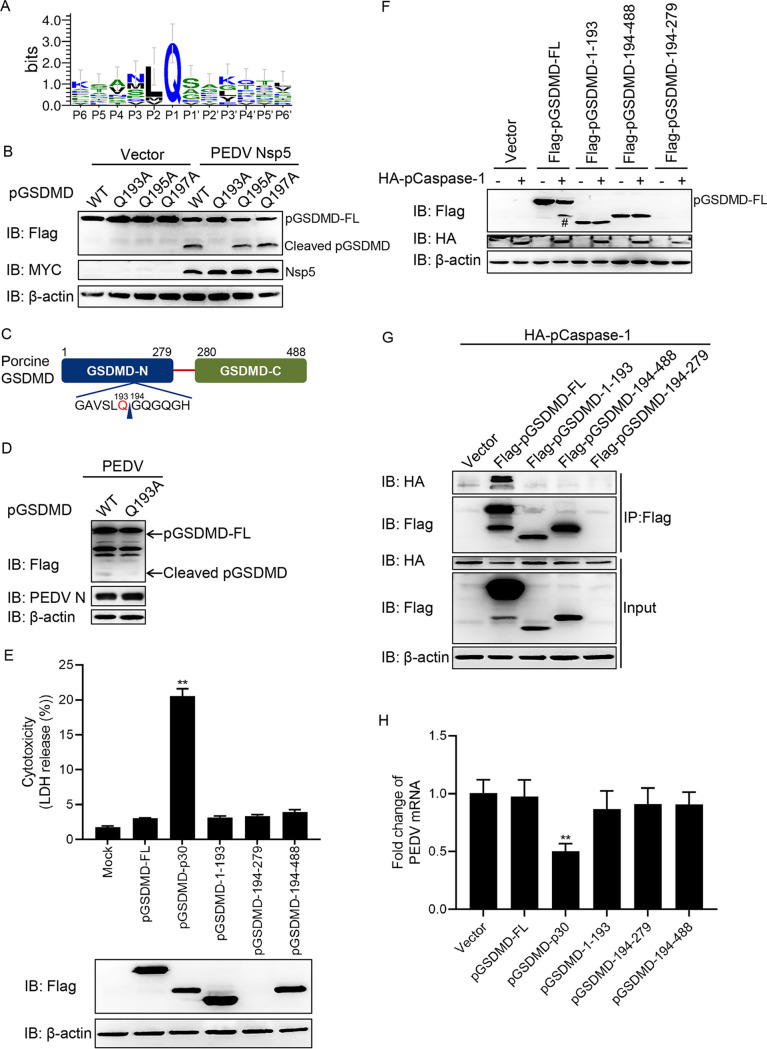
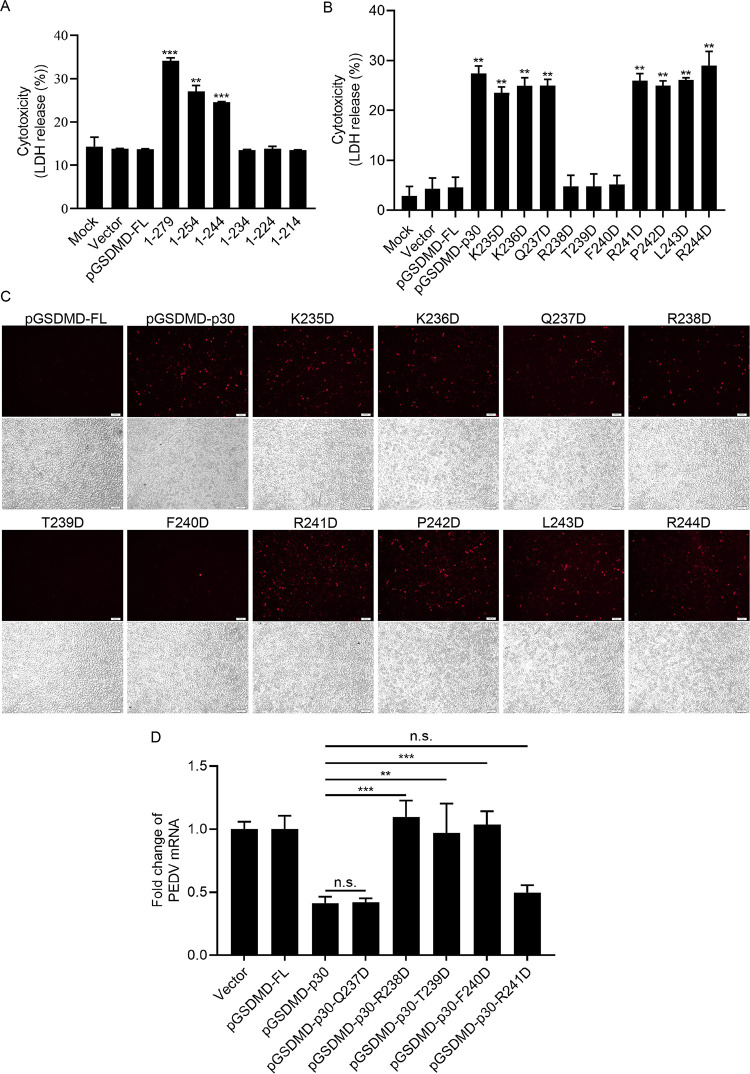
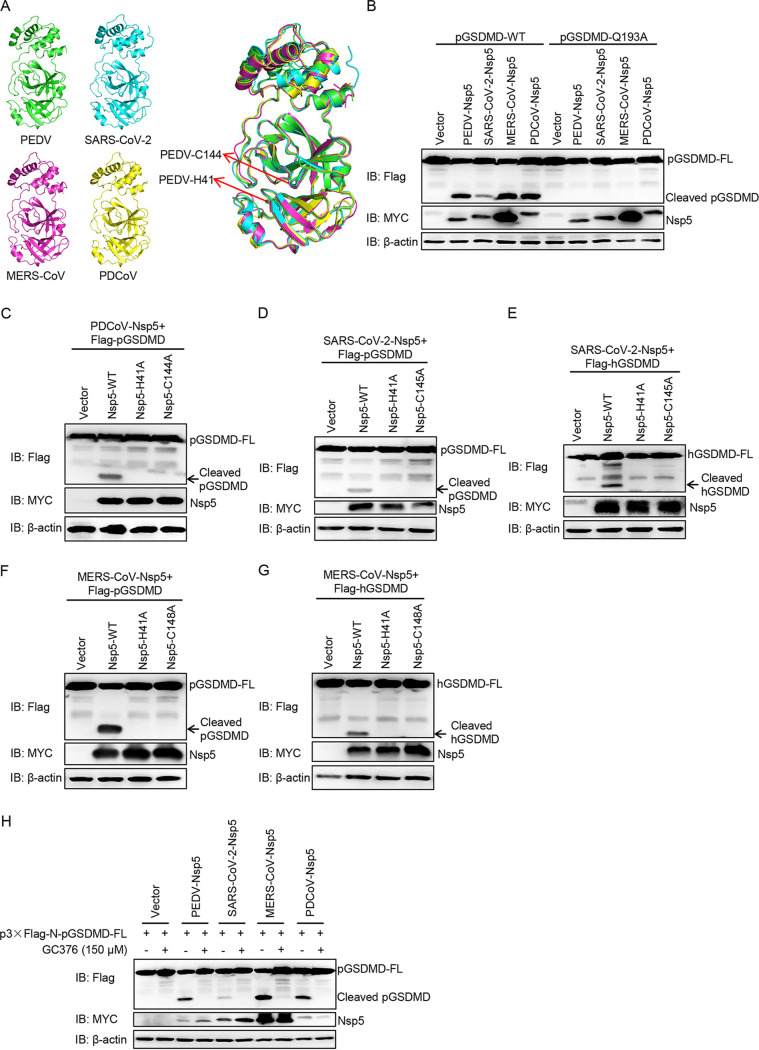
Coronaviruses (CoVs) are a family of RNA viruses that typically cause respiratory, enteric, and hepatic diseases in animals and humans. Here, we use porcine epidemic diarrhea virus (PEDV) as a model of CoVs to illustrate the reciprocal regulation between CoV infection and pyroptosis. For the first time, we elucidate the molecular mechanism of porcine gasdermin D (pGSDMD)-mediated pyroptosis and demonstrate that amino acids R238, T239, and F240 within pGSDMD-p30 are critical for pyroptosis. Furthermore, 3C-like protease Nsp5 from SARS-CoV-2, MERS-CoV, PDCoV, and PEDV can cleave pGSDMD at the Q193-G194 junction to produce two fragments unable to trigger pyroptosis. The two cleaved fragments could not inhibit PEDV replication. In addition, Nsp5 from SARS-CoV-2 and MERS-CoV also cleave human GSDMD (hGSDMD). Therefore, we provide clear evidence that PEDV may utilize the Nsp5-GSDMD pathway to inhibit pyroptosis and, thus, facilitate viral replication during the initial period, suggesting an important strategy for the coronaviruses to sustain their infection. Recently, GSDMD has been reported as a key executioner for pyroptosis. This study first demonstrates the molecular mechanism of pGSDMD-mediated pyroptosis and that the pGSDMD-mediated pyroptosis protects host cells against PEDV infection. Notably, PEDV employs its Nsp5 to directly cleave pGSDMD in favor of its replication. We found that Nsp5 proteins from other coronaviruses, such as porcine deltacoronavirus, severe acute respiratory syndrome coronavirus 2, and Middle East respiratory syndrome coronavirus, also had the protease activity to cleave human and porcine GSDMD. Thus, we provide clear evidence that the coronaviruses might utilize Nsp5 to inhibit the host pyroptotic cell death and facilitate their replication during the initial period, an important strategy for their sustaining infection. We suppose that GSDMD is an appealing target for the design of anticoronavirus therapies.
冠状病毒(CoVs)是一组 RNA 病毒,通常在动物和人类中引起呼吸道、肠道和肝脏疾病。在这里,我们使用猪流行性腹泻病毒(PEDV)作为 CoVs 的模型来说明 CoV 感染与细胞焦亡之间的相互调节。我们首次阐明了猪 gasdermin D(pGSDMD)介导的细胞焦亡的分子机制,并证明 pGSDMD-p30 内的氨基酸 R238、T239 和 F240 对于细胞焦亡至关重要。此外,来自 SARS-CoV-2、MERS-CoV、PDCoV 和 PEDV 的 3C 样蛋白酶 Nsp5 可以在 Q193-G194 连接处切割 pGSDMD,产生两个无法引发细胞焦亡的片段。这两个切割片段不能抑制 PEDV 复制。此外,SARS-CoV-2 和 MERS-CoV 的 Nsp5 也可以切割人 GSDMD(hGSDMD)。因此,我们提供了明确的证据表明 PEDV 可能利用 Nsp5-GSDMD 途径抑制细胞焦亡,从而在早期促进病毒复制,这表明冠状病毒维持感染的一个重要策略。最近,GSDMD 被报道为细胞焦亡的关键执行者。本研究首次阐明了 pGSDMD 介导的细胞焦亡的分子机制,以及 pGSDMD 介导的细胞焦亡保护宿主细胞免受 PEDV 感染。值得注意的是,PEDV 利用其 Nsp5 直接切割 pGSDMD,有利于其复制。我们发现,其他冠状病毒(如猪德尔塔冠状病毒、严重急性呼吸综合征冠状病毒 2 和中东呼吸综合征冠状病毒)的 Nsp5 蛋白也具有切割人和猪 GSDMD 的蛋白酶活性。因此,我们提供了明确的证据表明,冠状病毒可能利用 Nsp5 抑制宿主细胞的细胞焦亡死亡并促进其在早期的复制,这是它们维持感染的一个重要策略。我们假设 GSDMD 是抗病毒治疗设计的一个有吸引力的靶点。