Department of Gynaecology and Obstetrics, Faculty of Medicine, P.J. Šafárik University and L. Pasteur University Hospital, Rastislavova 43 Street, 041 90, Košice, Slovakia.
Frauenklinik, DONAUISAR Klinikum Deggendorf, Deggendorf, Germany.
J Ovarian Res. 2022 Jan 10;15(1):5. doi: 10.1186/s13048-021-00940-8.
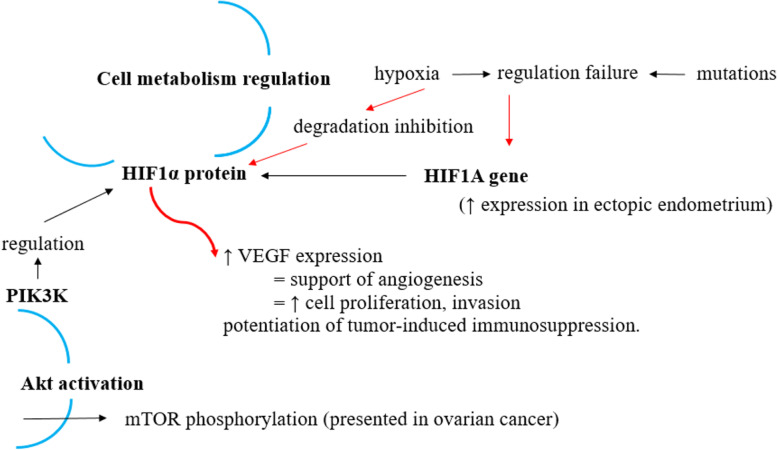
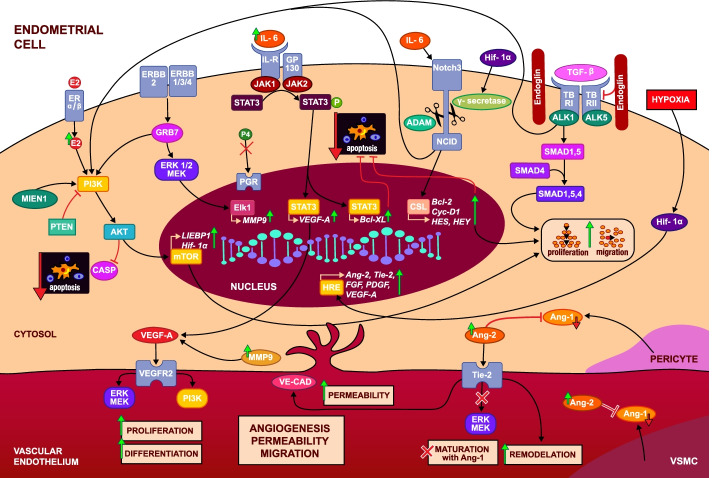
In recent years, the endometriosis has overcome a noteworthy renaissance in the recognition of its potential. In certain patients, a demonstrable malignant progression of ectopic foci leading to development of ovarian cancer is seen. The knowledge of endometriosis overthrow background into endometriosis associated ovarian cancer is of paramount importance for selection of patients at risk. The goal of the presented study was to review a malignant potential of the endometriosis and to specify predictive factors of endometriosis progression into ovarian cancer. Altogether 189 patients were included in the study. Conventional cytogenetics as well as measurement of transcriptional activity of CTNNB1 (β-catenin) and HIF1A (HIF1-α) genes were prospectively studied in 60 endometriosis patients and 50 control group patients. The retrospective histopathological analysis was performed in 19 endometriosis associated ovarian cancer patients and 60 patients with histologically confirmed endometriosis.
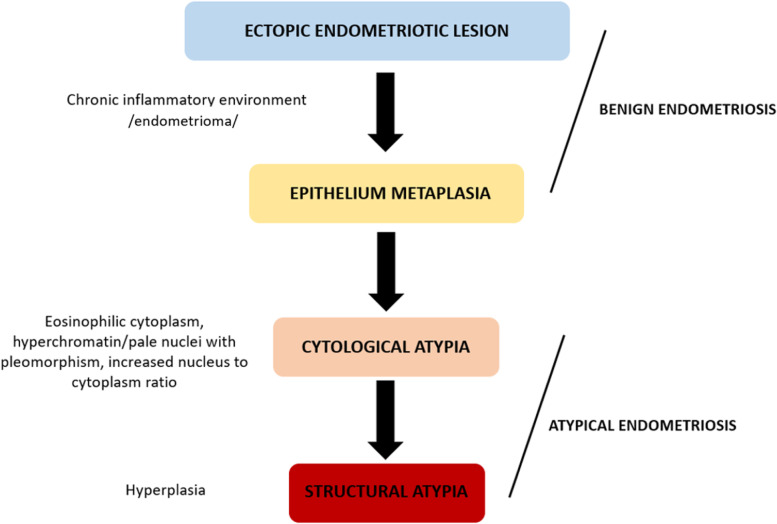
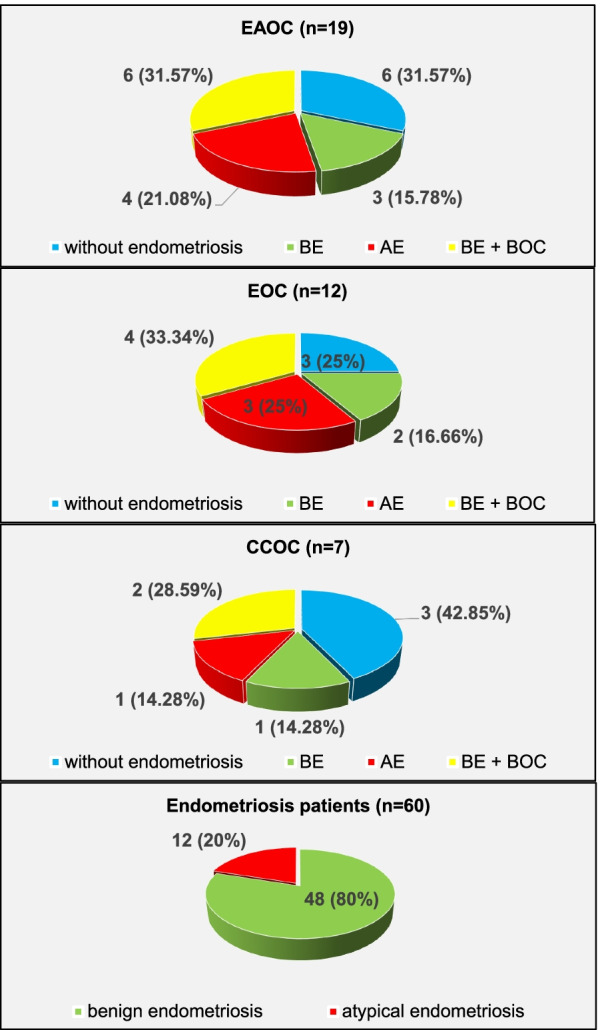
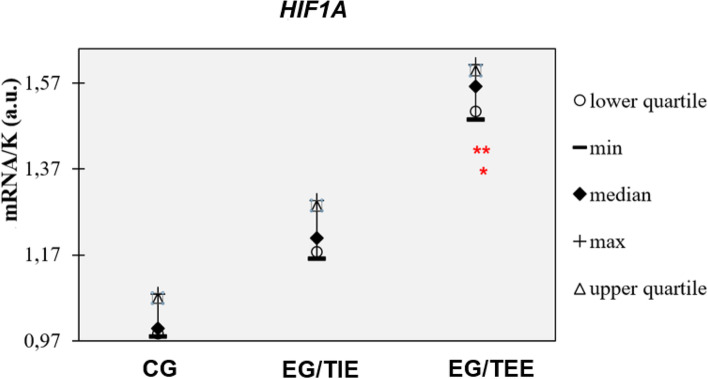
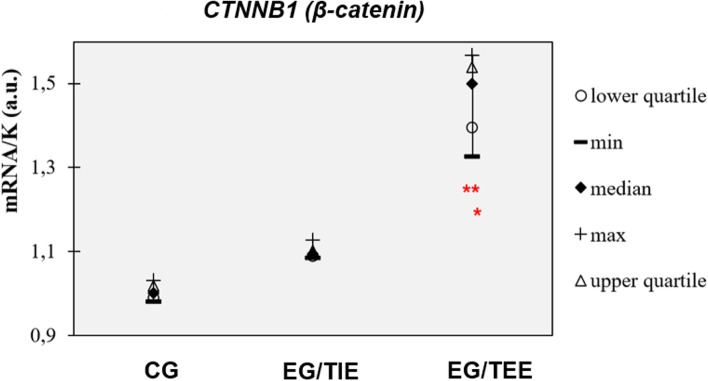
Five endometriosis patients showed a deviation from normal cytogenetics finding without affecting of their phenotype. In 6 cases of endometriosis associated ovarian cancer ectopic endometrium was not confirmed. The remaining 13 cases demonstrated either benign or atypical endometriosis or even structures of borderline carcinoma. Atypical endometriosis was histologically confirmed in 20% of 60 endometriosis patients. Determination of gene expression (CTNNB1, HIF1A) formed two subgroups. Transcriptionally incipient endometriosis subgroup with insignificant genes expression compared to control group. In transcriptionally evident endometriosis subgroup were genes expressions significantly higher compared to control group (p < 0.01) as well as transcriptionally incipient endometriosis subgroup (p < 0.05).
Significant structural abnormalities of chromosomes are not included in genetic rigging of endometriosis patients. Atypical endometriosis represents a histopathologically detectable intermediate of endometriosis progression. Determination of genes expression CTNNB1 and HIF1A helps to allocate risk patients with endometriosis where more precise management is needed.
近年来,子宫内膜异位症在认识其潜在性方面取得了显著的复兴。在某些患者中,可见异位病灶的明显恶性进展导致卵巢癌的发生。了解子宫内膜异位症的背景转变为与子宫内膜异位症相关的卵巢癌对于选择高危患者至关重要。本研究的目的是回顾子宫内膜异位症的恶性潜能,并确定子宫内膜异位症进展为卵巢癌的预测因素。共有 189 名患者纳入本研究。前瞻性研究了 60 例子宫内膜异位症患者和 50 例对照组患者的常规细胞遗传学以及 CTNNB1(β-连环蛋白)和 HIF1A(HIF1-α)基因转录活性的测量。对 19 例与子宫内膜异位症相关的卵巢癌患者和 60 例组织学证实的子宫内膜异位症患者进行了回顾性组织病理学分析。
5 例子宫内膜异位症患者的细胞遗传学结果偏离正常,但不影响其表型。在 6 例与子宫内膜异位症相关的卵巢癌患者中,异位子宫内膜未得到证实。其余 13 例表现为良性或非典型子宫内膜异位症,甚至为交界性癌的结构。在 60 例子宫内膜异位症患者中,有 20%的患者组织学证实为非典型子宫内膜异位症。基因表达(CTNNB1、HIF1A)的测定形成了两个亚组。与对照组相比,转录起始的子宫内膜异位症亚组基因表达无显著差异。在转录明显的子宫内膜异位症亚组中,基因表达明显高于对照组(p < 0.01),也高于转录起始的子宫内膜异位症亚组(p < 0.05)。
染色体的显著结构异常不包括在子宫内膜异位症患者的遗传机制中。非典型子宫内膜异位症代表了子宫内膜异位症进展中可检测到的组织病理学中间产物。CTNNB1 和 HIF1A 基因表达的测定有助于确定需要更精确管理的子宫内膜异位症高危患者。