Department of Medicine, Division of Infectious Diseases, University of California Los Angeles, Los Angeles, CA, 90095, USA.
Molecular Biology Institute, University of California Los Angeles, Los Angeles, CA, 90095, USA.
Nat Commun. 2022 Jan 10;13(1):121. doi: 10.1038/s41467-021-27647-0.
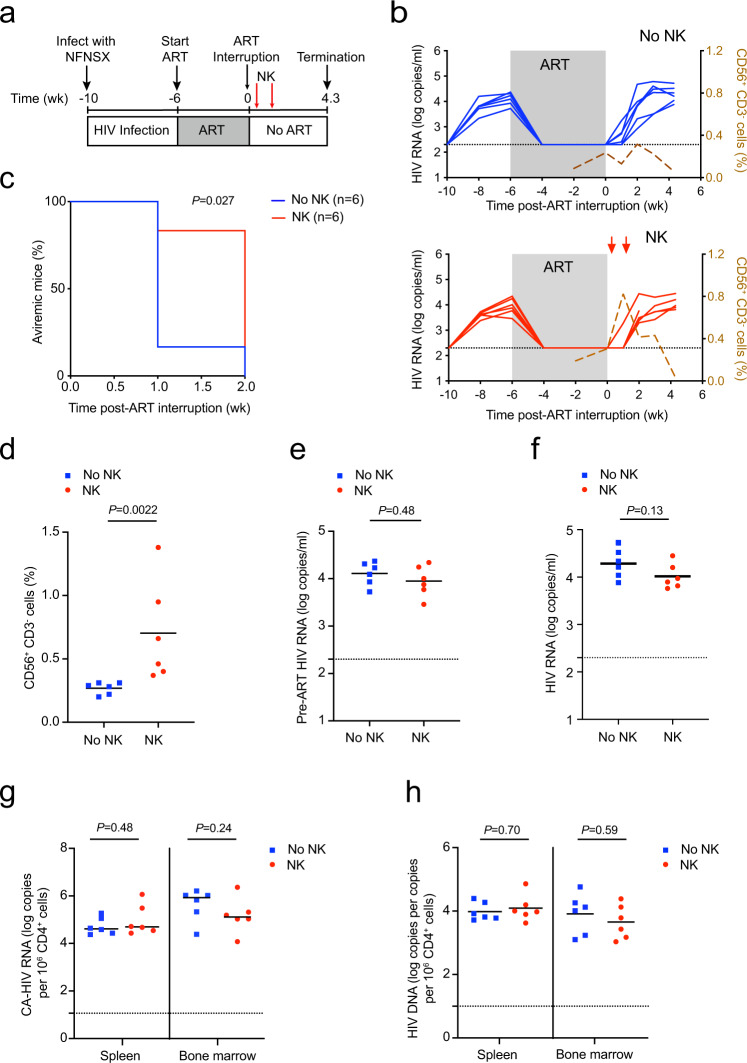
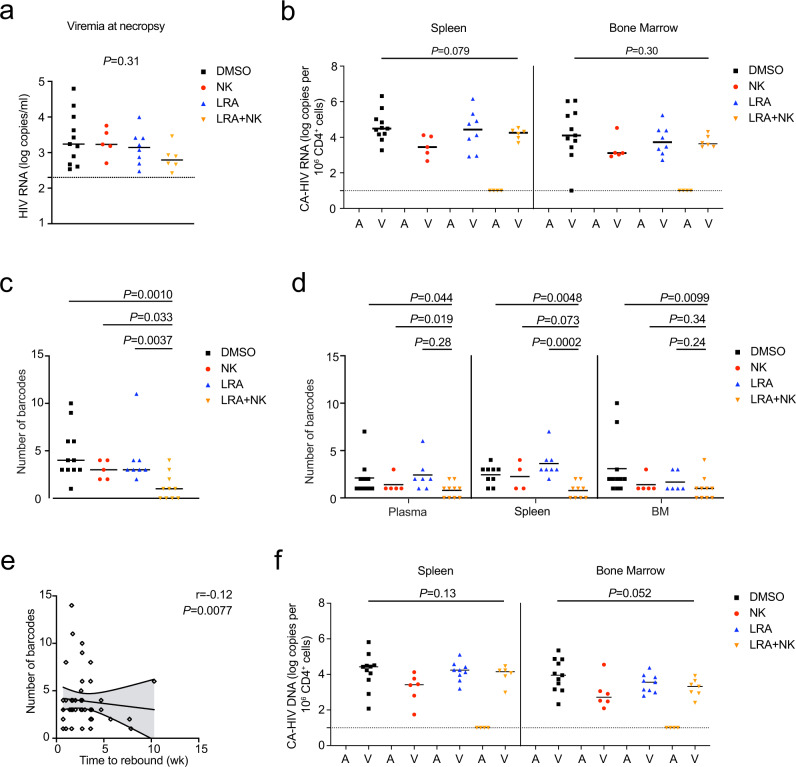
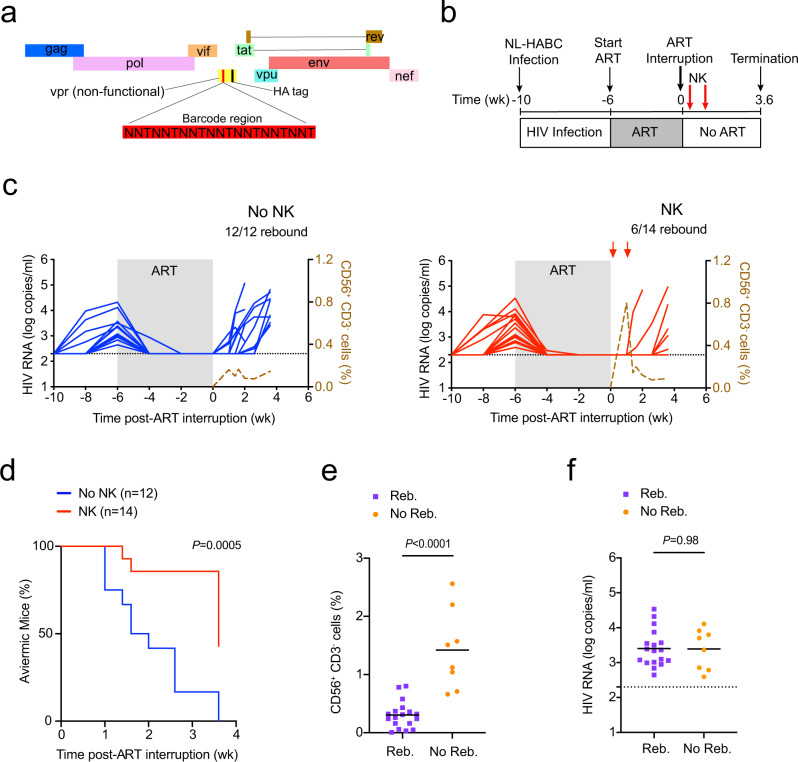
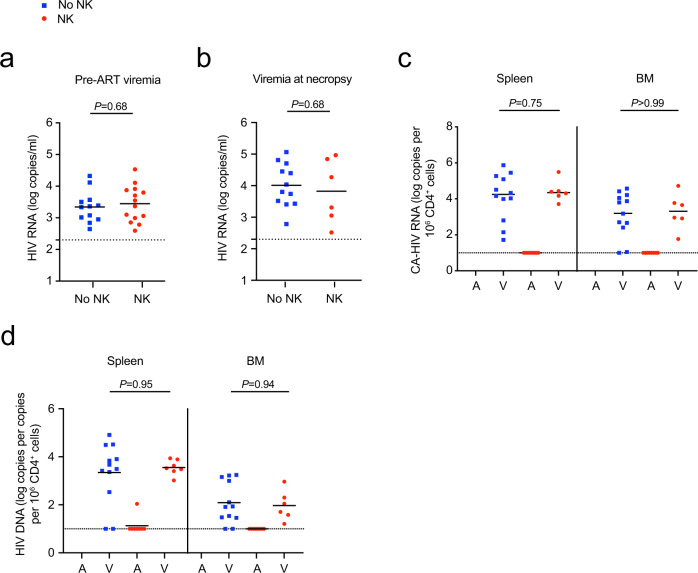
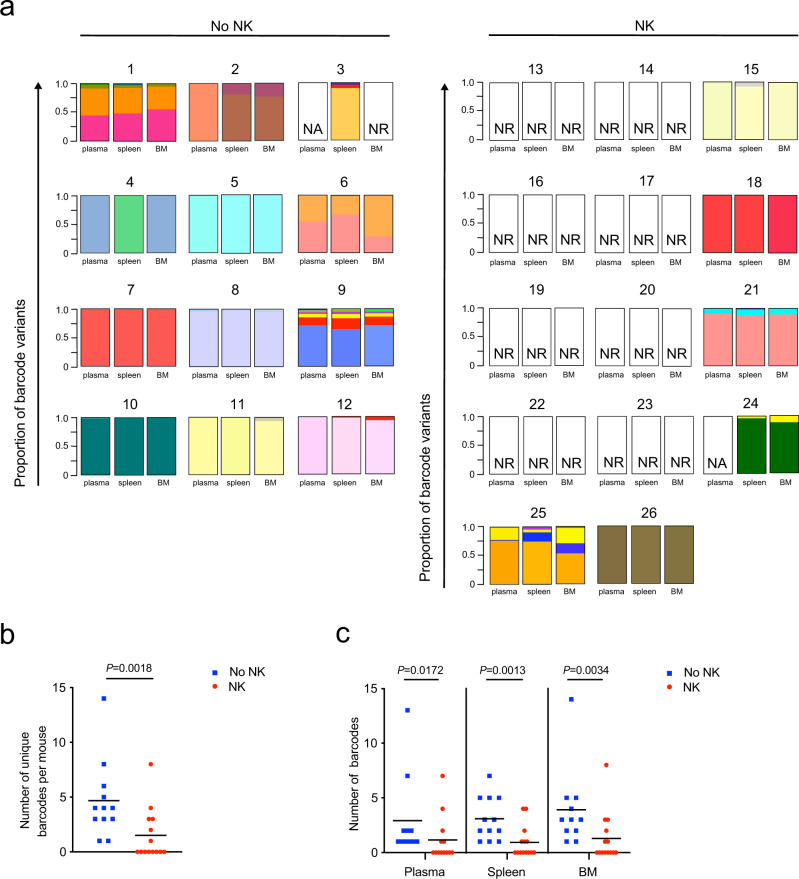
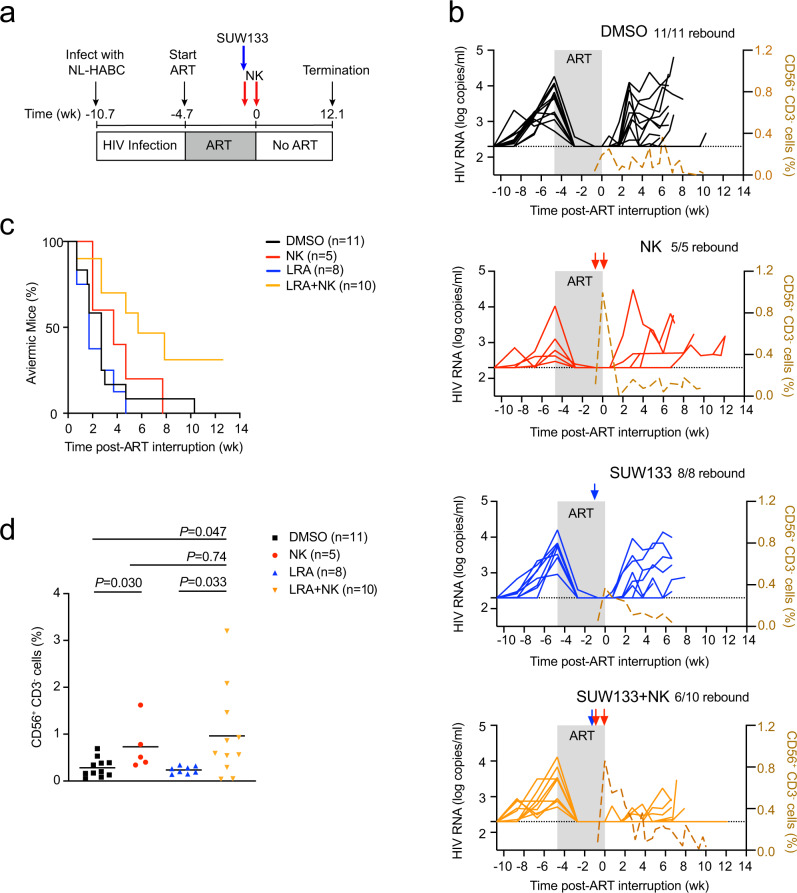
HIV is difficult to eradicate due to the persistence of a long-lived reservoir of latently infected cells. Previous studies have shown that natural killer cells are important to inhibiting HIV infection, but it is unclear whether the administration of natural killer cells can reduce rebound viremia when anti-retroviral therapy is discontinued. Here we show the administration of allogeneic human peripheral blood natural killer cells delays viral rebound following interruption of anti-retroviral therapy in humanized mice infected with HIV-1. Utilizing genetically barcoded virus technology, we show these natural killer cells efficiently reduced viral clones rebounding from latency. Moreover, a kick and kill strategy comprised of the protein kinase C modulator and latency reversing agent SUW133 and allogeneic human peripheral blood natural killer cells during anti-retroviral therapy eliminated the viral reservoir in a subset of mice. Therefore, combinations utilizing latency reversal agents with targeted cellular killing agents may be an effective approach to eradicating the viral reservoir.
HIV 难以根除,因为潜伏感染细胞的寿命很长。先前的研究表明,自然杀伤细胞对于抑制 HIV 感染很重要,但尚不清楚在停止抗逆转录病毒治疗时,给予自然杀伤细胞是否可以减少病毒反弹。在这里,我们展示了同种异体人外周血自然杀伤细胞的给药可以延迟感染 HIV-1 的人源化小鼠中断抗逆转录病毒治疗后的病毒反弹。利用基因编码病毒技术,我们表明这些自然杀伤细胞有效地减少了从潜伏状态中反弹的病毒克隆。此外,在抗逆转录病毒治疗期间,包含蛋白激酶 C 调节剂和潜伏逆转剂 SUW133 以及同种异体人外周血自然杀伤细胞的“踢杀”策略可以消除一部分小鼠中的病毒库。因此,利用潜伏逆转剂与靶向细胞杀伤剂的组合可能是消除病毒库的有效方法。