Division of BioTherapeutics, Leiden Academic Centre for Drug Research, Leiden University, Gorlaeus Laboratories, 2333CC, Leiden, The Netherlands.
Analytical Biosciences and Metabolomics, Division of Systems Biomedicine and Pharmacology, Leiden Academic Center for Drug Research, Leiden University, Leiden, The Netherlands.
Sci Rep. 2022 Jan 10;12(1):483. doi: 10.1038/s41598-021-04524-w.
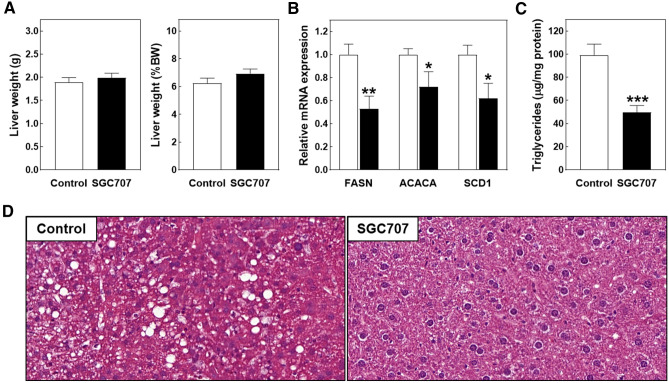
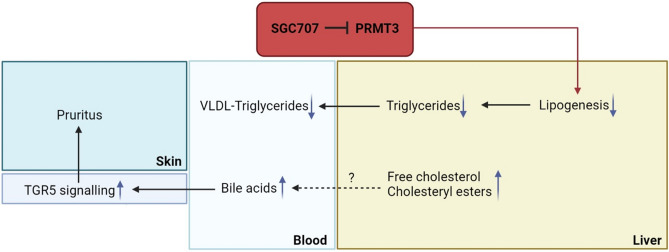
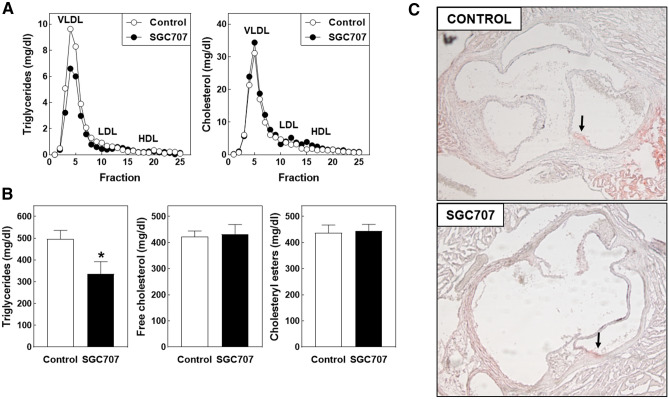
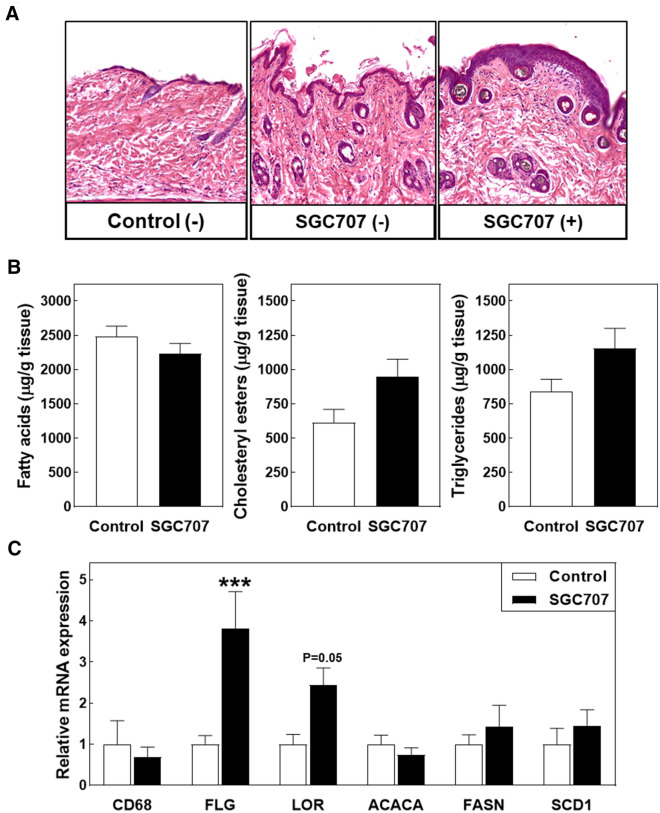
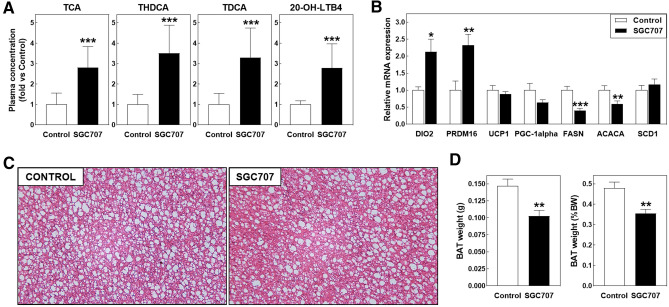
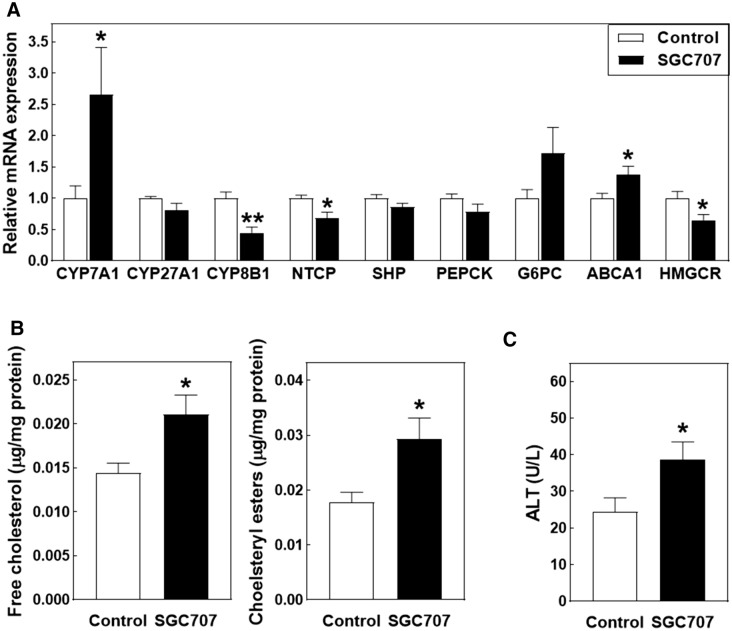
Protein arginine methyltransferase 3 (PRMT3) is a co-activator of liver X receptor capable of selectively modulating hepatic triglyceride synthesis. Here we investigated whether pharmacological PRMT3 inhibition can diminish the hepatic steatosis extent and lower plasma lipid levels and atherosclerosis susceptibility. Hereto, male hyperlipidemic low-density lipoprotein receptor knockout mice were fed an atherogenic Western-type diet and injected 3 times per week intraperitoneally with PRMT3 inhibitor SGC707 or solvent control. Three weeks into the study, SGC707-treated mice developed severe pruritus and scratching-associated skin lesions, leading to early study termination. SGC707-treated mice exhibited 50% lower liver triglyceride stores as well as 32% lower plasma triglyceride levels. Atherosclerotic lesions were virtually absent in all experimental mice. Plasma metabolite analysis revealed that levels of taurine-conjugated bile acids were ~ threefold increased (P < 0.001) in response to SGC707 treatment, which was paralleled by systemically higher bile acid receptor TGR5 signalling. In conclusion, we have shown that SGC707 treatment reduces hepatic steatosis and plasma triglyceride levels and induces pruritus in Western-type diet-fed LDL receptor knockout mice. These findings suggest that pharmacological PRMT3 inhibition can serve as therapeutic approach to treat non-alcoholic fatty liver disease and dyslipidemia/atherosclerosis, when unwanted effects on cholesterol and bile acid metabolism can be effectively tackled.
蛋白质精氨酸甲基转移酶 3(PRMT3)是肝 X 受体的共激活因子,能够选择性地调节肝甘油三酯的合成。在这里,我们研究了是否可以通过药理学抑制 PRMT3 来减轻肝脂肪变性程度,降低血脂水平和动脉粥样硬化易感性。为此,雄性高脂血症低密度脂蛋白受体敲除小鼠喂食动脉粥样硬化的西方饮食,并每周三次腹膜内注射 PRMT3 抑制剂 SGC707 或溶剂对照。研究进行到第 3 周时,SGC707 处理的小鼠出现严重瘙痒和抓挠相关的皮肤损伤,导致研究提前结束。SGC707 处理的小鼠肝甘油三酯储存减少了 50%,血浆甘油三酯水平降低了 32%。所有实验小鼠的动脉粥样硬化病变几乎不存在。血浆代谢物分析显示,SGC707 处理后牛磺酸结合胆汁酸的水平增加了约 3 倍(P<0.001),这与系统中更高的胆汁酸受体 TGR5 信号转导平行。总之,我们已经证明,SGC707 治疗可减少肝脂肪变性和血浆甘油三酯水平,并在西方饮食喂养的 LDL 受体敲除小鼠中引起瘙痒。这些发现表明,当可以有效解决胆固醇和胆汁酸代谢的不良影响时,药理学抑制 PRMT3 可以作为治疗非酒精性脂肪性肝病和血脂异常/动脉粥样硬化的治疗方法。