Center for Pharmacometrics and Systems Pharmacology, Department of Pharmaceutics, College of Pharmacy, University of Florida, Orlando, Florida, USA.
thinkQ2, Baar, Switzerland.
Clin Transl Sci. 2022 Apr;15(4):1003-1013. doi: 10.1111/cts.13219. Epub 2022 Jan 11.
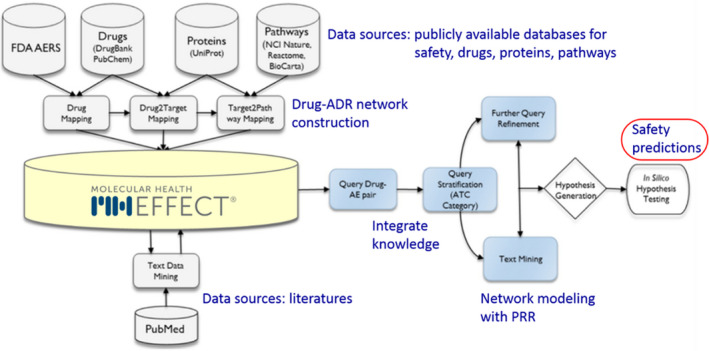
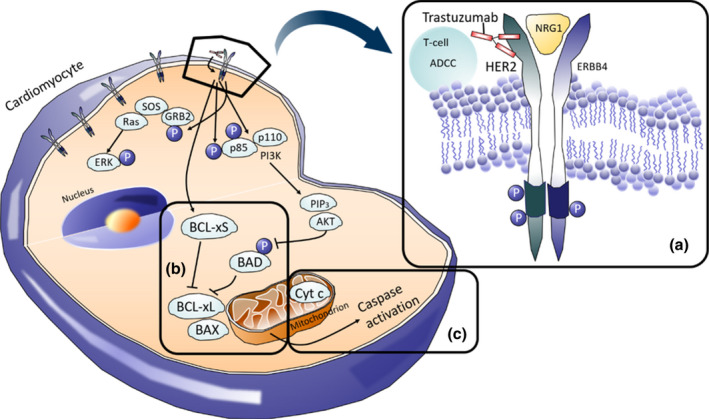
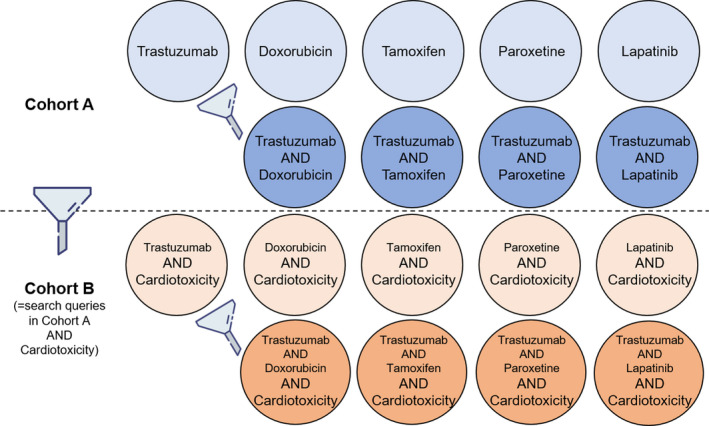
Adverse drug reactions (ADRs) of targeted therapy drugs (TTDs) are frequently unexpected and long-term toxicities detract from exceptional efficacy of new TTDs. In this proof-of-concept study, we explored how molecular causation involved in trastuzumab-induced cardiotoxicity changes when trastuzumab was given in combination with doxorubicin, tamoxifen, paroxetine, or lapatinib. The data analytical platform Molecular Health Effect was utilized to map population ADR data from the US Food and Drug Administration (FDA) Adverse Event Reporting System to chemical and biological databases (such as UniProt and Reactome), for hypothesis generation regarding the underlying molecular mechanisms causing cardiotoxicity. Disproportionality analysis was used to assess the statistical relevance between adverse events of interest and molecular causation. Literature search was performed to compare the established hypotheses to published experimental findings. We found that the combination therapy of trastuzumab and doxorubicin may affect mitochondrial dysfunction in cardiomyocytes through different molecular pathways such as BCL-X and PGC-1α proteins, leading to a synergistic effect of cardiotoxicity. We found, on the other hand, that trastuzumab-induced cardiotoxicity would be diminished by concomitant use of tamoxifen, paroxetine, and/or lapatinib. Tamoxifen and paroxetine may cause less cardiotoxicity through an increase in antioxidant activities, such as glutathione conjugation. Lapatinib may decrease the apoptotic effects in cardiomyocytes by altering the effects of trastuzumab on BCL-X proteins. This patient-centered systems-based approach provides, based on the trastuzumab-induced ADR cardiotoxicity, an example of how to apply reverse translation to investigate ADRs at the molecular pathway and target level to understand the causality and prevalence during drug development of novel therapeutics.
靶向治疗药物(TTD)的不良反应(ADR)常常是意外的,长期的毒性反应减损了新型 TTD 的卓越疗效。在这项概念验证研究中,我们探讨了当曲妥珠单抗与多柔比星、他莫昔芬、帕罗西汀或拉帕替尼联合使用时,曲妥珠单抗诱导的心脏毒性的分子病因如何变化。利用分子健康效应数据分析平台,将美国食品和药物管理局(FDA)不良事件报告系统中的人群 ADR 数据映射到化学和生物数据库(如 UniProt 和 Reactome),以生成关于导致心脏毒性的潜在分子机制的假说。比例失调分析用于评估相关不良事件与分子病因之间的统计学相关性。进行文献检索以将已建立的假说与已发表的实验结果进行比较。我们发现,曲妥珠单抗和多柔比星的联合治疗可能通过 BCL-X 和 PGC-1α 蛋白等不同分子途径影响心肌细胞的线粒体功能障碍,导致心脏毒性的协同作用。另一方面,我们发现,曲妥珠单抗与他莫昔芬、帕罗西汀和/或拉帕替尼同时使用会减轻曲妥珠单抗诱导的心脏毒性。他莫昔芬和帕罗西汀可能通过增加谷胱甘肽结合等抗氧化活性导致心脏毒性降低。拉帕替尼可能通过改变曲妥珠单抗对 BCL-X 蛋白的作用来减少心肌细胞的凋亡作用。这种以患者为中心的基于系统的方法基于曲妥珠单抗诱导的 ADR 心脏毒性,提供了一个如何应用反向翻译来研究 ADR 分子途径和靶标水平的例子,以了解新药开发过程中新型治疗药物的因果关系和普遍性。