
一种可适应的微反应器,用于研究界面对铜绿假单胞菌生物膜生长的影响。
An adaptable microreactor to investigate the influence of interfaces on Pseudomonas aeruginosa biofilm growth.
机构信息
School of Mechanical Engineering, Faculty of Engineering, Macquarie University, Sydney, NSW, 2113, Australia.
Woolcock Institute of Medical Research, Sydney, Australia.
出版信息
Appl Microbiol Biotechnol. 2022 Feb;106(3):1067-1077. doi: 10.1007/s00253-021-11746-5. Epub 2022 Jan 11.
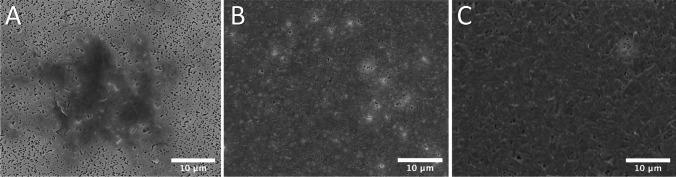
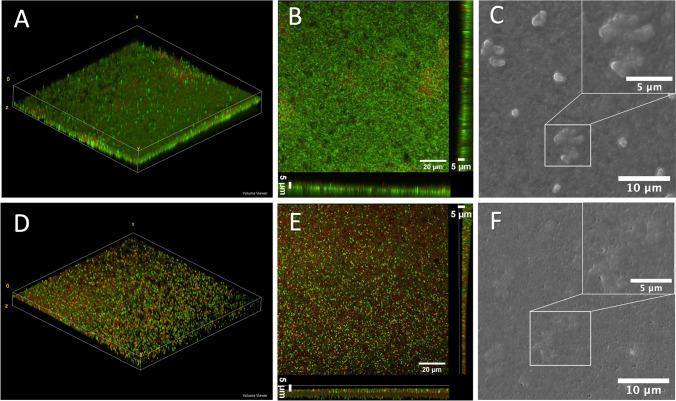
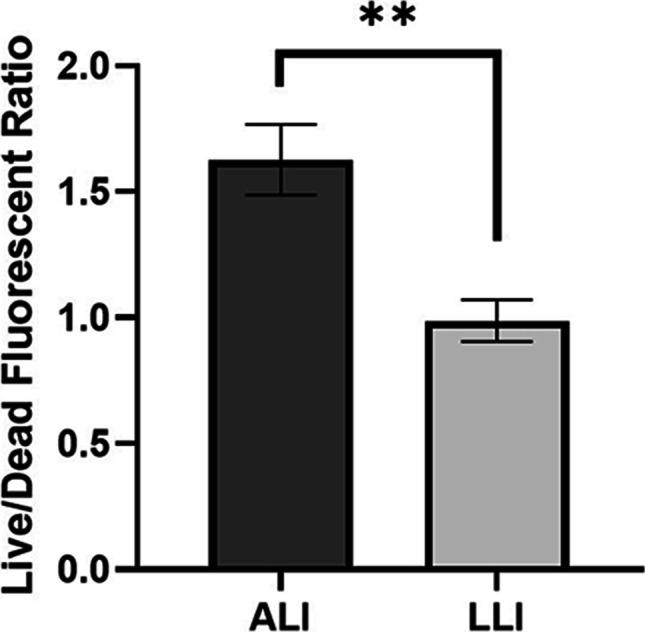
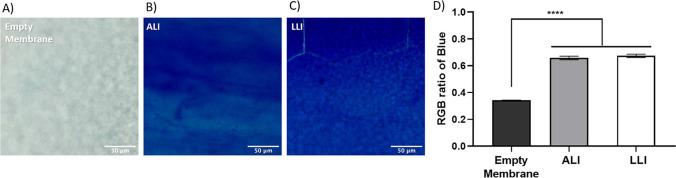
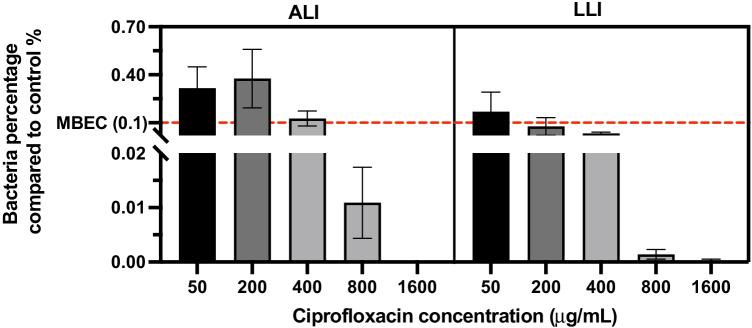
Biofilms are ubiquitous and notoriously difficult to eradicate and control, complicating human infections and industrial and agricultural biofouling. However, most of the study had used the biofilm model that attached to solid surface and developed in liquid submerged environments which generally have neglected the impact of interfaces. In our study, a reusable dual-chamber microreactor with interchangeable porous membranes was developed to establish multiple growth interfaces for biofilm culture and test. Protocol for culturing Pseudomonas aeruginosa (PAO1) on the air-liquid interface (ALI) and liquid-liquid interface (LLI) under static environmental conditions for 48 h was optimized using this novel device. This study shows that LLI model biofilms are more susceptible to physical disruption compared to ALI model biofilm. SEM images revealed a unique "dome-shaped" microcolonies morphological feature, which is more distinct on ALI biofilms than LLI. Furthermore, the study showed that ALI and LLI biofilms produced a similar amount of extracellular polymeric substances (EPS). As differences in biofilm structure and properties may lead to different outcomes when using the same eradication approaches, the antimicrobial effect of an antibiotic, ciprofloxacin (CIP), was chosen to test the susceptibility of a 48-h-old P. aeruginosa biofilms grown on ALI and LLI. Our results show that the minimum biofilm eradication concentration (MBEC) of 6-h CIP exposure for ALI and LLI biofilms is significantly different, which are 400 μg/mL and 200 μg/mL, respectively. These results highlight the importance of growth interface when developing more targeted biofilm management strategies, and our novel device provides a promising tool that enables manipulation of realistic biofilm growth. KEY POINTS: • A novel dual-chamber microreactor device that enables the establishment of different interfaces for biofilm culture has been developed. • ALI model biofilms and LLI model biofilms show differences in resistance to physical disruption and antibiotic susceptibility.
生物膜无处不在,且难以根除和控制,这使得人类感染和工农业生物污染变得复杂。然而,大多数研究都使用了附着在固体表面并在浸没液体环境中生长的生物膜模型,这些模型通常忽略了界面的影响。在我们的研究中,开发了一种具有可互换多孔膜的可重复使用的双通道微反应器,以建立用于生物膜培养和测试的多个生长界面。使用这种新型设备优化了在静态环境下在气液界面(ALI)和液液界面(LLI)上培养铜绿假单胞菌(PAO1)48 小时的方案。该研究表明,与 ALI 模型生物膜相比,LLI 模型生物膜更容易受到物理破坏。SEM 图像显示了一种独特的“圆顶状”微菌落形态特征,在 ALI 生物膜上比 LLI 更明显。此外,该研究表明,ALI 和 LLI 生物膜产生了相似量的胞外聚合物物质(EPS)。由于使用相同的清除方法时,生物膜结构和特性的差异可能导致不同的结果,因此选择抗生素环丙沙星(CIP)来测试在 ALI 和 LLI 上生长 48 小时的铜绿假单胞菌生物膜的敏感性。我们的结果表明,6 小时 CIP 暴露时 ALI 和 LLI 生物膜的最小生物膜清除浓度(MBEC)有显著差异,分别为 400μg/mL 和 200μg/mL。这些结果强调了在开发更有针对性的生物膜管理策略时生长界面的重要性,并且我们的新型设备提供了一种有前途的工具,可以实现对现实生物膜生长的控制。要点:• 开发了一种新型双通道微反应器设备,可用于生物膜培养的不同界面的建立。• ALI 模型生物膜和 LLI 模型生物膜在物理破坏抗性和抗生素敏感性方面存在差异。



 Zotero 插件