Department of Interventional Radiology, University of Texas MD Anderson Cancer Center, Houston, Texas.
Department of Interventional Radiology, University of Texas MD Anderson Cancer Center, Houston, Texas.
J Am Coll Radiol. 2022 Feb;19(2 Pt A):243-250. doi: 10.1016/j.jacr.2021.10.022. Epub 2021 Dec 8.
To evaluate the clinical, operational, and financial effects of using telemedicine services in an academic interventional radiology setting during the coronavirus disease 2019 pandemic and to identify potential barriers to equitable telemedicine access for patients.
Evaluation and management (E&M) data over a 104-week period from September 2019 to August 2021 were reviewed. Data related to the visits were recorded including visit type, billing provider, patient demographic information, Current Procedural Terminology code charged, and reimbursement received. The ZIP code pertaining to the patient's primary residence was matched with median household income from the US Census Bureau.
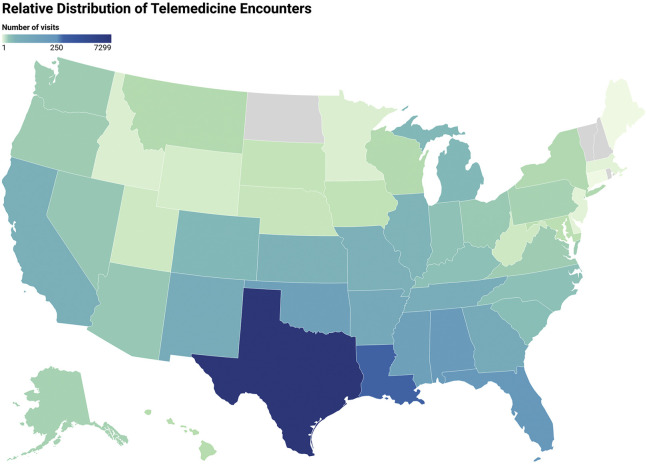
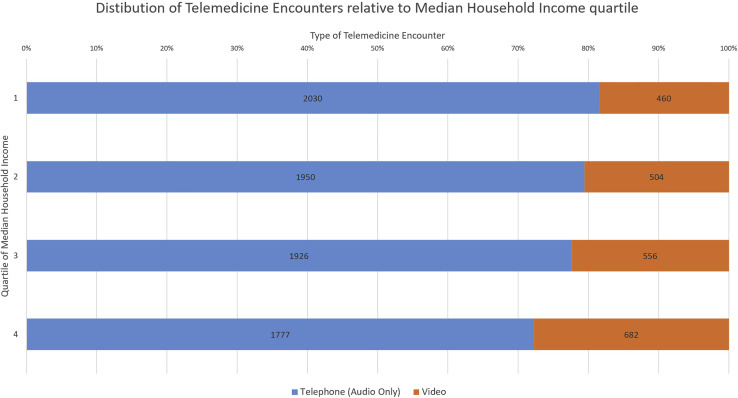
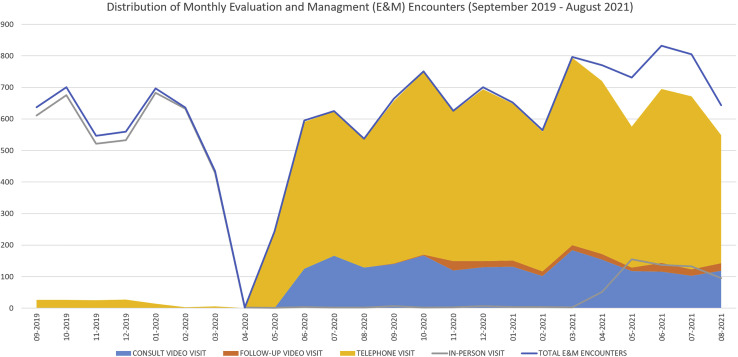
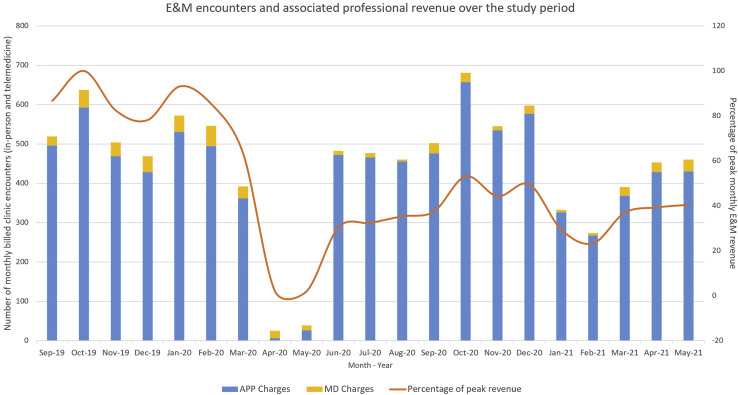
In all, 14,754 E&M encounters were performed over the study period, of which 10,056 were conducted using telemedicine. Twenty-two percent of visits were performed with interactive video; the remainder were performed using audio only. Female patients were more likely than male patients to use interactive video visits for telemedicine encounters (23.7% versus 20.4%, P < .001). Patients availing of video visits (mean age, 58.1 years, SD = 14.0) were also significantly younger than those patients who used audio-only (telephone) encounters (mean age, 62.5 years, SD = 13.3). Patients with private insurance and those living in neighborhoods with higher median household income were more likely to avail of interactive video visits (P < .001). Professional E&M monthly revenue was between 23.3% and 53.2% of peak prepandemic levels (mean 37.7%).
Telemedicine services allowed for rapid restoration of E&M encounter volumes over the study period. Further work is required to determine the potential implementation barriers to increasing the use of video visits.
评估在冠状病毒病 2019 大流行期间在学术介入放射学环境中使用远程医疗服务的临床、运营和财务影响,并确定患者获得公平远程医疗服务的潜在障碍。
回顾了 2019 年 9 月至 2021 年 8 月的 104 周评估和管理(E&M)数据。记录与就诊相关的数据,包括就诊类型、计费提供者、患者人口统计学信息、收取的当前程序术语(CPT)代码和收到的报销。患者主要居住地的邮政编码与美国人口普查局的家庭中位数收入相匹配。
在整个研究期间共进行了 14754 次 E&M 就诊,其中 10056 次是通过远程医疗进行的。22%的就诊是通过互动视频进行的;其余的则是通过音频进行的。女性患者比男性患者更有可能使用互动视频就诊进行远程医疗就诊(23.7%比 20.4%,P<.001)。使用视频就诊的患者(平均年龄为 58.1 岁,标准差为 14.0)也明显比使用音频(电话)就诊的患者年轻(平均年龄为 62.5 岁,标准差为 13.3)。拥有私人保险的患者和居住在家庭中位数收入较高社区的患者更有可能使用互动视频就诊(P<.001)。专业 E&M 每月收入介于大流行前高峰期的 23.3%至 53.2%之间(平均为 37.7%)。
远程医疗服务使 E&M 就诊量在研究期间迅速恢复。需要进一步努力确定增加视频就诊使用的潜在实施障碍。