Department of Medicine, Section of Hematology, University of Verona, Verona, Italy.
Haematologica. 2022 Apr 1;107(4):790-802. doi: 10.3324/haematol.2021.280201.
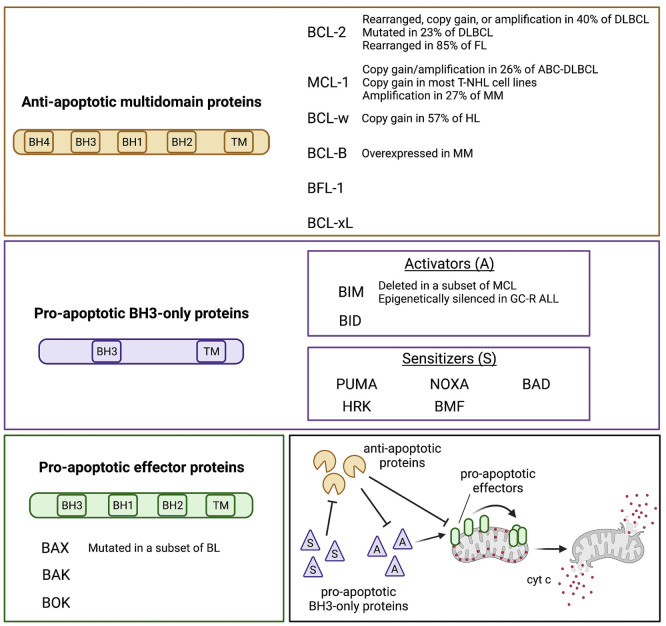
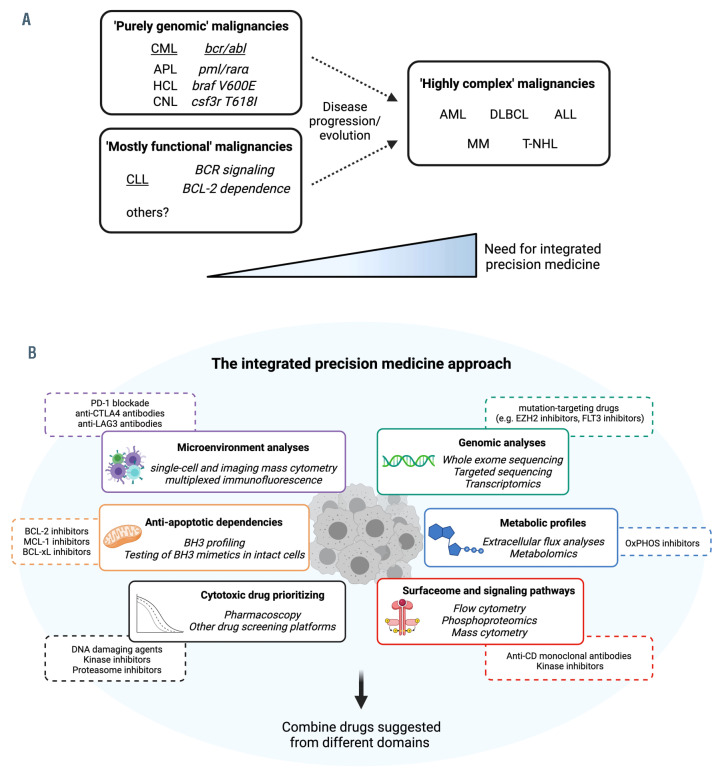
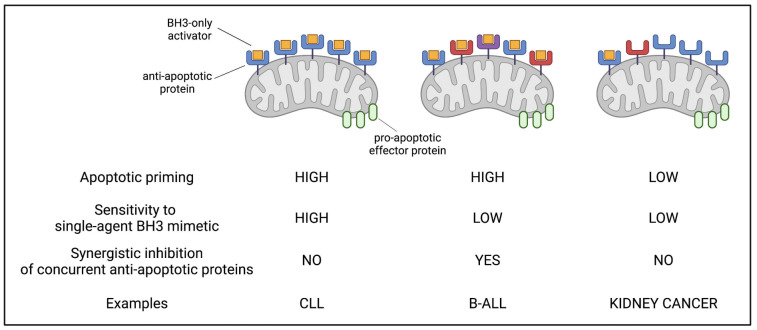
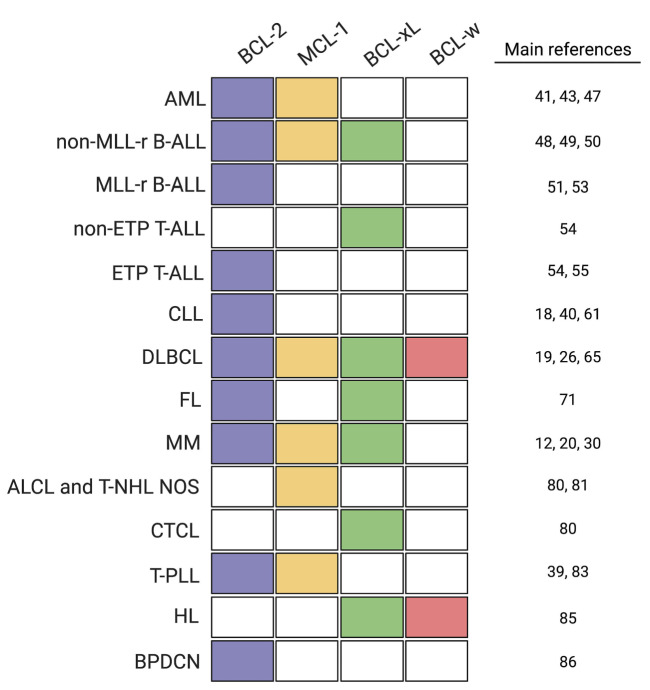
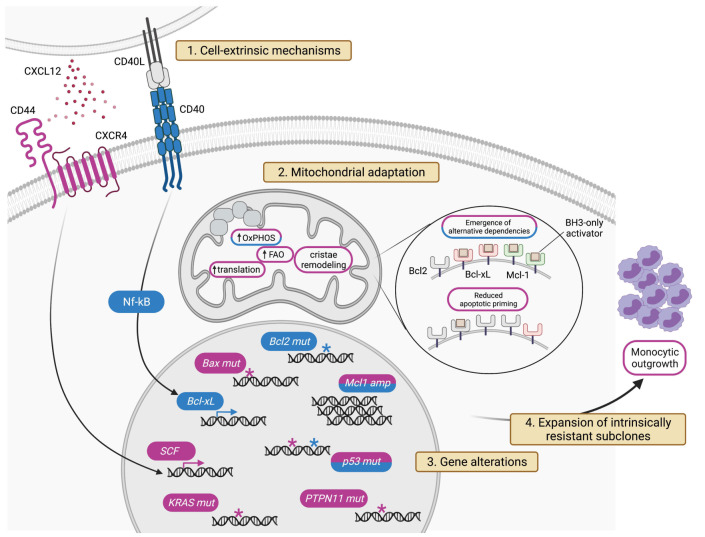
Mitochondria are critical organelles in the regulation of intrinsic apoptosis. As a general feature of blood cancers, different antiapoptotic members of the BCL-2 protein family localize at the outer mitochondrial membrane to sequester variable amounts of proapoptotic activators, and hence protect cancer cells from death induction. However, the impact of distinct anti-apoptotic members on apoptosis prevention, a concept termed anti-apoptotic dependence, differs remarkably across disease entities. Over the last two decades, several genetic and functional methodologies have been established to uncover the anti-apoptotic dependencies of the majority of blood cancers, inspiring the development of a new class of small molecules called BH3 mimetics. In this review, we highlight the rationale of targeting mitochondrial apoptosis in hematology, and provide a comprehensive map of the anti-apoptotic dependencies that are currently guiding novel therapeutic strategies. Cell-extrinsic and -intrinsic mechanisms conferring resistance to BH3 mimetics are also examined, with insights on potential strategies to overcome them. Finally, we discuss how the field of mitochondrial apoptosis might be complemented with other dimensions of precision medicine for more successful treatment of 'highly complex' hematologic malignancies.
线粒体在内在凋亡的调控中起着关键作用。作为血液癌症的一般特征,BCL-2 蛋白家族的不同抗凋亡成员定位于外线粒体膜,以隔离不同数量的促凋亡激活剂,从而保护癌细胞免受死亡诱导。然而,不同的抗凋亡成员对凋亡预防的影响,即所谓的抗凋亡依赖性,在不同的疾病实体中差异显著。在过去的二十年中,已经建立了几种遗传和功能方法来揭示大多数血液癌症的抗凋亡依赖性,这激发了一类新的小分子 BH3 模拟物的开发。在这篇综述中,我们强调了靶向血液学中线粒体凋亡的基本原理,并提供了目前指导新治疗策略的抗凋亡依赖性的全面图谱。还研究了赋予对 BH3 模拟物耐药性的细胞外和细胞内机制,并探讨了克服这些机制的潜在策略。最后,我们讨论了如何通过线粒体凋亡领域与其他精准医学维度相结合,以更成功地治疗“高度复杂”的血液恶性肿瘤。