Martín-Sabroso Cristina, Alonso-González Mario, Fernández-Carballido Ana, Aparicio-Blanco Juan, Córdoba-Díaz Damián, Navarro-García Federico, Córdoba-Díaz Manuel, Torres-Suárez Ana I
Department of Pharmaceutics and Food Technology, Complutense University of Madrid, 28040 Madrid, Spain.
Institute of Industrial Pharmacy, Complutense University of Madrid, 28040 Madrid, Spain.
Pharmaceuticals (Basel). 2021 Dec 21;15(1):2. doi: 10.3390/ph15010002.
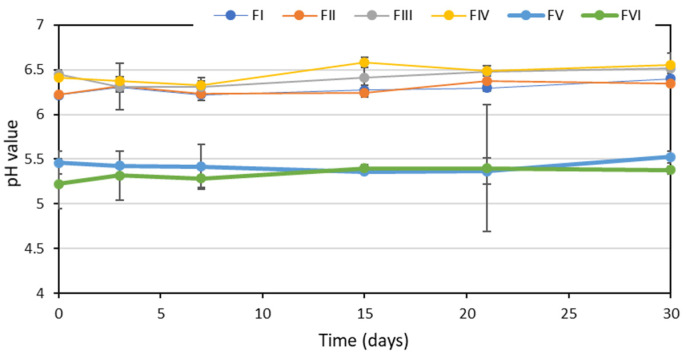
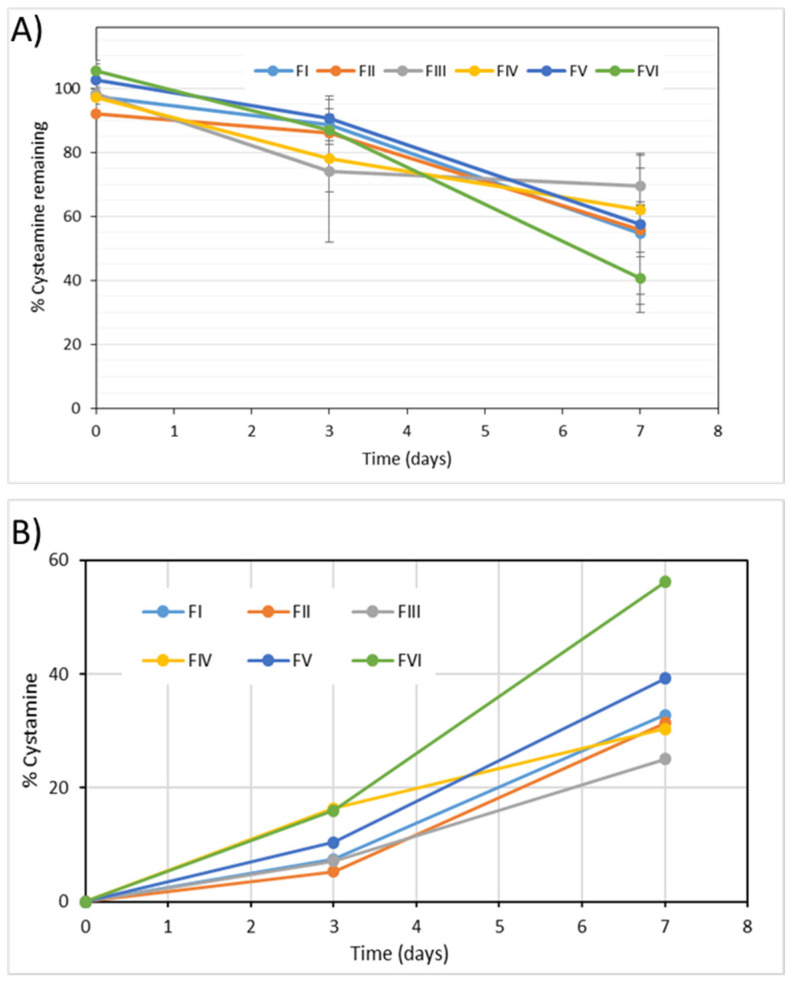
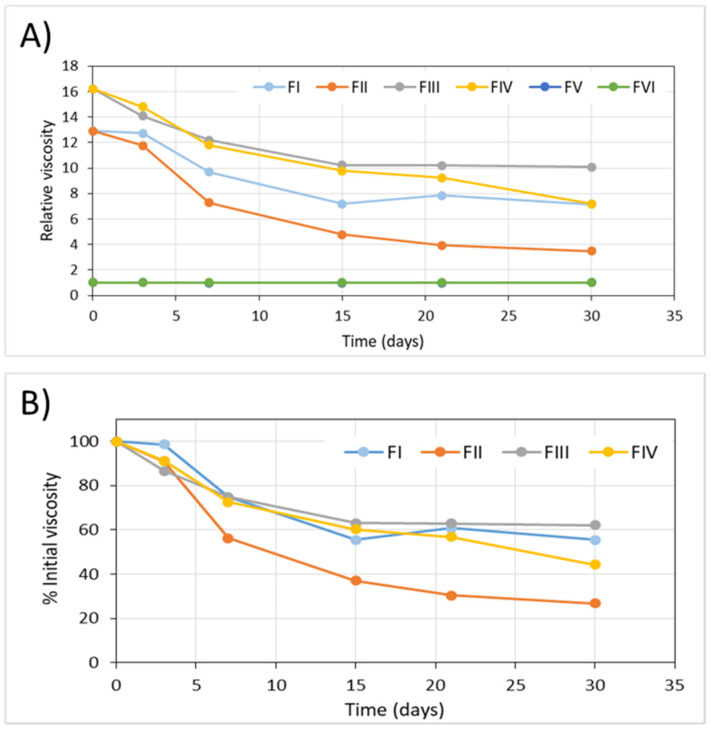
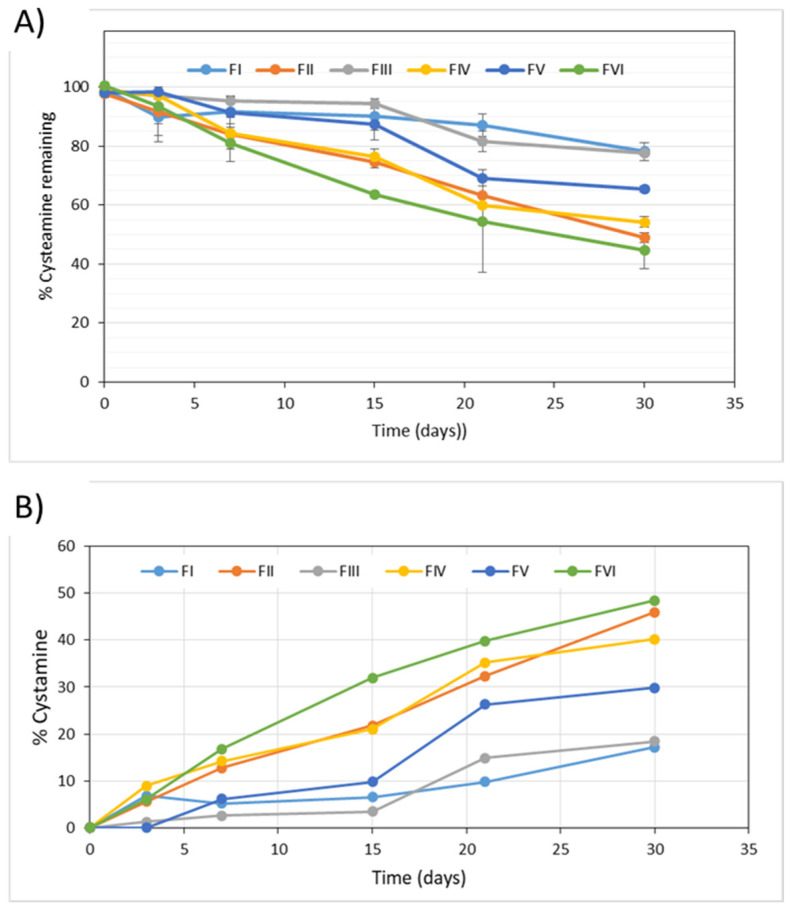
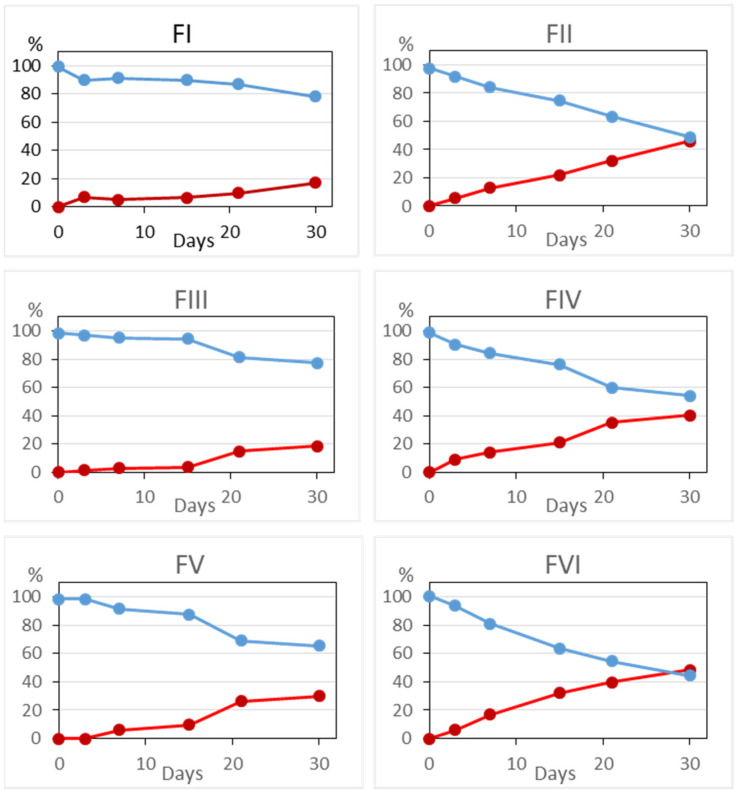
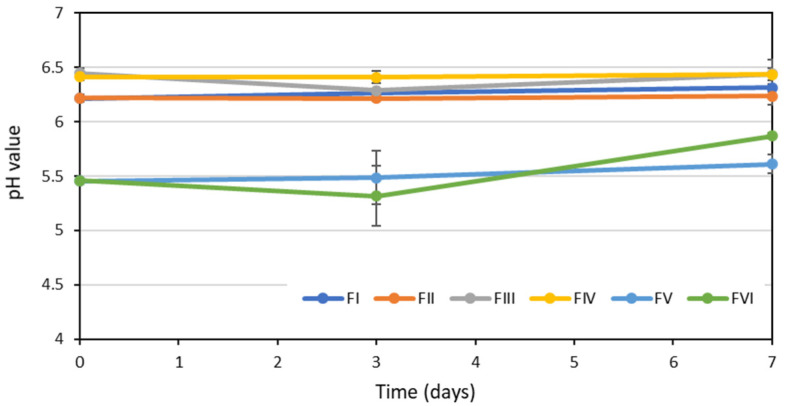
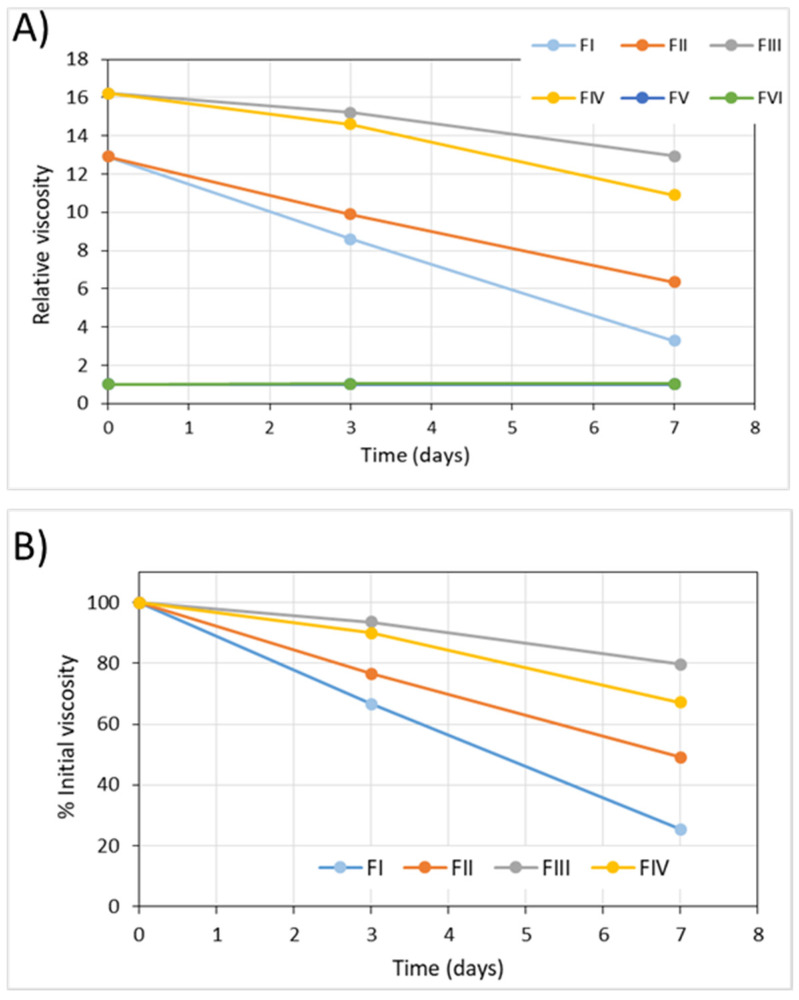
Accumulation of cystine crystals in the cornea of patients suffering from cystinosis is considered pathognomonic and can lead to severe ocular complications. Cysteamine eye drop compounded formulations, commonly prepared by hospital pharmacy services, are meant to diminish the build-up of corneal cystine crystals. The objective of this work was to analyze whether the shelf life proposed for six formulations prepared following different protocols used in hospital pharmacies is adequate to guarantee the quality and efficacy of cysteamine eye drops. The long-term and in-use stabilities of these preparations were studied using different parameters: content of cysteamine and its main degradation product cystamine; appearance, color and odor; pH and viscosity; and microbiological analysis. The results obtained show that degradation of cysteamine was between 20% and 50% after one month of storage in the long-term stability study and between 35% and 60% in the in-use study. These data confirm that cysteamine is a very unstable molecule in aqueous solution, the presence of oxygen being the main degradation factor. Saturation with nitrogen gas of the solutions offers a means of reducing cysteamine degradation. Overall, all the formulae studied presented high instability at the end of their shelf life, suggesting that their clinical efficacy might be dramatically compromised.
胱氨酸病患者角膜中胱氨酸晶体的积累被认为具有诊断意义,并可能导致严重的眼部并发症。半胱胺滴眼液复方制剂通常由医院药房配制,旨在减少角膜胱氨酸晶体的积聚。这项工作的目的是分析按照医院药房使用的不同方案制备的六种制剂所建议的保质期是否足以保证半胱胺滴眼液的质量和疗效。使用不同参数研究了这些制剂的长期稳定性和使用稳定性:半胱胺及其主要降解产物胱胺的含量;外观、颜色和气味;pH值和粘度;以及微生物分析。长期稳定性研究中储存一个月后半胱胺的降解率在20%至50%之间,使用研究中降解率在35%至60%之间。这些数据证实半胱胺在水溶液中是一种非常不稳定的分子,氧气的存在是主要降解因素。溶液用氮气饱和提供了一种减少半胱胺降解的方法。总体而言,所有研究的配方在保质期结束时都表现出高度不稳定性,这表明它们的临床疗效可能会受到极大影响。