Division of Gastroenterology, Union Hospital, Tongji Medical College, Huazhong University of Science and Technology, Wuhan, 430022, People's Republic of China.
Department of Pharmacy, Union Hospital, Tongji Medical College, Huazhong University of Science and Technology, Wuhan, 430022, People's Republic of China.
BMC Gastroenterol. 2022 Jan 21;22(1):29. doi: 10.1186/s12876-022-02101-7.
Malignant ascites is a manifestation of end stage events in a variety of cancers and is associated with significant morbidity. Epigenetic modulators play a key role in cancer initiation and progression, among which histone deacetylases (HDACs) are considered as one of the most important regulators for various cancer development, such as liver cancer, ovarian cancer, and pancreatic cancer et al. Thus, in this paper, we sought to explore the therapeutic effect of HDAC inhibitor on malignant ascites.
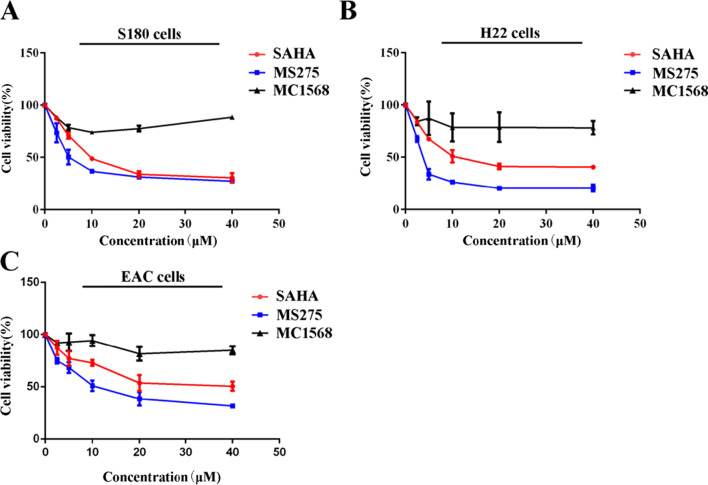
In this report, we tested the therapeutic effect of different isoform selective HDAC inhibitors (Class I HDACI MS275, Class IIa HDACI MC1568, pan-HDAC inhibitors SAHA) on malignant ascites in vitro and in vivo. We further used proteome analysis to find the potential mechanisms for malignant ascites therapy.
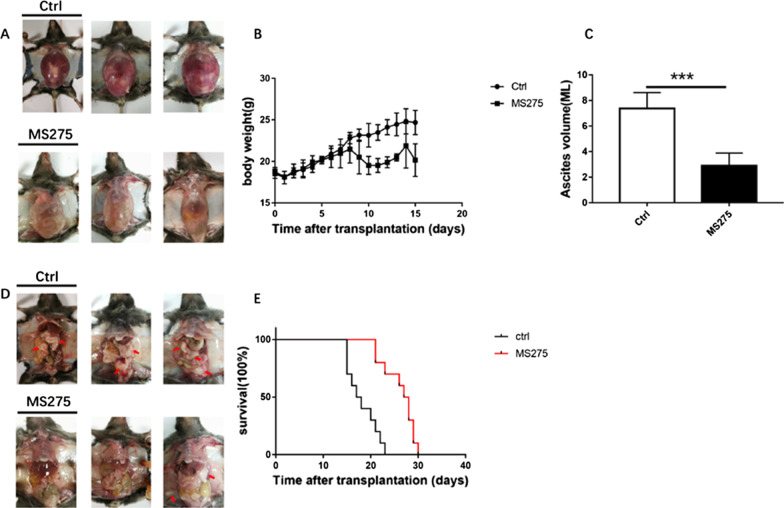
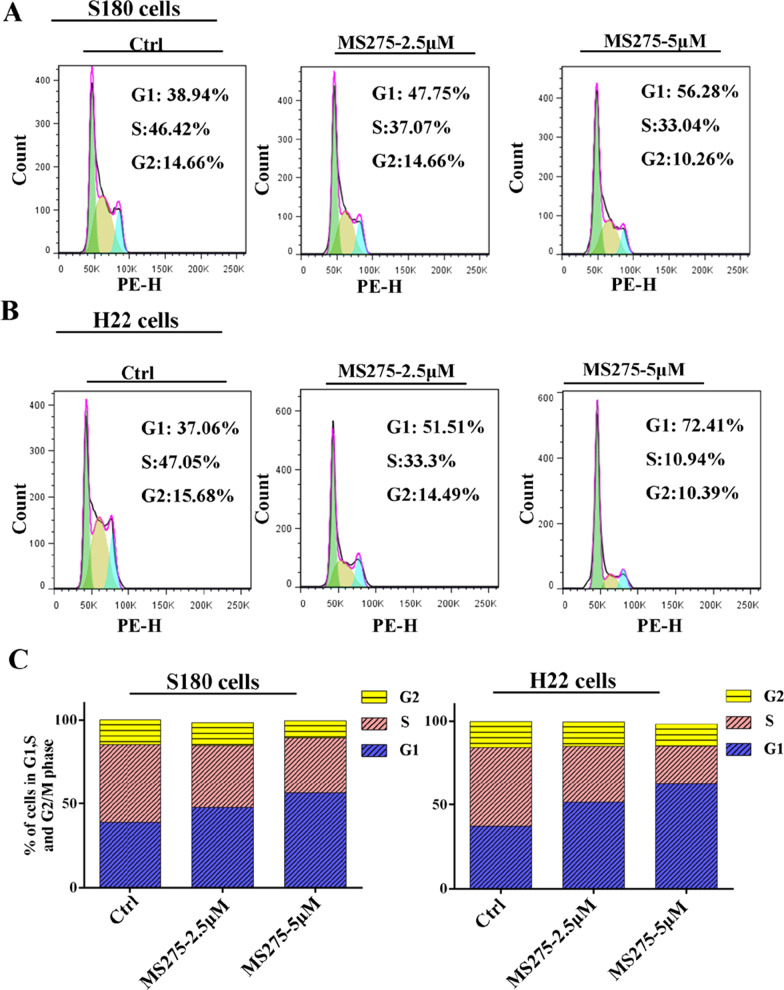
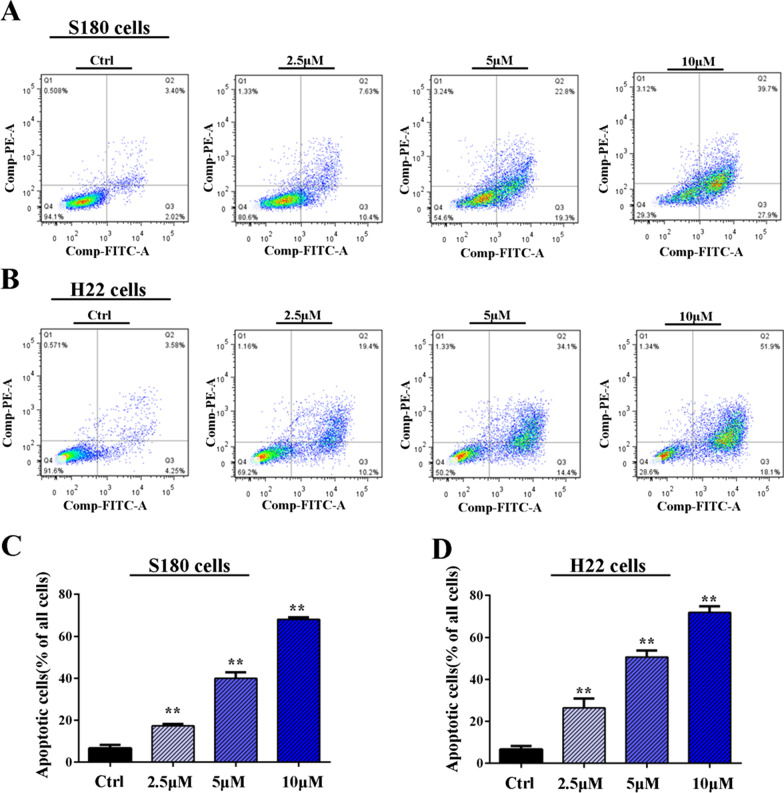
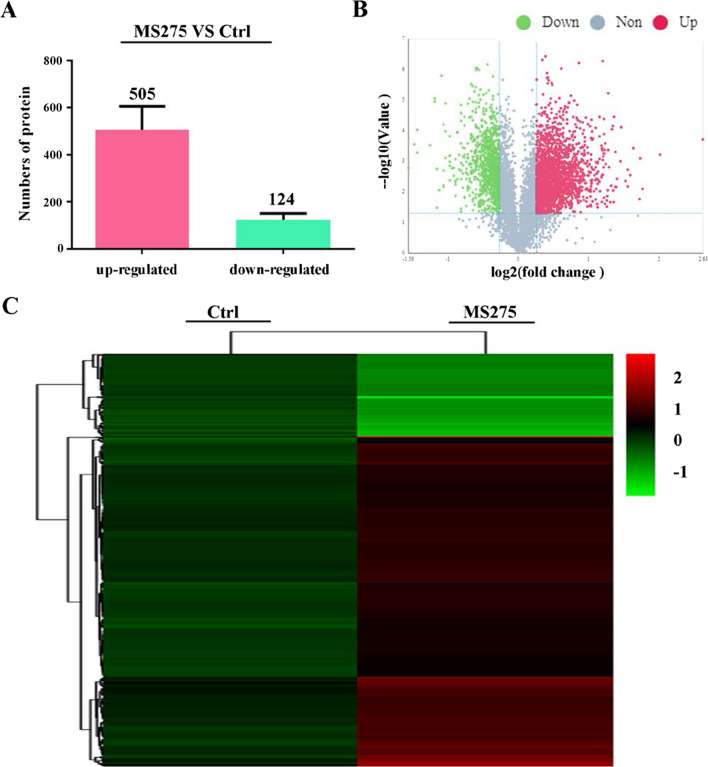
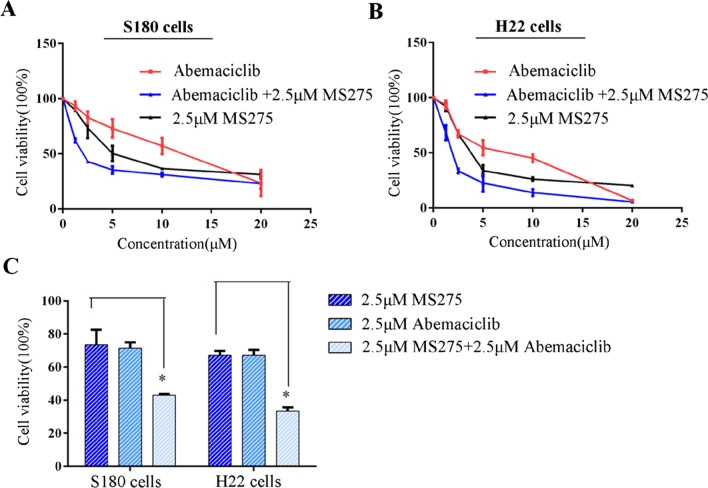
Among the different isoform-selective HDAC inhibitors, the class I selective HDACI, MS275, exhibited preferential inhibition on various ascites cells. MS275 could induce cell cycle arrest in G0/G1 phase and promote apoptosis on ascites cells. Through proteome analysis, we found MS275 could downregulate proteins related to cell cycle progression, such as CDK4, CDC20, CCND1; MS275 could upregulate pro-apoptosis proteins such as PAPR1, LMNB2 and AIFM1; in addition, MS275 could change the expression of tumorigenic proteins related to the specific malignant ascites bearing tumors, such as TSP1 and CDK4 for bladder cancer. We then confirmed that abemaciclib (CDK4/6 selective inhibitor) could inhibit the proliferation of ascites cells, and the combination of abemaciclib and MS275 had synergistic anti-tumor effect. Finally, we found that MS275 could in vivo inhibit malignant ascites progression (ascites volume: 2.9 ± 1.0 mL vs 7.5 ± 1.2 mL, p < 0.01), tumor growth, and prolong 66% of the life-span when compared with the untreated group.
This present research revealed that the class I selective HDAC inhibitor, MS275, could effectively inhibit malignant ascites development and tumor growth via multiple pathways. These results indicated that HDACI could have great potential for clinical therapy of malignant ascites.
恶性腹水是多种癌症晚期的表现,与严重的发病率有关。表观遗传调节剂在癌症的发生和发展中起着关键作用,其中组蛋白去乙酰化酶(HDACs)被认为是各种癌症发展的最重要调节剂之一,如肝癌、卵巢癌、胰腺癌等。因此,在本文中,我们试图探讨 HDAC 抑制剂对恶性腹水的治疗作用。
在本报告中,我们测试了不同同工型选择性 HDAC 抑制剂(I 类 HDACI MS275、IIa 类 HDACI MC1568、pan-HDAC 抑制剂 SAHA)对体外和体内恶性腹水的治疗效果。我们进一步使用蛋白质组分析来寻找恶性腹水治疗的潜在机制。
在不同同工型选择性 HDAC 抑制剂中,I 类选择性 HDACI MS275 对各种腹水细胞表现出优先抑制作用。MS275 可以诱导细胞周期停滞在 G0/G1 期,并促进腹水细胞凋亡。通过蛋白质组分析,我们发现 MS275 可以下调与细胞周期进展相关的蛋白,如 CDK4、CDC20、CCND1;MS275 可以上调促凋亡蛋白,如 PAPR1、LMNB2 和 AIFM1;此外,MS275 可以改变与特定恶性腹水相关的致瘤蛋白的表达,如膀胱癌中的 TSP1 和 CDK4。然后我们证实 abemaciclib(CDK4/6 选择性抑制剂)可以抑制腹水细胞的增殖,并且 abemaciclib 和 MS275 的组合具有协同的抗肿瘤作用。最后,我们发现 MS275 可以体内抑制恶性腹水的进展(腹水体积:2.9±1.0 mL 比 7.5±1.2 mL,p<0.01),肿瘤生长,并延长未经处理组 66%的寿命。
本研究揭示了 I 类选择性 HDAC 抑制剂 MS275 通过多种途径有效抑制恶性腹水的发展和肿瘤生长。这些结果表明,HDACIs 可能具有恶性腹水临床治疗的巨大潜力。