Stănculescu Elena
Faculty of Psychology and Educational Sciences, University of Bucharest, Bucharest, Romania.
Int J Ment Health Addict. 2022 Jan 15:1-18. doi: 10.1007/s11469-021-00732-7.
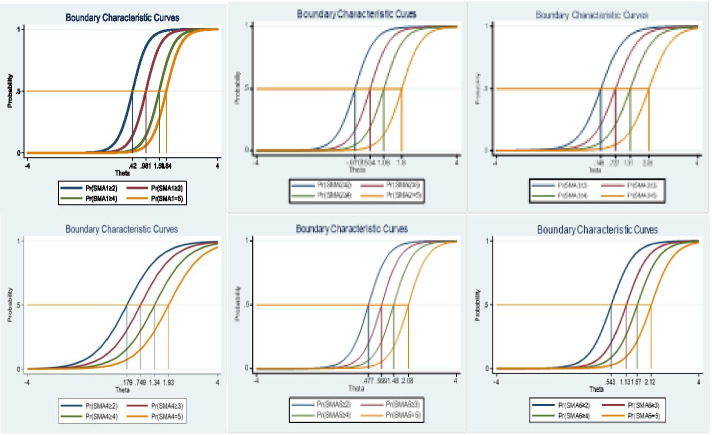
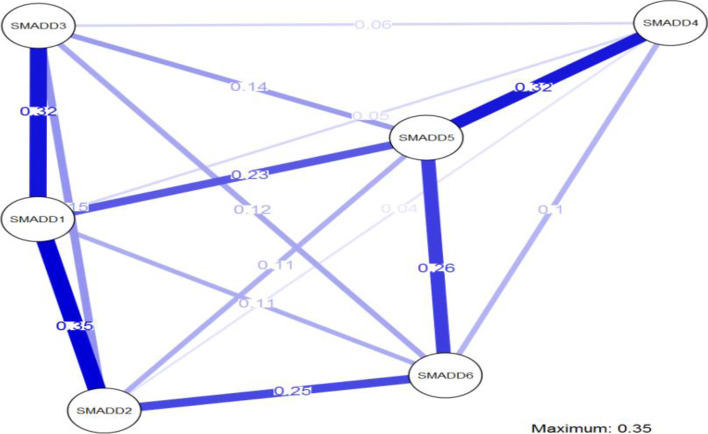
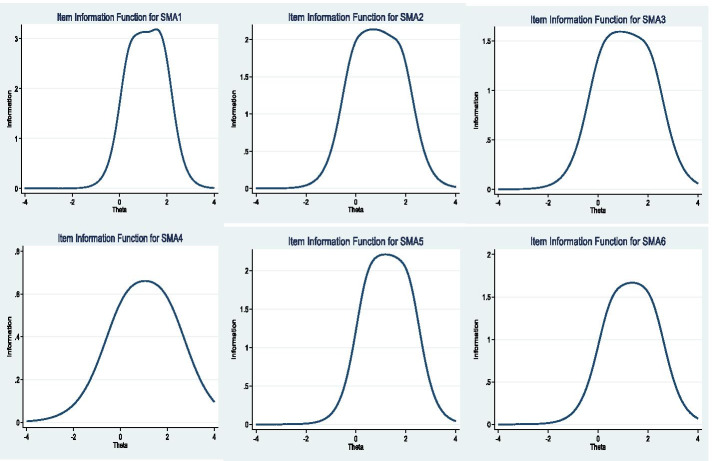
The validation of the Bergen Social Media Addiction Scale (BSMAS) in different cultural contexts is contributory in adding to the extant research body on psychometric qualities of the scale. The main purpose of this study was to examine the validity of the BSMAS, based on classical test theory and advanced psychometric testing, namely item response theory (IRT) and network analysis in a Romanian sample of 705 participants (39% males, aged 18-54 years, = 30.24, ± 9.15). Composite reliability and McDonald's omega proved the very good internal consistency of the BSMAS-RO. The CFA highlighted the unifactorial model fitted well and measurement invariance across gender was revealed. Females obtained significantly higher scores on social media addiction (SMA) than males. As for concurrent validity, SMA correlated with social media intensity use, anxious attachment, social anxiety, need to belong, self-esteem, and happiness. IRT analysis proved adequate discrimination and difficulty parameters for all items. The highest discrimination was registered by salience criterion and the highest difficulty by conflict, withdrawal, and mood modification criteria. Relapse criterion had the lowest values of both parameters. Network analysis revealed that salience and withdrawal criteria had the highest indicators of centrality and relapse the lowest. Our findings revealed that the most relevant criteria to the diagnosis of SMA in Romanian people are salience, conflict, withdrawal, and mood modification. The robust psychometric properties of the BSMAS-RO provide health professionals a valid instrument for assessing SMA. Programs to prevent SMA must focus on dispositional traits as AATT, social anxiety, respectively unsatisfied need to belong, and promoting the ability to initiate and maintain rewarding social relationships.
在不同文化背景下对卑尔根社交媒体成瘾量表(BSMAS)进行验证,有助于丰富该量表心理测量学特性方面的现有研究。本研究的主要目的是基于经典测试理论以及先进的心理测量测试方法,即项目反应理论(IRT)和网络分析,对罗马尼亚705名参与者(39%为男性,年龄在18 - 54岁之间,平均年龄 = 30.24岁,标准差 ± 9.15)样本中的BSMAS进行效度检验。合成信度和麦克唐纳ω系数证明了BSMAS - RO具有非常好的内部一致性。验证性因素分析突出显示单因素模型拟合良好,且揭示了性别间的测量不变性。女性在社交媒体成瘾(SMA)方面的得分显著高于男性。至于同时效度,SMA与社交媒体使用强度、焦虑依恋、社交焦虑、归属感需求、自尊和幸福感相关。IRT分析证明所有项目的区分度和难度参数都合适。显著性标准的区分度最高,冲突、退缩和情绪调节标准的难度最高。复发标准的两个参数值最低。网络分析表明,显著性和退缩标准的中心性指标最高,复发标准的最低。我们的研究结果表明,罗马尼亚人群中诊断SMA最相关的标准是显著性、冲突、退缩和情绪调节。BSMAS - RO强大的心理测量学特性为健康专业人员提供了一个评估SMA的有效工具。预防SMA的项目必须关注诸如适应不良的依恋特质、社交焦虑以及未满足的归属感需求等倾向性特征,并提高建立和维持有意义社交关系的能力。