Department of Oncogene Research, Research Institute for Microbial Diseases, Osaka University, Suita, Osaka, Japan.
Laboratory for Cell Signaling Dynamics, RIKEN Center for Biosystems Dynamics Research, Suita, Osaka, Japan.
J Biol Chem. 2022 Mar;298(3):101630. doi: 10.1016/j.jbc.2022.101630. Epub 2022 Jan 24.
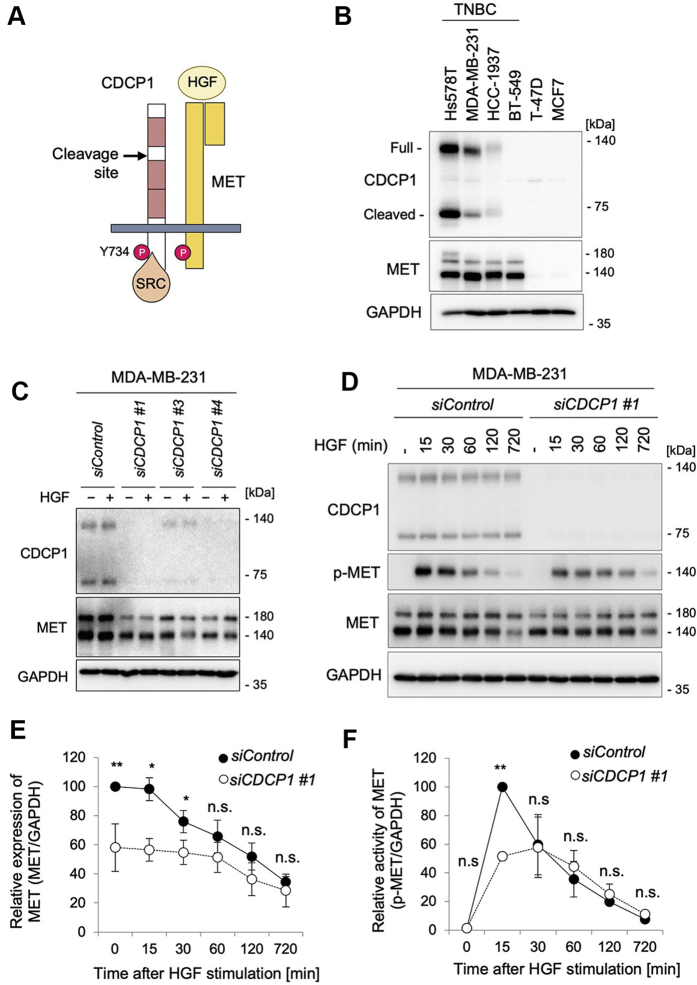
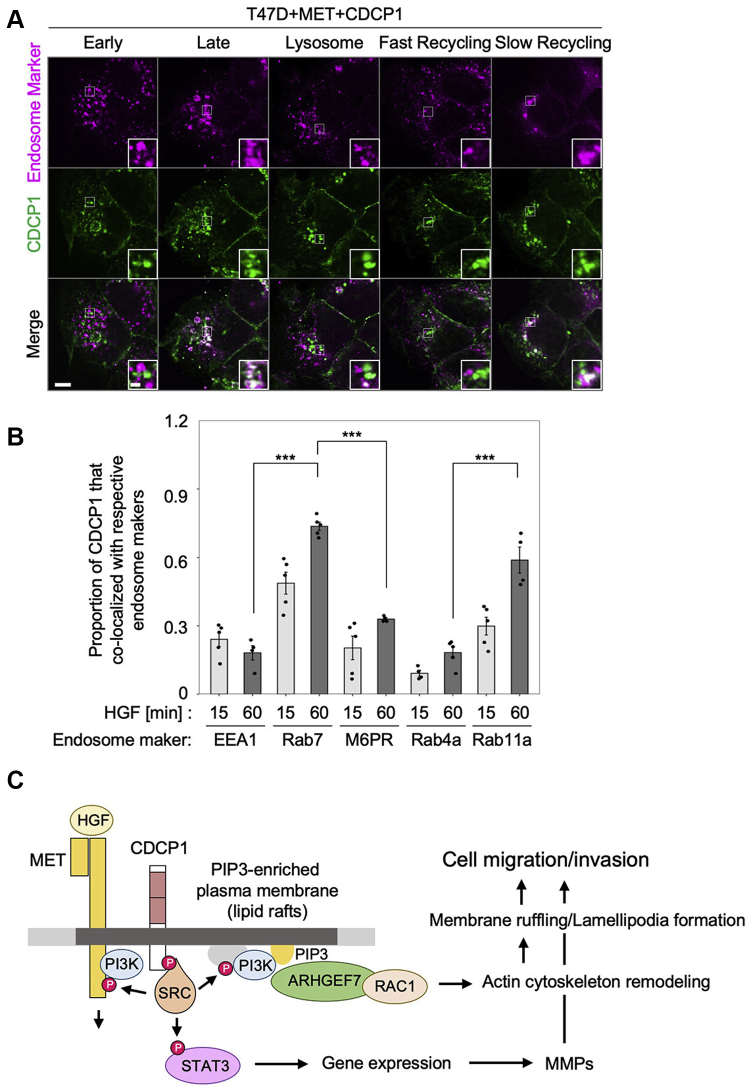
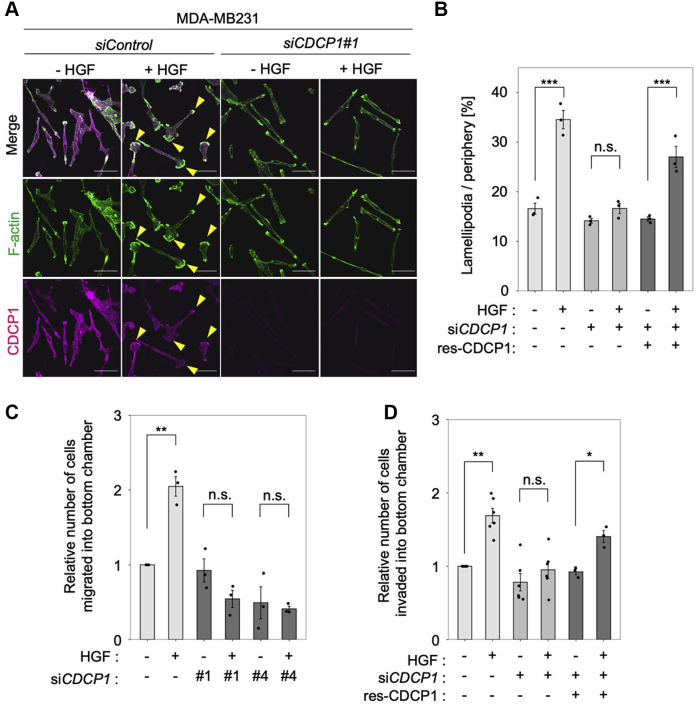
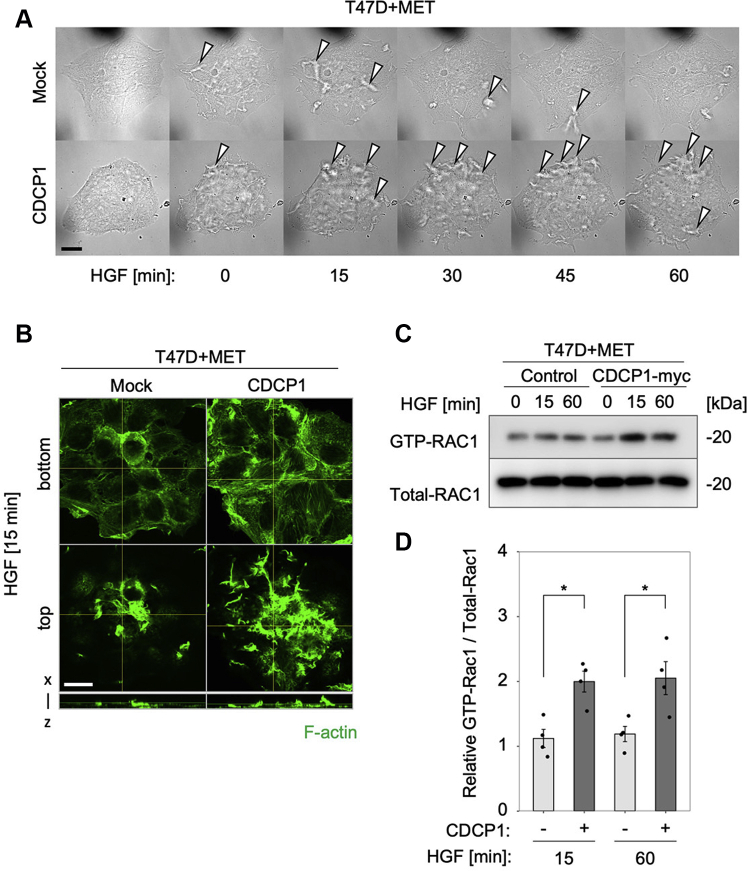
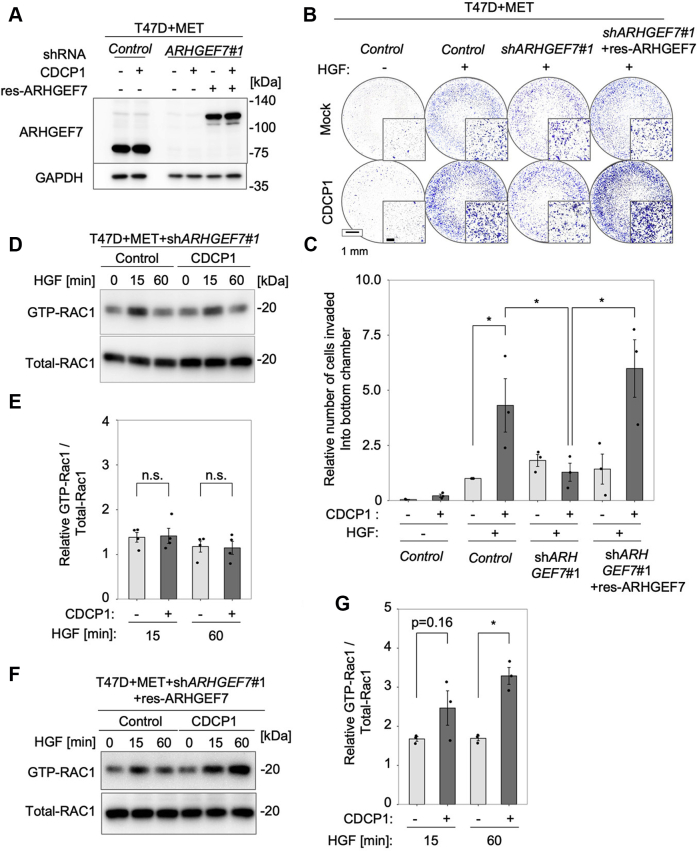
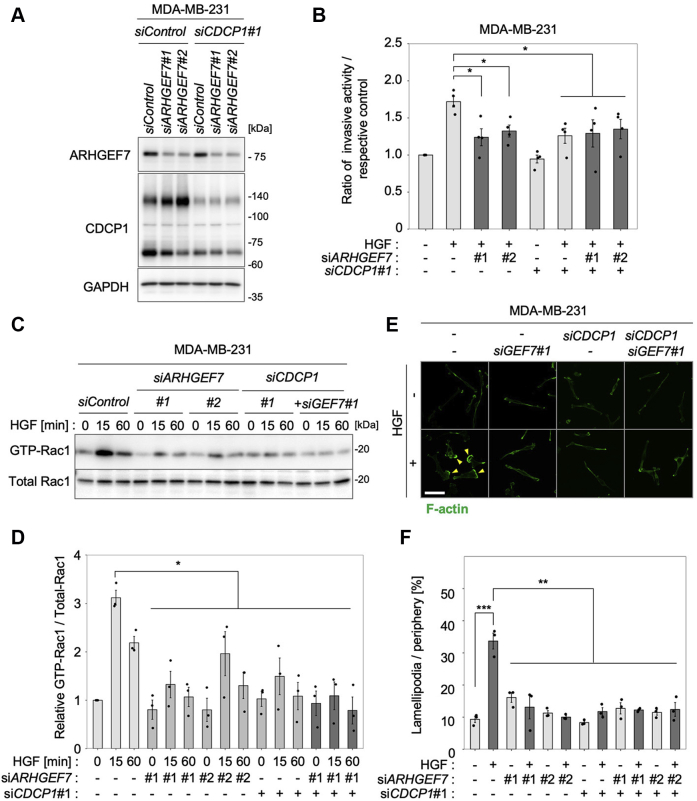
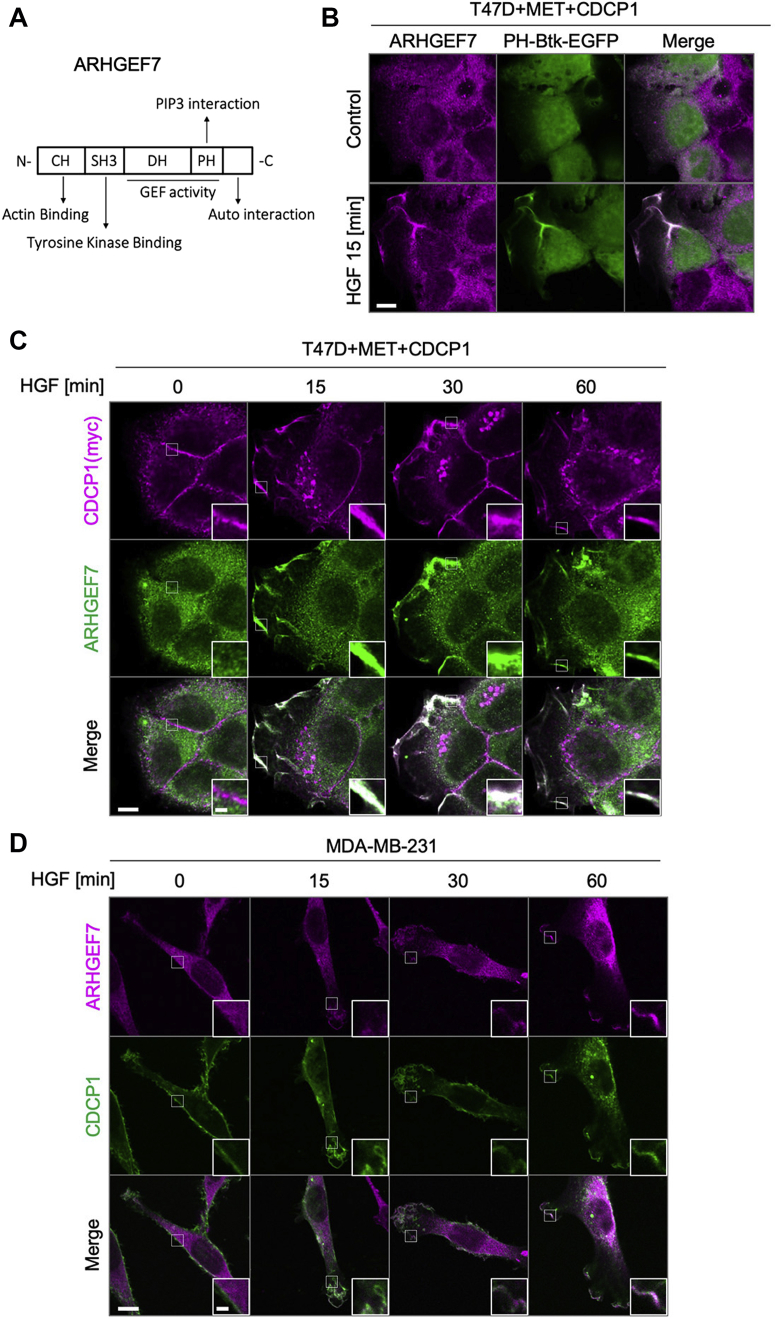
Cancer invasion and metastasis are the major causes of cancer patient mortality. Various growth factors, including hepatocyte growth factor (HGF), are known to promote cancer invasion and metastasis, but the regulatory mechanisms involved are not fully understood. Here, we show that HGF-promoted migration and invasion of breast cancer cells are regulated by CUB domain-containing protein 1 (CDCP1), a transmembrane activator of SRC kinase. In metastatic human breast cancer cell line MDA-MB-231, which highly expresses the HGF receptor MET and CDCP1, we show that CDCP1 knockdown attenuated HGF-induced MET activation, followed by suppression of lamellipodia formation and cell migration/invasion. In contrast, in the low invasive/nonmetastatic breast cancer cell line T47D, which had no detectable MET and CDCP1 expression, ectopic MET expression stimulated the HGF-dependent activation of invasive activity, and concomitant CDCP1 expression activated SRC and further promoted invasive activity. In these cells, CDCP1 expression dramatically activated HGF-induced membrane remodeling, which was accompanied by activation of the small GTPase Rac1. Analysis of guanine nucleotide exchange factors revealed that ARHGEF7 was specifically required for CDCP1-dependent induction of HGF-induced invasive ability. Furthermore, immunofluorescence staining demonstrated that CDCP1 coaccumulated with ARHGEF7. Finally, we confirmed that the CDCP1-SRC axis was also crucial for HGF and ARHGEF7-RAC1 signaling in MDA-MB-231 cells. Altogether, these results demonstrate that the CDCP1-SRC-ARHGEF7-RAC1 pathway plays an important role in the HGF-induced invasion of a subset of breast cancer cells.
癌症的侵袭和转移是癌症患者死亡的主要原因。已知包括肝细胞生长因子(HGF)在内的各种生长因子可促进癌症侵袭和转移,但涉及的调节机制尚不完全清楚。在这里,我们表明 HGF 促进乳腺癌细胞的迁移和侵袭受 CUB 结构域包含蛋白 1(CDCP1)调节,CDCP1 是 SRC 激酶的跨膜激活剂。在高表达 HGF 受体 MET 和 CDCP1 的转移性人乳腺癌细胞系 MDA-MB-231 中,我们表明 CDCP1 敲低减弱了 HGF 诱导的 MET 激活,随后抑制了片状伪足的形成和细胞迁移/侵袭。相比之下,在低侵袭/非转移性乳腺癌细胞系 T47D 中,没有检测到 MET 和 CDCP1 的表达,异位 MET 表达刺激了 HGF 依赖性侵袭活性的激活,同时 CDCP1 的表达激活了 SRC,并进一步促进了侵袭活性。在这些细胞中,CDCP1 的表达显著激活了 HGF 诱导的膜重塑,伴随着小 GTPase Rac1 的激活。对鸟嘌呤核苷酸交换因子的分析表明,ARHGEF7 是 CDCP1 依赖性诱导 HGF 诱导的侵袭能力所必需的。此外,免疫荧光染色表明 CDCP1 与 ARHGEF7 共积累。最后,我们证实 CDCP1-SRC 轴对于 MDA-MB-231 细胞中的 HGF 和 ARHGEF7-RAC1 信号传导也至关重要。总之,这些结果表明 CDCP1-SRC-ARHGEF7-RAC1 途径在一组乳腺癌细胞的 HGF 诱导侵袭中起重要作用。