Ye Yang, Li Quan, Pan Chun-Shui, Yan Li, Sun Kai, Wang Xiao-Yi, Yao Shu-Qi, Fan Jing-Yu, Han Jing-Yan
Department of Integration of Chinese and Western Medicine, School of Basic Medical Sciences, Peking University, Beijing, China.
Tasly Microcirculation Research Center, Peking University Health Science Center, Beijing, China.
Front Pharmacol. 2022 Jan 12;12:759027. doi: 10.3389/fphar.2021.759027. eCollection 2021.
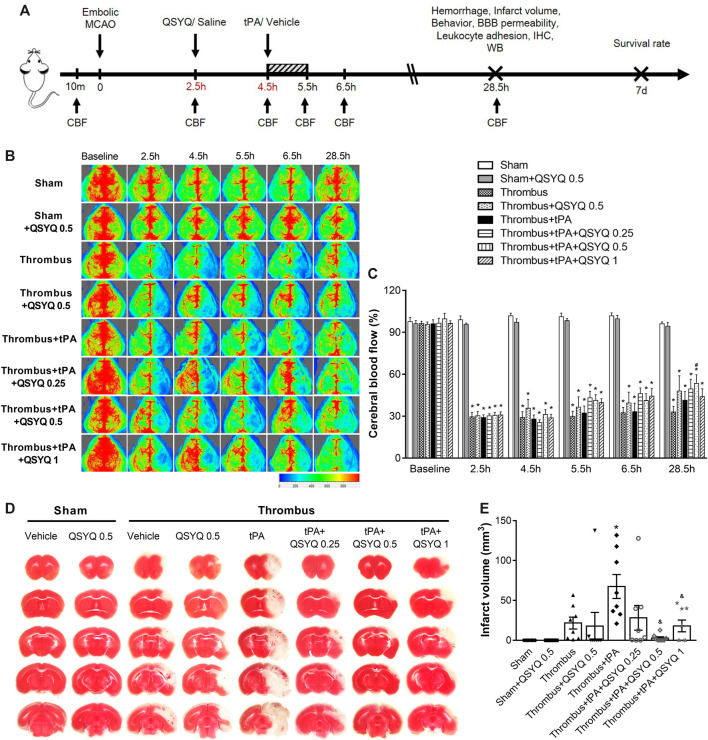
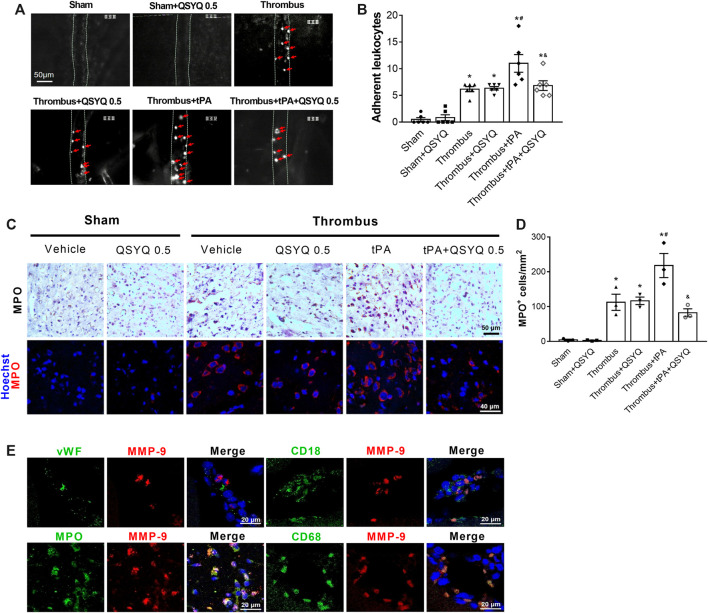
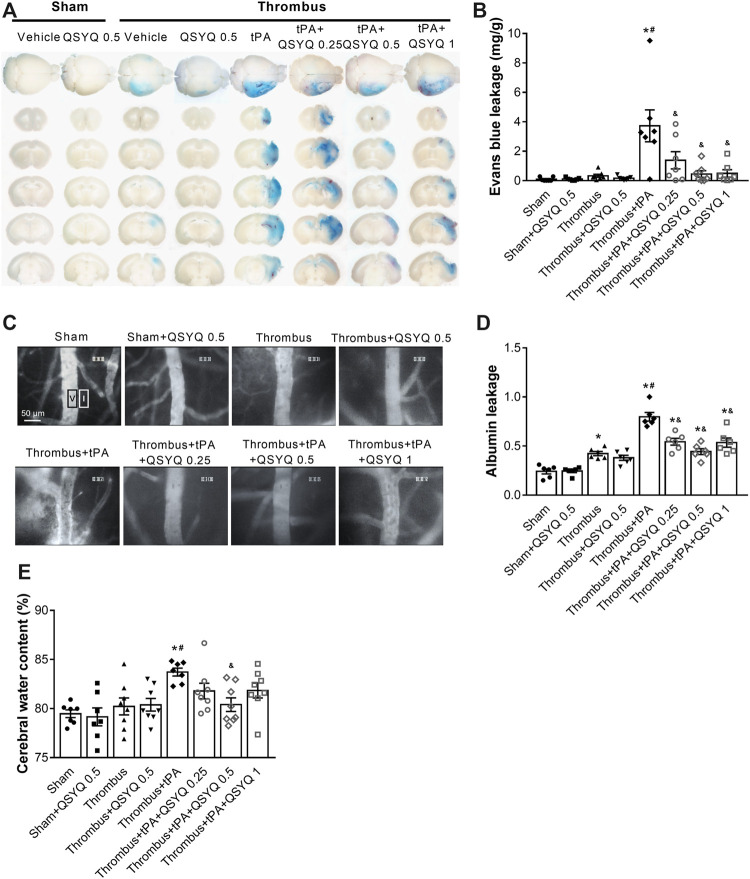
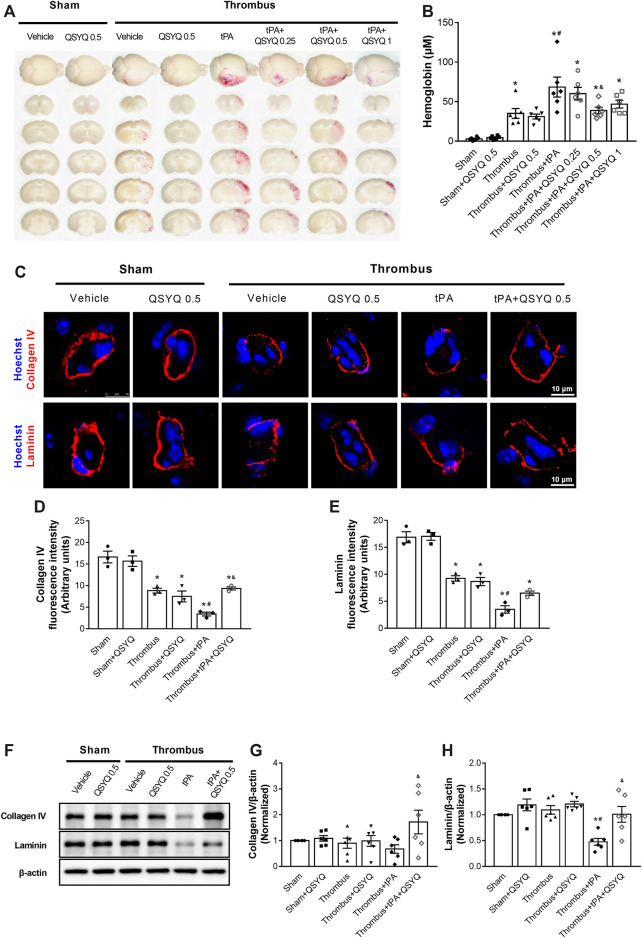
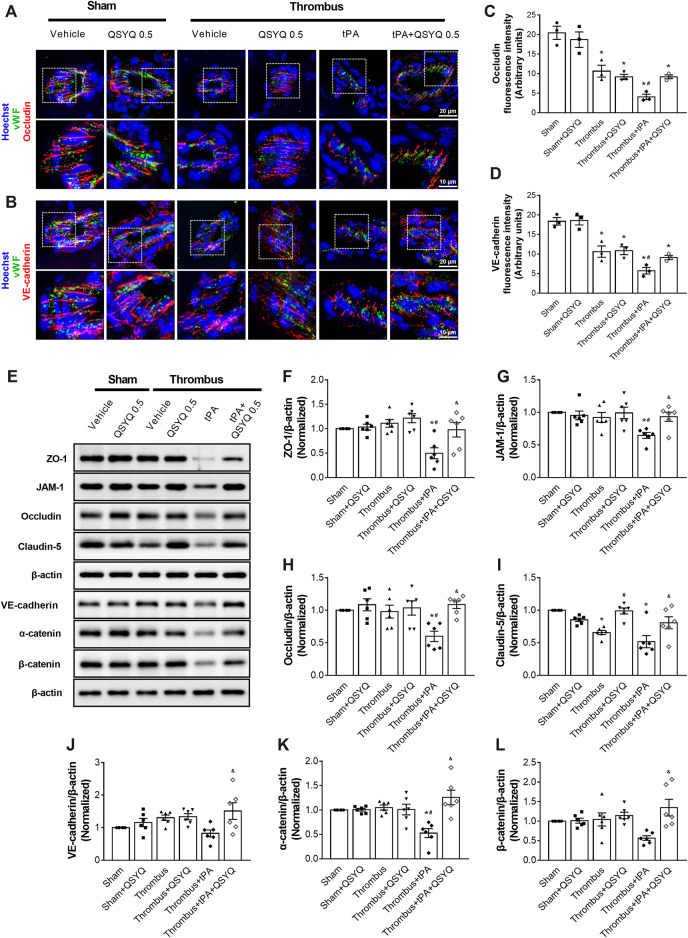
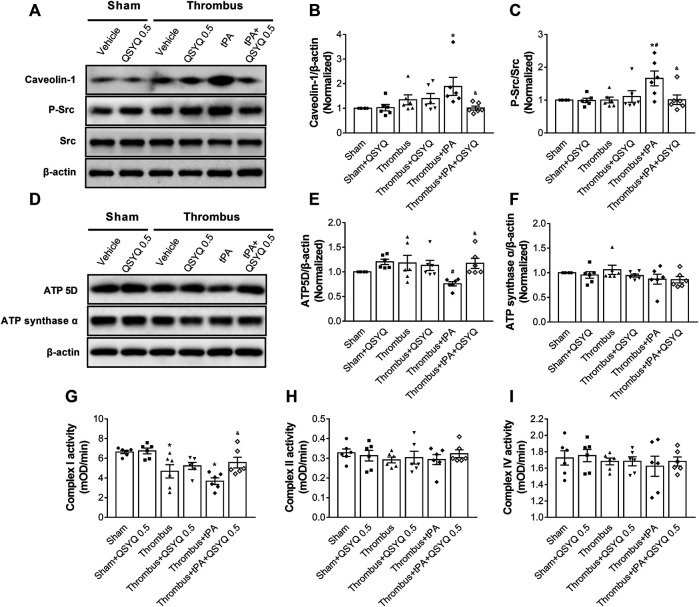
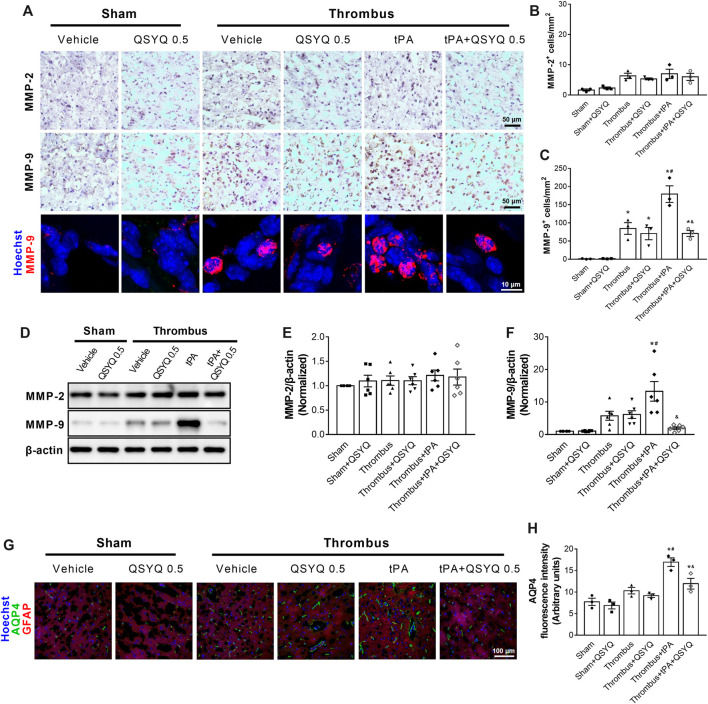
Thrombolysis with tissue plasminogen activator (tPA) remains the only approved drug therapy for acute ischemic stroke. However, delayed tPA treatment is associated with an increased risk of brain hemorrhage. In this study, we assessed whether QiShenYiQi (QSYQ), a compound Chinese medicine, can attenuate tPA-induced brain edema and hemorrhage in an experimental stroke model. Male mice were subjected to ferric chloride-induced carotid artery thrombosis followed by mechanical detachment of thrombi. Then mice were treated with QSYQ at 2.5 h followed by administration of tPA (10 mg/kg) at 4.5 h. Hemorrhage, infarct size, neurological score, cerebral blood flow, Evans blue extravasation, FITC-labeled albumin leakage, tight and adherens junction proteins expression, basement membrane proteins expression, matrix metalloproteinases (MMPs) expression, leukocyte adhesion, and leukocyte infiltration were assessed 24 h after tPA administration. Compared with tPA alone treatments, the combination therapy of QSYQ and tPA significantly reduced hemorrhage, infarction, brain edema, Evans blue extravasation, albumin leakage, leukocyte adhesion, MMP-9 expression, and leukocyte infiltration at 28.5 h after stroke. The combination also significantly improved the survival rate, cerebral blood flow, tight and adherens junction proteins (occludin, claudin-5, junctional adhesion molecule-1, zonula occludens-1, VE-cadherin, α-catenin, β-catenin) expression, and basement membrane proteins (collagen IV, laminin) expression. Addition of QSYQ protected the downregulated ATP 5D and upregulated p-Src and Caveolin-1 after tPA treatment. Our results show that QSYQ inhibits tPA-induced brain edema and hemorrhage by protecting the blood-brain barrier integrity, which was partly attributable to restoration of energy metabolism, protection of inflammation and Src/Caveolin signaling activation. The present study supports QSYQ as an effective adjunctive therapy to increase the safety of delayed tPA thrombolysis for ischemic stroke.
组织型纤溶酶原激活剂(tPA)溶栓仍然是急性缺血性卒中唯一获批的药物治疗方法。然而,tPA治疗延迟与脑出血风险增加相关。在本研究中,我们评估了复方中药芪参益气(QSYQ)是否能在实验性卒中模型中减轻tPA诱导的脑水肿和出血。雄性小鼠接受氯化铁诱导的颈动脉血栓形成,随后进行血栓机械剥离。然后在2.5小时给小鼠用QSYQ治疗,4.5小时后给予tPA(10mg/kg)。在给予tPA后24小时评估出血、梗死面积、神经功能评分、脑血流量、伊文思蓝外渗、异硫氰酸荧光素标记的白蛋白渗漏、紧密连接和黏附连接蛋白表达、基底膜蛋白表达、基质金属蛋白酶(MMPs)表达、白细胞黏附和白细胞浸润情况。与单独使用tPA治疗相比,QSYQ与tPA联合治疗在卒中后28.5小时显著减少了出血、梗死、脑水肿、伊文思蓝外渗、白蛋白渗漏、白细胞黏附、MMP-9表达和白细胞浸润。联合治疗还显著提高了生存率、脑血流量、紧密连接和黏附连接蛋白(闭合蛋白、Claudin-5、连接黏附分子-1、闭锁小带-1、血管内皮钙黏蛋白、α-连环蛋白、β-连环蛋白)表达以及基底膜蛋白(胶原蛋白IV、层粘连蛋白)表达。添加QSYQ可保护tPA治疗后下调的ATP 5D以及上调的p-Src和小窝蛋白-1。我们的结果表明,QSYQ通过保护血脑屏障完整性来抑制tPA诱导的脑水肿和出血,这部分归因于能量代谢的恢复、炎症的保护以及Src/小窝蛋白信号激活。本研究支持QSYQ作为一种有效的辅助治疗方法,以提高延迟tPA溶栓治疗缺血性卒中的安全性。