College of Medicine and Health, University of Exeter, Exeter, UK.
Population Health Sciences, School of Physiology, Pharmacology and Neuroscience, University of Bristol, Bristol, UK.
Child Care Health Dev. 2022 Sep;48(5):724-735. doi: 10.1111/cch.12978. Epub 2022 Feb 20.
Attention deficit hyperactivity disorder (ADHD) is a common neurodevelopmental disorder that can persist into adulthood. Young people often stop taking ADHD medication during adolescence despite evidence that continuation would be beneficial. Increasingly, young people are restarting medication in early adulthood suggesting that cessation was premature. In this paper we explore the reasons given by young people for discontinuing ADHD medication.
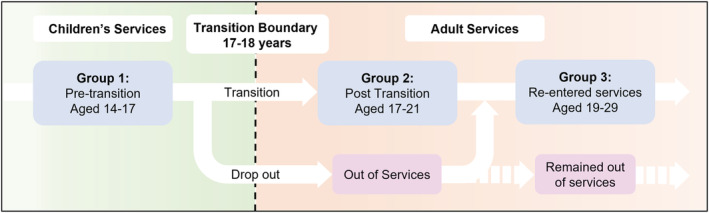
Qualitative data from the Children and Adolescents with ADHD in Transition between Children's and Adult Services (CATCh-uS) project was analysed to look for reasons for stopping medication. Semi-structured interviews with three groups of young people were analysed using thematic and framework analysis; this included young people prior to transition (n = 21); young people that had successfully transitioned to adult services (n = 22); and young people who left children's services prior to transition but re-entered adult services later (n = 21).
Reasons given by young people for stopping ADHD medication included the following: the perceived balance between benefits and adverse effects of medication; perceptions of ADHD as a childhood or educational disorder; life circumstance of the young person and challenges young people faced in accessing services.
A multidimensional approach is needed to address discontinuation of ADHD medication in order to improve the long-term prospects and quality of life for these young people. Possible approaches include access to non-pharmacological treatments and improved psychoeducation. As many reasons given by young people are not unique to ADHD, these findings are also of relevance to medication adherence in other chronic childhood conditions.
注意缺陷多动障碍(ADHD)是一种常见的神经发育障碍,可延续至成年期。尽管有证据表明继续服药会有好处,但青少年经常在青春期停止服用 ADHD 药物。越来越多的年轻人在成年早期重新开始服用药物,这表明停药过早。在本文中,我们探讨了年轻人停止服用 ADHD 药物的原因。
对儿童和青少年 ADHD 过渡到儿童和成人服务项目(CATCh-uS)的定性数据进行分析,以寻找停药的原因。对三组年轻人进行半结构化访谈,采用主题和框架分析进行分析;这包括过渡前的年轻人(n=21);成功过渡到成人服务的年轻人(n=22);以及在过渡前离开儿童服务但后来重新进入成人服务的年轻人(n=21)。
年轻人停止 ADHD 药物治疗的原因包括以下几个方面:药物治疗的益处和不良反应之间的平衡感知;对 ADHD 的看法是一种儿童或教育障碍;年轻人的生活环境和年轻人在获得服务方面面临的挑战。
需要采取多维方法来解决 ADHD 药物治疗的停药问题,以改善这些年轻人的长期前景和生活质量。可能的方法包括获得非药物治疗和改善心理教育。由于年轻人给出的许多原因并非 ADHD 所特有,因此这些发现也与其他慢性儿童疾病的药物依从性有关。